Conularia

Ghedo · CC BY-SA 4.0 · via Wikidata/Commons. May be a photograph of a specimen, or an artist’s reconstruction — an interpretation of a skeleton, since colour and soft tissue are almost never preserved.
On record
Recorded, not inferred- Sits inside
- ConulariinaePBDB
- Diet
- suspension feederPBDB, for Conulariidae
- Life habit
- epifaunalPBDB, for Conulariidae
- Motility
- stationaryPBDB, for Conulariidae
- Vision
- blindPBDB, for Conulariidae
Time the record covers
At least 232 million years on record.
The record covers at least 469.4 Mya to 237 Mya. No occurrence read is dated outside 486.85 Mya to 227.3 Mya.
214 occurrences of Conularia on record, most of them in the Ordovician. Bar height is expected occurrences, not a count: each fossil is spread across the span it is dated to, so a tall narrow bar means tight dating and a low wide one means loose.
When
214 occurrences- Ordovician36%
- Silurian23%
- Devonian27%
- Carboniferous8%
- Permian5%
- Middle Triassicunder 1%
- Late Triassicunder 1%
These are dates about fossils, not the animal: the record can only begin after it arose and end before it died out, so either end may reach further. Shares are expected occurrences: a fossil dated to a span is counted partly in each period it straddles. More on what this infers.
Found in
115 formations
- Gydo Formation · Bokkeveld Group11
- Red River Formation7
- Verulam Formation · Simcoe Group6
- Rochester Shale Formation · Clinton Group4
- Louisiana Limestone Formation4
- Stonington Formation4
Loading coastlines…
The named rock units Conularia has been recovered from, largest first. Drawn where the rock is now, not where it formed. 91 further formations hold fewer occurrences each and are not listed. 16 occurrences have no formation on record, which is common for older literature.
Conularia and its relatives
OrdovicianWhere Conularia and its relatives were recorded in the Ordovician.
Found in the same rock
2,724 taxa- Rafinesquina33 sites
- Ctenodonta32 sites
- Orthoceras28 sites
- Pterinea27 sites
- Modiolopsis26 sites
- Orbiculoidea25 sites
- Hallopora24 sites
- Ostracoda24 sites
- Cornulites23 sites
- Crinoidea23 sites
- Platystrophia23 sites
- Isotelus22 sites
- Lingula22 sites
- Nuculites21 sites
- Dalmanella19 sites
- Tentaculites19 sites
- Trematis19 sites
- Ambonychia18 sites
- Fenestella18 sites
- Mesotrypa18 sites
- Petrocrania18 sites
- Strophomena17 sites
- Chonetes16 sites
- Dalmanites16 sites
The Paleobiology Database records 190 sites for Conularia, and this reads all of them. Of that, one read hit the database's own return limit, so every count below is a floor rather than a total. The number is how many of those sites it was catalogued from too. The 24 sharing the most are listed.
This is not a list of everything alive at the time. It is only what has come out of the same ground as this animal and been written down.
Entered from
100 references- Preliminary catalogue and report on the biostratigraphy and palaeogeographic distribution of the Bokkeveld fauna14
- The Clinton of Western and Central New York11
- Palaeozoic geology of the Lake Simcoe Area, Ontario10
- The fossil fauna of the Ordovician in the Cincinnati Region10
- The Malvinokaffric realm in the Devonian of Brazil7
- The biostratigraphy of the Ordovician of Bohemia7
- Late Ordovician conulariids from Manitoba, Canada6
- Work with Thayer collections, Yale Peabody Accession 7112, published, in part, "New perspectives on transitions between ecological-evolutionary subunits in the "type interval" for coordinated stasis", James J Zambito IV, Carlton E Brett, Gordon C Baird, Sarah E Kolbe, Arnold I Miller; Paleobiology5
- Wenlockian fossil communities in New York State and adjacent areas: Paleontology and Paleoecology5
- The Richmond Formation of Michigan5
- Pflanzen im Hunsrueckschiefer4
- Middle Gaspe Limestone communities on the Forillon Peninsula, Quebec, Canada (Siegenian, Lower Devonian)4
Each of the 214 occurrences read was entered from one of these publications, ordered by how many each accounts for. This is not a search for papers mentioning the name. 88 further references are not listed. Entries link to doi.org where the Paleobiology Database holds an identifier, and to its own record where it does not. Relayed as the Paleobiology Database holds them, not checked against what they resolve to.
Media and terms
Media content2
Picture of Conularia
- Source
- Wikidata/Commons
- Credit
- Ghedo
- Licence
- CC BY-SA 4.0
- Commercial use
- the licence allows it
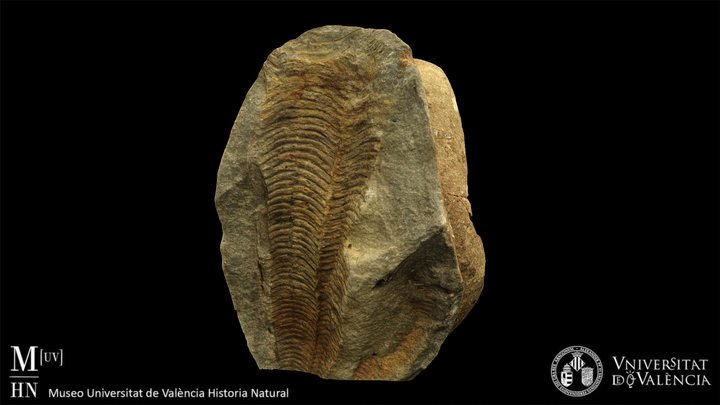
3D model
- Source
- Sketchfab
- Licence
- CC Attribution
- Commercial use
- cannot be read from the licence given — check the record
This is what the site found, which is not the same as what exists.
Keep going
What may have been alongside itConulariinae through timeFormations of the OrdovicianThe world it lived on
Occurrence data from the Paleobiology Database, CC BY 4.0. Miller 1820