Asplenium
Asplenium is a genus of about 700 species of ferns, often treated as the only genus in the family Aspleniaceae, though other authors consider Hymenasplenium separate, based on molecular phylogenetic analysis of DNA sequences, a different chromosome count, and structural differences in the rhizomes. The type species for the genus is Asplenium marinum.

Uncredited · CC BY-SA 3.0 · via Wikipedia/Commons. May be a photograph of a specimen, or an artist’s reconstruction — an interpretation of a skeleton, since colour and soft tissue are almost never preserved.
On record
Recorded, not inferred- Sits inside
- AspleniaceaePBDB
- Diet
- "photoautotroph"PBDB, for Streptophyta
Time the record covers
At least 227 million years on record.
The record covers at least 227.3 Mya to 11.7 ka. No occurrence read is dated outside 241.464 Mya to 0 Mya.
62 occurrences of Asplenium on record, most of them in the Early Cretaceous. The Paleobiology Database records this as a living group. Bar height is expected occurrences, not a count: each fossil is spread across the span it is dated to, so a tall narrow bar means tight dating and a low wide one means loose.
When
62 occurrences- Middle Triassicunder 1%
- Late Triassic1%
- Late Jurassic10%
- Early Cretaceous22%
- Late Cretaceous20%
- Eocene22%
- Oligoceneunder 1%
- Miocene2%
- Plioceneunder 1%
- Pleistocene19%
- Holocene3%
These are dates about fossils, not the animal: the record can only begin after it arose and end before it died out, so either end may reach further. Shares are expected occurrences: a fossil dated to a span is counted partly in each period it straddles. More on what this infers.
Found in
17 formations
- Krivorechenskaya Formation12
- Sepulcher Formation5
- Eagle Formation4
- Green River Formation3
- Cheyenne Sandstone Formation3
- Cretaceous Formation2
Loading coastlines…
The named rock units Asplenium has been recovered from, largest first. Drawn where the rock is now, not where it formed. 22 occurrences have no formation on record, which is common for older literature.
Asplenium and its relatives
Early CretaceousWhere Asplenium and its relatives were recorded in the Early Cretaceous.
Found in the same rock
841 taxa- Coniopteris15 sites
- Acanthopteris14 sites
- Asteraceae12 sites
- Celtis12 sites
- Pteridium12 sites
- Urticaceae12 sites
- Poaceae11 sites
- Rutaceae11 sites
- Cladophlebis10 sites
- Cyathea10 sites
- Cyperaceae10 sites
- Elaeocarpus10 sites
- Nilsonia10 sites
- Plantago10 sites
- Pteris10 sites
- Scheffleraephyllum venustum10 sites
- Araucaria9 sites
- Gleichenites9 sites
- Ilex9 sites
- Liliaceae9 sites
- Macaranga9 sites
- Mallotus9 sites
- Menispermites9 sites
- Podocarpus9 sites
The Paleobiology Database records 50 sites for Asplenium, and this reads all of them. The number is how many of those sites it was catalogued from too. The 24 sharing the most are listed.
This is not a list of everything alive at the time. It is only what has come out of the same ground as this animal and been written down.
Entered from
22 references- Palaeoenvironment and ecology of the middle Cretaceous Grebenka flora of northeastern Asia12
- A complete pollen record of the last 230 ka from Lynch's Crater, north-eastern Australia8
- A Catalogue of Fossil Plants from India Part 6: Cenozoic (Quaternary) Palynology and Palaeobotany6
- Fossil Flora of the Yellowstone National Park6
- The flora of the Eagle Formation and its significance for Late Cretaceous floristic evolution4
- The Stratigraphic Tables of Heilongjiang4
- The Eocene Green River Flora of northwestern Colorado and northeastern Utah3
- The flora of the Cheyenne Sandstone of Kansas3
- The Lower Eocene floras of Southeastern North America2
- The Cretaceous formation of the Black Hills as as indicated by the fossil plants2
- Review of the Kimmeridgian flora of Sutherland, Scotland with reference to the ecology and in situ pollen1
- Plant and mammal diversity in the Paleocene to Early Eocene of the Bighorn Basin1
Each of the 62 occurrences read was entered from one of these publications, ordered by how many each accounts for. This is not a search for papers mentioning the name. 10 further references are not listed. Entries link to doi.org where the Paleobiology Database holds an identifier, and to its own record where it does not. Relayed as the Paleobiology Database holds them, not checked against what they resolve to.
Media and terms
Media content2

Picture of Asplenium
- Source
- Wikipedia/Commons
- Credit
- nobody named on the record
- Licence
- CC BY-SA 3.0
- Commercial use
- the licence allows it
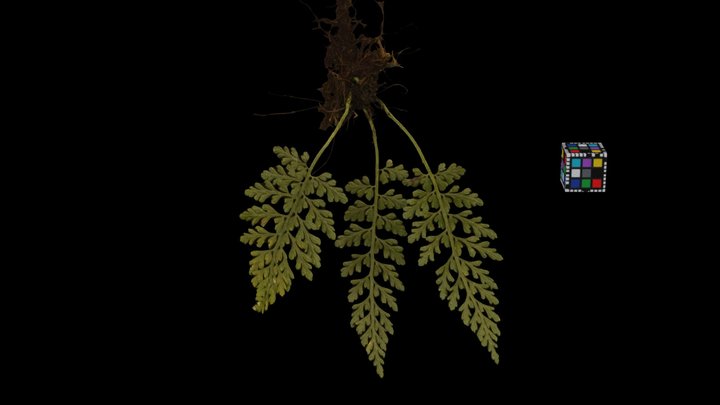
3D model
- Source
- Sketchfab
- Licence
- CC0 Public Domain
- Commercial use
- the licence allows it
The description on this site
- Source
- Wikipedia, “Asplenium”
- Licence
- CC BY-SA 4.0
This is what the site found, which is not the same as what exists.
Keep going
What may have been alongside itAspleniaceae through timeFormations of the Early CretaceousThe world it lived on
Occurrence data from the Paleobiology Database, CC BY 4.0. (Linnaeus 1753)