Elaeocarpus
Elaeocarpus is a genus of nearly five hundred species of flowering plants in the family Elaeocarpaceae native to the western Indian Ocean, tropical and subtropical Asia, Australia and the Pacific. Plants in the genus are trees or shrubs with simple leaves, flowers with four or five petals, and usually blue fruit.

Lokionly · CC BY-SA 3.0 · via Wikipedia/Commons. May be a photograph of a specimen, or an artist’s reconstruction — an interpretation of a skeleton, since colour and soft tissue are almost never preserved.
On record
Recorded, not inferred- Sits inside
- ElaeocarpaceaePBDB
- Diet
- "photoautotroph"PBDB, for Angiospermae
Time the record covers
At least 65 million years on record.
The record covers at least 66 Mya to 11.7 ka. No occurrence read is dated outside 83.6 Mya to 0 Mya.
47 occurrences of Elaeocarpus on record, most of them in the Pleistocene. The Paleobiology Database records this as a living group. Bar height is expected occurrences, not a count: each fossil is spread across the span it is dated to, so a tall narrow bar means tight dating and a low wide one means loose.
When
47 occurrences- Late Cretaceous2%
- Paleoceneunder 1%
- Eocene2%
- Oligocene6%
- Miocene2%
- Plioceneunder 1%
- Pleistocene81%
- Holocene6%
These are dates about fossils, not the animal: the record can only begin after it arose and end before it died out, so either end may reach further. Shares are expected occurrences: a fossil dated to a span is counted partly in each period it straddles. More on what this infers.
Found in
4 formations
- Yallourn Formation2
- Seto Porcelain Clay Formation · Seto Group1
- Zamek Formation1
- Deccan Intertrappean Formation1
Loading coastlines…
The named rock units Elaeocarpus has been recovered from, largest first. Drawn where the rock is now, not where it formed. 42 occurrences have no formation on record, which is common for older literature.
Elaeocarpus and its relatives
PleistoceneWhere Elaeocarpus and its relatives were recorded in the Pleistocene.
Found in the same rock
736 taxa- Poaceae41 sites
- Podocarpus40 sites
- Asteraceae38 sites
- Eucalyptus38 sites
- Monolete38 sites
- Acacia37 sites
- Cyperaceae37 sites
- Agathis36 sites
- Araucaria36 sites
- Chenopodiaceae36 sites
- Dodonaea36 sites
- Proteaceae36 sites
- Rapanea36 sites
- Cunoniaceae35 sites
- Dacrydium35 sites
- Myrtaceae35 sites
- Cyathea32 sites
- Macaranga32 sites
- Plantago32 sites
- Casuarinaceae30 sites
- Haloragis30 sites
- Leptospermum30 sites
- Myriophyllum29 sites
- Syzygium29 sites
The Paleobiology Database records 45 sites for Elaeocarpus, and this reads all of them. The number is how many of those sites it was catalogued from too. The 24 sharing the most are listed.
This is not a list of everything alive at the time. It is only what has come out of the same ground as this animal and been written down.
Entered from
9 references- Early Pleistocene vegetation change in upland south-eastern Australia17
- A complete pollen record of the last 230 ka from Lynch's Crater, north-eastern Australia13
- A Late Pleistocene and Holocene pollen diagram from Lynch’s Crater, northeastern Queensland, Australia8
- A Catalogue of Fossil Plants from India Part 6: Cenozoic (Quaternary) Palynology and Palaeobotany3
- The Oligo-Miocene coal floras of southeastern Australia2
- Upper Cretaceous floras of King George Island, West Antarctica, and their palaeoenvironmental and phytogeographic implications1
- Palaeovegetation and Environment at Cethana, Tasmania.1
- Late Miocene and Pliocene Floras in Central Honshu, Japan1
- A Catalogue of Indian Fossil Plants1
Each of the 47 occurrences read was entered from one of these publications, ordered by how many each accounts for. This is not a search for papers mentioning the name. Entries link to doi.org where the Paleobiology Database holds an identifier, and to its own record where it does not. Relayed as the Paleobiology Database holds them, not checked against what they resolve to.
Media and terms
Media content2

Picture of Elaeocarpus
- Source
- Wikipedia/Commons
- Credit
- Lokionly
- Licence
- CC BY-SA 3.0
- Commercial use
- the licence allows it
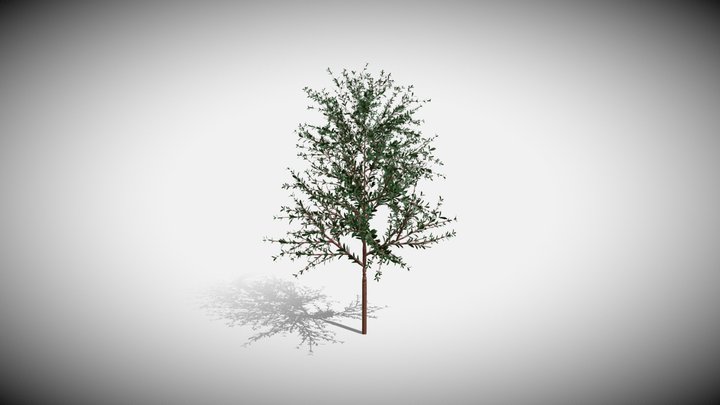
3D model
- Source
- Sketchfab
- Credit
- UESReseach
- Licence
- CC Attribution
- Commercial use
- cannot be read from the licence given — check the record
The description on this site
- Source
- Wikipedia, “Elaeocarpus”
- Licence
- CC BY-SA 4.0
This is what the site found, which is not the same as what exists.
Keep going
What may have been alongside itElaeocarpaceae through timeFormations of the PleistoceneThe world it lived on
Occurrence data from the Paleobiology Database, CC BY 4.0. Linnaeus 1753