Stylaster
Stylaster is a genus of hydroids in the family Stylasteridae.

Uncredited · via Wikipedia/Commons. May be a photograph of a specimen, or an artist’s reconstruction — an interpretation of a skeleton, since colour and soft tissue are almost never preserved.
On record
Recorded, not inferred- Sits inside
- StylasterinaPBDB
- Diet
- carnivore, suspension feederPBDB, for Hydrozoa
- Life habit
- epifaunalPBDB, for Hydrozoa
- Motility
- stationary, attachedPBDB, for Hydrozoa
- Vision
- blindPBDB, for Hydrozoa
Time the record covers
At least 64 million years on record.
The record covers at least 66 Mya to 1.8 Mya. No occurrence read is dated outside 72.2 Mya to 774 ka.
9 occurrences of Stylaster on record, most of them in the Eocene. The Paleobiology Database records this as a living group, and the chart stops with its fossils rather than at the present. Bar height is expected occurrences, not a count: each fossil is spread across the span it is dated to, so a tall narrow bar means tight dating and a low wide one means loose.
When
9 occurrences- Late Cretaceous11%
- Eocene33%
- Oligocene22%
- Miocene11%
- Pliocene11%
- Pleistocene11%
These are dates about fossils, not the animal: the record can only begin after it arose and end before it died out, so either end may reach further. Shares are expected occurrences: a fossil dated to a span is counted partly in each period it straddles. More on what this infers.
Found in
6 formations
- Quimper Formation3
- Brèches rouges de Carboneras Formation1
- Kaawa Formation1
- Moin Formation · Limon Group1
- Miria Formation1
- Gries Ranch Formation1
Loading coastlines…
The named rock units Stylaster has been recovered from, largest first. Drawn where the rock is now, not where it formed. 1 occurrence has no formation on record, which is common for older literature.
Stylaster and its relatives
EoceneWhere Stylaster and its relatives were recorded in the Eocene.
Found in the same rock
176 taxa- Dentalium porterensis3 sites
- Acteon parvum2 sites
- Acutostrea griesensis2 sites
- Anthozoa2 sites
- Corallium2 sites
- Hemithiris2 sites
- Madrepora2 sites
- Molopophorus effingeri2 sites
- Solen townsendensis2 sites
- Vertipecten porterensis2 sites
- ? Spinobrookula sp.1 site
- Acar1 site
- Acila (Truncacila) shumardi1 site
- Acrilla (Ferminoscala) becki1 site
- Adeonellopsis1 site
- Alvania1 site
- Amphissa acutecostata1 site
- Anechinocardium weaveri1 site
- Anomocora exilis1 site
- Anthemiphyllia1 site
- Anthemiphyllia catinata1 site
- Arbacina1 site
- Astya nielseni1 site
- Balanophyllia1 site
The Paleobiology Database records 5 sites for Stylaster, and this reads all of them. The number is how many of those sites it was catalogued from too. The 24 sharing the most are listed.
This is not a list of everything alive at the time. It is only what has come out of the same ground as this animal and been written down.
Entered from
7 references- Megafaunal zones of the Oligocene of northwestern Washington2
- Eocene and Oligocene coral faunas of Washington2
- Australian Cretaceous Cnidaria and Porifera1
- A paleobiotic survey of Caribbean faunas from the Neogene of the Isthmus of Panama1
- Review of the fossil Stylasteridae (Cnidaria: Hydrozoa) from the New Zealand region1
- Une faune de fond dur du Bathyal supérieur dans le Miocène terminal des cordillères bétiques (Carboneras, SE Espagne)1
- Eocene corals from Eua, Tonga1
Each of the 9 occurrences read was entered from one of these publications, ordered by how many each accounts for. This is not a search for papers mentioning the name. Entries link to doi.org where the Paleobiology Database holds an identifier, and to its own record where it does not. Relayed as the Paleobiology Database holds them, not checked against what they resolve to.
Media and terms
Media content2

Picture of Stylaster
- Source
- Wikipedia/Commons
- Credit
- nobody named on the record
- Licence
- not stated by the source
- Commercial use
- cannot be read from the licence given — check the record
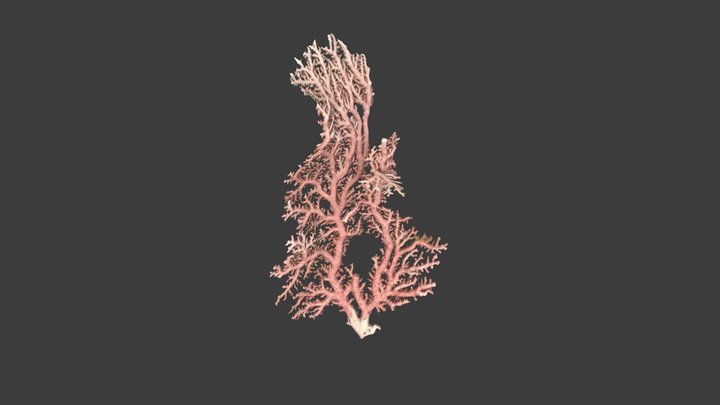
3D model
- Source
- Sketchfab
- Licence
- CC0 Public Domain
- Commercial use
- the licence allows it
Smithsonian Open Access and MorphoSource were not reached for this taxon, so this list is what the others held rather than everything there is.
The description on this site
- Source
- Wikipedia, “Stylaster”
- Licence
- CC BY-SA 4.0
This is what the site found, which is not the same as what exists.
Keep going
What may have been alongside itStylasterina through timeFormations of the EoceneThe world it lived on
Occurrence data from the Paleobiology Database, CC BY 4.0.