Spinatrypa

via iDigBio · CC0 · via iDigBio. May be a photograph of a specimen, or an artist’s reconstruction — an interpretation of a skeleton, since colour and soft tissue are almost never preserved.
On record
Recorded, not inferred- Sits inside
- SpinatrypinaePBDB
- Diet
- suspension feederPBDB, for Atrypida
- Life habit
- epifaunalPBDB, for Atrypida
- Motility
- stationaryPBDB, for Atrypida
- Vision
- blindPBDB, for Rhynchonellata
- Environment
- marinePBDB, for Lophophorata
Time the record covers
At least 107 million years on record.
The record covers at least 430.6 Mya to 323.4 Mya. No occurrence read is dated outside 443.1 Mya to 293.52 Mya.
538 occurrences of Spinatrypa on record, most of them in the Devonian. Bar height is expected occurrences, not a count: each fossil is spread across the span it is dated to, so a tall narrow bar means tight dating and a low wide one means loose.
When
538 occurrences- Silurian2%
- Devonian98%
- Carboniferousunder 1%
- Permianunder 1%
These are dates about fossils, not the animal: the record can only begin after it arose and end before it died out, so either end may reach further. Shares are expected occurrences: a fossil dated to a span is counted partly in each period it straddles. More on what this infers.
Found in
123 formations
- Dawson Bay Formation · Manitoba Group49
- Lime Creek Formation36
- Sly Gap Formation34
- Elm Point Formation · Elk Point Group21
- Moscow Formation · Hamilton Group19
- Chemung Formation17
Loading coastlines…
The named rock units Spinatrypa has been recovered from, largest first. Drawn where the rock is now, not where it formed. 99 further formations hold fewer occurrences each and are not listed. 61 occurrences have no formation on record, which is common for older literature.
Spinatrypa and its relatives
DevonianWhere Spinatrypa and its relatives were recorded in the Devonian.
Found in the same rock
1,277 taxa- Schizophoria45 sites
- Cyrtospirifer40 sites
- Atrypa39 sites
- Gypidula35 sites
- Douvillina33 sites
- Pseudoatrypa devoniana33 sites
- Cyrtina32 sites
- Schuchertella29 sites
- Strophomena (Strophodonta)29 sites
- Crinoidea28 sites
- Productella28 sites
- Ambocoelia23 sites
- Camarotoechia23 sites
- Nervostrophia21 sites
- Cranaena20 sites
- Howellella20 sites
- Leiorhynchus19 sites
- Tenticospirifer19 sites
- Devonoproductus18 sites
- Paracyclas18 sites
- Tylothyris mesacostalis18 sites
- Atrypa reticularis17 sites
- Douvillina arcuata17 sites
- Isorthis17 sites
The Paleobiology Database records 404 sites for Spinatrypa, and this reads 240 of them. The number is how many of those sites it was catalogued from too. The 24 sharing the most are listed.
This is not a list of everything alive at the time. It is only what has come out of the same ground as this animal and been written down.
Entered from
109 references- Using GIS to unlock the interactions between biogeography, environment, and evolution in middle and Late Devonian brachiopods and bivalves133
- Devonian rocks of the Lake Winnipegosis - Lake Manitoba outcrop belt, Manitoba72
- Brachiopod assemblages in the Devonian of Ferques (Boulonnais, France). Relations to palaeoenvironments and global eustatic curves.12
- Faunal signatures of Middle-Upper Devonian depositional sequences and sea level fluctuations in the Iowa Basin: US Midcontinent11
- Lower and Middle Devonian Brachiopod-Dominated Communities of Nevada, and Their Position in a Biofacies-Province-Realm Model11
- The Dynamics of Rapid, Asynchronous Biotic Turnover in the Middle Devonian Appalachian Basin of New York10
- Regional variation and paleontology of two coral beds in the Middle Devonian Hamilton Group of Western New York9
- Tyazheva et al., 19769
- Brachiopodes du Devonien de Ferques (Boulonnais-France)8
- Chostophyllum, a new genus of charactophyllid corals from the Middle Devonian of Western Canada8
- A review of Silurian brachiopods from Gotland8
- The sedimentology and palaeoecology of the Devonian of the Ferques inlier, northern France8
Each of the 538 occurrences read was entered from one of these publications, ordered by how many each accounts for. This is not a search for papers mentioning the name. 97 further references are not listed. Entries link to doi.org where the Paleobiology Database holds an identifier, and to its own record where it does not. Relayed as the Paleobiology Database holds them, not checked against what they resolve to.
Media and terms
Media content2
Picture of Spinatrypa
- Source
- iDigBio
- Credit
- via iDigBio
- Licence
- CC0
- Commercial use
- the licence allows it
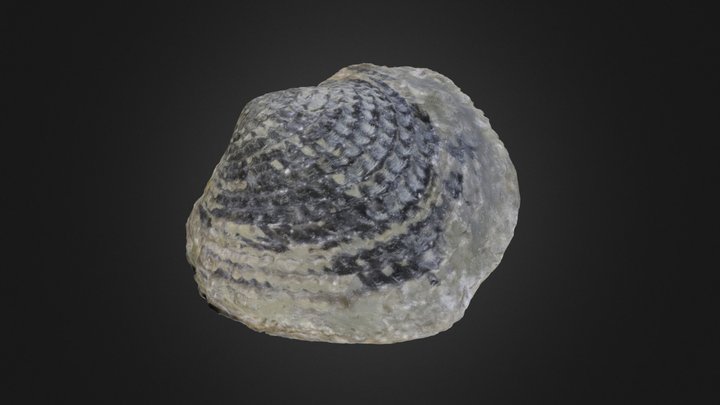
3D model
- Source
- Sketchfab
- Licence
- CC0 Public Domain
- Commercial use
- the licence allows it
Smithsonian Open Access and MorphoSource were not reached for this taxon, so this list is what the others held rather than everything there is.
This is what the site found, which is not the same as what exists.
Keep going
What may have been alongside itSpinatrypinae through timeFormations of the DevonianThe world it lived on
Occurrence data from the Paleobiology Database, CC BY 4.0. Stainbrook 1951