Purussaurus
Purussaurus is a genus of extinct giant caimans that lived in the Americas during the Miocene epoch, from the Friasian to the Huayquerian in the SALMA classification. It is known from skull material found in the Brazilian and Peruvian Amazon, Argentina, Colombian Villavieja Formation, Panamanian Culebra Formation, Urumaco, and Socorro Formations of northern Venezuela.

Tito Aureliano, Aline M. Ghilardi, Edson Guilherme, Jonas P. Souza-Filho, Mauro Cavalcanti, Douglas Riff · CC BY 2.5 · via Wikipedia/Commons. May be a photograph of a specimen, or an artist’s reconstruction — an interpretation of a skeleton, since colour and soft tissue are almost never preserved.
On record
Recorded, not inferred- Sits inside
- JacareaPBDB
- Diet
- carnivorePBDB, for Crocodylia
- Motility
- actively mobilePBDB, for Osteichthyes
- Environment
- marinePBDB, for Mesoeucrocodylia
- Length
- 10.3 mWikidata
- Mass
- 5.16 tonneWikidata
Time the record covers
At least 20 million years on record.
The record covers at least 23.04 Mya to 2.58 Mya. No occurrence read is dated outside 56 Mya to 11.7 ka.
62 occurrences of Purussaurus on record, most of them in the Miocene. Bar height is expected occurrences, not a count: each fossil is spread across the span it is dated to, so a tall narrow bar means tight dating and a low wide one means loose.
When
62 occurrences- Eocene3%
- Oligocene3%
- Miocene91%
- Plioceneunder 1%
- Pleistocene2%
These are dates about fossils, not the animal: the record can only begin after it arose and end before it died out, so either end may reach further. Shares are expected occurrences: a fossil dated to a span is counted partly in each period it straddles. More on what this infers.
Found in
13 formations
- Urumaco Formation18
- Pebas Formation11
- Solimões Formation8
- Solimoes Formation4
- Castillo Formation4
- Culebra Formation2
Loading coastlines…
The named rock units Purussaurus has been recovered from, largest first. Drawn where the rock is now, not where it formed. 7 occurrences have no formation on record, which is common for older literature.
Purussaurus and its relatives
MioceneWhere Purussaurus and its relatives were recorded in the Miocene.
Found in the same rock
260 taxa- Mourasuchus10 sites
- Caimaninae8 sites
- Caiman6 sites
- Crocodyliformes6 sites
- Gavialoidea6 sites
- Gnatusuchus pebasensis6 sites
- Osteichthyes6 sites
- Podocnemididae6 sites
- Testudinata6 sites
- Crocodylia5 sites
- Podocnemis5 sites
- Toxodontidae5 sites
- Characiformes4 sites
- Chelus4 sites
- Chelus colombiana4 sites
- Gryposuchus pachakamue4 sites
- Hydrolycus4 sites
- Mammalia4 sites
- Siluriformes4 sites
- Caiman wannlangstoni3 sites
- Dasyatidae3 sites
- Gavialidae3 sites
- Globidentosuchus brachyrostris3 sites
- Gryposuchus3 sites
The Paleobiology Database records 48 sites for Purussaurus, and this reads all of them. The number is how many of those sites it was catalogued from too. The 24 sharing the most are listed.
This is not a list of everything alive at the time. It is only what has come out of the same ground as this animal and been written down.
Entered from
21 references- The late Miocene caimanine fauna (Crocodylia: Alligatoroidea) of the Urumaco Formation, Venezuela9
- Georeferencing fossiliferous localities from Solimões and Acre Basins (Brazil) -what we know so far about Solimões Formation and future perspectives8
- Crocodylian diversity peak and extinction in the late Cenozoic of the northern Neotropics5
- Fossil crocodilians from Colombia and the Cenozoic history of the Crocodilia in South America5
- Lower Miocene alligatoroids (Crocodylia) from the Castillo Formation, northwest of Venezuela4
- A 60-million-year Cenozoic history of western Amazonian ecosystems in Contamana, eastern Peru4
- A Miocene hyperdiverse crocodylian community reveals peculiar trophic dynamics in proto-Amazonian mega-wetlands4
- A new giant Purussaurus (Crocodyliformes, Alligatoridae) from the Upper Miocene Urumaco Formation, Venezuela4
- A historical vertebrate collection from the Middle Miocene of the Peruvian Amazon3
- The Acre vertebrate fauna: Age, diversity, and geography3
- Systematics and biogeography of crocodylians from the Miocene of Panama2
- Middle Miocene crocodiles from the Fitzcarrald Arch, Amazonian Peru2
Each of the 62 occurrences read was entered from one of these publications, ordered by how many each accounts for. This is not a search for papers mentioning the name. 9 further references are not listed. Entries link to doi.org where the Paleobiology Database holds an identifier, and to its own record where it does not. Relayed as the Paleobiology Database holds them, not checked against what they resolve to.
Media and terms
Media content2

Picture of Purussaurus
- Source
- Wikipedia/Commons
- Credit
- Tito Aureliano, Aline M. Ghilardi, Edson Guilherme, Jonas P. Souza-Filho, Mauro Cavalcanti, Douglas Riff
- Licence
- CC BY 2.5
- Commercial use
- the licence allows it
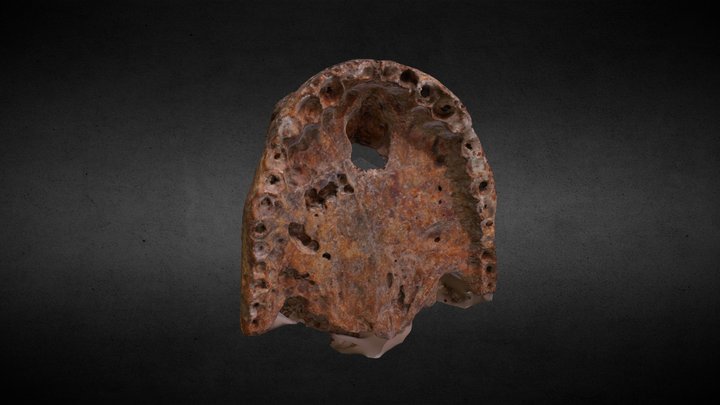
3D model
- Source
- Sketchfab
- Credit
- Digital Dinosaurs
- Licence
- CC Attribution-NonCommercial-NoDerivs
- Commercial use
- the licence does not allow it
Smithsonian Open Access and MorphoSource were not reached for this taxon, so this list is what the others held rather than everything there is.
The description on this site
- Source
- Wikipedia, “Purussaurus”
- Licence
- CC BY-SA 4.0
This is what the site found, which is not the same as what exists.
Keep going
What may have been alongside itJacarea through timeFormations of the MioceneThe world it lived on
Occurrence data from the Paleobiology Database, CC BY 4.0. Barbosa Rodrigues 1892