Polistes
Polistes is a cosmopolitan genus of paper wasps and the only genus in the tribe Polistini. Vernacular names for the genus include umbrella wasps, coined by Walter Ebeling in 1975 to distinguish it from other types of paper wasp, in reference to the form of their nests, and umbrella paper wasps. Polistes is the single largest genus within the family Vespidae, with over 200 recognized species. Their innate preferences for nest-building sites leads them to commonly build nests on human habitation, where they can be very unwelcome; although generally not aggressive, they can be provoked into defending their nests. All species are predatory, and they may consume large numbers of caterpillars, in which respect they are generally considered beneficial.

Alvesgaspar · CC BY-SA 3.0 · via Wikipedia/Commons. May be a photograph of a specimen, or an artist’s reconstruction — an interpretation of a skeleton, since colour and soft tissue are almost never preserved.
On record
Recorded, not inferred- Sits inside
- PolistiniPBDB
- Motility
- actively mobilePBDB, for Arthropoda
- Environment
- terrestrialPBDB, for Insecta
Time the record covers
At least 58 million years on record.
The record covers at least 59.24 Mya to 774 ka. No occurrence read is dated outside 61.66 Mya to 129 ka.
10 occurrences of Polistes on record, most of them in the Eocene. The Paleobiology Database records this as a living group, and the chart stops with its fossils rather than at the present. Bar height is expected occurrences, not a count: each fossil is spread across the span it is dated to, so a tall narrow bar means tight dating and a low wide one means loose.
When
10 occurrences- Paleocene10%
- Eocene30%
- Oligocene20%
- Miocene30%
- Pleistocene10%
These are dates about fossils, not the animal: the record can only begin after it arose and end before it died out, so either end may reach further. Shares are expected occurrences: a fossil dated to a span is counted partly in each period it straddles. More on what this infers.
Found in
5 formations
- Upper Freshwater-Molasse Formation2
- Menat Formation1
- Campagne-Calavon Formation1
- Rott Formation1
- Miyajima Formation · Shiobara Group1
Loading coastlines…
The named rock units Polistes has been recovered from, largest first. Drawn where the rock is now, not where it formed. 4 occurrences have no formation on record, which is common for older literature.
Polistes and its relatives
EoceneWhere Polistes and its relatives were recorded in the Eocene.
Found in the same rock
807 taxa- Coleoptera4 sites
- Hemiptera3 sites
- Apis (Synapis) henshawi2 sites
- Bibio2 sites
- Bibionidae2 sites
- Cercopis2 sites
- Corixidae2 sites
- Curculionidae2 sites
- Dilophus2 sites
- Gubuzhu orientalis2 sites
- Hydrophilidae2 sites
- Nangamostethos tibetense2 sites
- Tettigoniidae2 sites
- Tipula2 sites
- Acalyptratae1 site
- Acanthocryptus bischoffi1 site
- Acanthoderes1 site
- Acmaeodera antholitha1 site
- Acmaeodera brevicollis1 site
- Acoenites statzi1 site
- Acrididae1 site
- Adipterites obovatus1 site
- Aeshna1 site
- Aetalion oligocaenica1 site
The Paleobiology Database records 9 sites for Polistes, and this reads all of them. The number is how many of those sites it was catalogued from too. The 24 sharing the most are listed.
This is not a list of everything alive at the time. It is only what has come out of the same ground as this animal and been written down.
Entered from
8 references- Paper wasps (Hymenoptera: Vespidae, Polistinae) from Xiede (Eocene, central Tibetan Plateau): systematics and paleoecological implications3
- A fossil paper wasp (Vespidae: Polistinae) from the Chibanian (Middle Pleistocene) Shiobara Group in Tochigi Prefecture, Japan1
- Piton, 19401
- Les insectes fossiles des terrains oligocènes de France1
- Ueber alte und neue fossile Hymenopterenfunde aus den Tertiaren Ablagerungen von Rott am Siebengebirge1
- Miocene fossil insects1
- Heer, 18641
- Heer, 18491
Each of the 10 occurrences read was entered from one of these publications, ordered by how many each accounts for. This is not a search for papers mentioning the name. Entries link to doi.org where the Paleobiology Database holds an identifier, and to its own record where it does not. Relayed as the Paleobiology Database holds them, not checked against what they resolve to.
Media and terms
Media content3
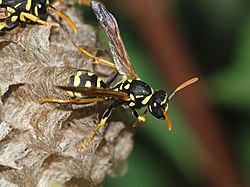
Picture of Polistes
- Source
- Wikipedia/Commons
- Credit
- Alvesgaspar
- Licence
- CC BY-SA 3.0
- Commercial use
- the licence allows it
Photogrammetry
- Source
- MorphoSource
- Licence
- not stated by the source
- Commercial use
- cannot be read from the licence given — check the record
- Specimen
- Polistes Polistes spilophorus · ETHZ:ENT:0540981
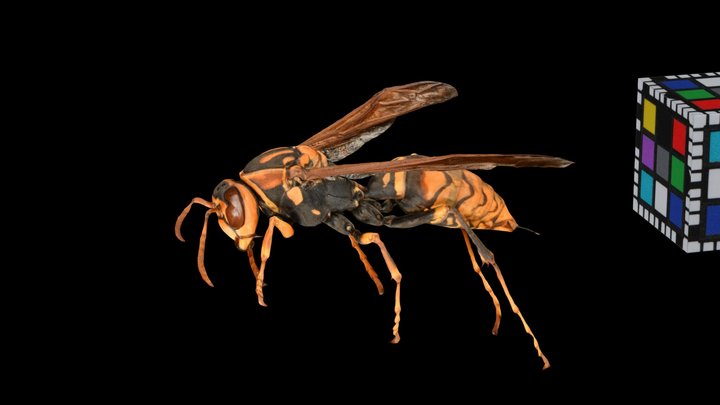
3D model
- Source
- Sketchfab
- Licence
- CC0 Public Domain
- Commercial use
- the licence allows it
Smithsonian Open Access was not reached for this taxon, so this list is what the others held rather than everything there is.
The description on this site
- Source
- Wikipedia, “Polistes”
- Licence
- CC BY-SA 4.0
This is what the site found, which is not the same as what exists.
Keep going
What may have been alongside itPolistini through timeFormations of the EoceneThe world it lived on
Occurrence data from the Paleobiology Database, CC BY 4.0. Latreille 1802