Pelecanoides
The diving petrels form a genus, Pelecanoides, of seabirds in the family Procellariidae. There are four very similar species of diving petrels, distinguished only by small differences in the coloration of their plumage, habitat, and bill construction. They are only found in the southern hemisphere. The diving petrels were formerly placed in their own family, the Pelecanoididae.

Uncredited · CC BY-SA 3.0 · via Wikipedia/Commons. May be a photograph of a specimen, or an artist’s reconstruction — an interpretation of a skeleton, since colour and soft tissue are almost never preserved.
On record
Recorded, not inferred- Also called
- diving-petrelPBDB
- Sits inside
- ProcellariidaePBDB
- Diet
- carnivorePBDB, for Coelurosauria
- Life habit
- ground dwelling, solitaryPBDB, for Theropoda
- Motility
- actively mobilePBDB, for Theropoda
- Environment
- marinePBDB, for Procellariiformes
Time the record covers
At least 15 million years on record.
The record covers at least 15.9 Mya to 11.7 ka. No occurrence read is dated outside 18.7 Mya to 0 Mya.
45 occurrences of Pelecanoides on record. The Paleobiology Database records this as a living group. Bar height is expected occurrences, not a count: each fossil is spread across the span it is dated to, so a tall narrow bar means tight dating and a low wide one means loose.
When
45 occurrences- Miocene4%
- Pliocene2%
- Pleistocene9%
- Holocene84%
These are dates about fossils, not the animal: the record can only begin after it arose and end before it died out, so either end may reach further. Shares are expected occurrences: a fossil dated to a span is counted partly in each period it straddles. More on what this infers.
Found in
4 formations
- Hillgrove Formation4
- Bannockburn Formation · Manuherikia Group1
- Varswater Formation1
- Double Corner Shell Beds Formation1
Loading coastlines…
The named rock units Pelecanoides has been recovered from, largest first. Drawn where the rock is now, not where it formed. 38 occurrences have no formation on record, which is common for older literature.
Found in the same rock
240 taxa- Ardenna grisea10 sites
- Pachyptila turtur10 sites
- Cyanoramphus9 sites
- Coturnix novaezelandiae8 sites
- Eudyptula minor8 sites
- Gallirallus australis8 sites
- Prosthemadera novaeseelandiae8 sites
- Anthus novaeseelandiae7 sites
- Larus dominicanus7 sites
- Hemiphaga novaeseelandiae6 sites
- Pelagodroma marina6 sites
- Phalacrocorax punctatus6 sites
- Puffinus6 sites
- Sceloglaux albifacies6 sites
- Tadorna variegata6 sites
- Anas chlorotis5 sites
- Apteryx australis5 sites
- Callaeas cinereus5 sites
- Chenonetta finschi5 sites
- Corvus moriorum5 sites
- Gallinula hodgenorum5 sites
- Haematopus unicolor5 sites
- Nestor meridionalis5 sites
- Pachyptila5 sites
The Paleobiology Database records 43 sites for Pelecanoides, and this reads all of them. The number is how many of those sites it was catalogued from too. The 24 sharing the most are listed.
This is not a list of everything alive at the time. It is only what has come out of the same ground as this animal and been written down.
Entered from
15 references- Analyses of phenotypic differentiations among South Georgian Diving Petrel (Pelecanoides georgicus) populations reveal an undescribed and highly endangered species from New Zealand22
- Late-Pleistocene avifaunas from Cape Wanbrow, Otago, South Island, New Zealand4
- Quaternary fossil fauna of South Canterbury, South Island, New Zealand4
- Holocene fossil bird remains from subantarctic Macquarie Island2
- A remarkable fossil and archaeological avifauna from Marfells Beach, Lake Grassmere, South Island, New Zealand2
- Bird extinctions and fossil bones from Mangere Island, Chatham Islands2
- Mid-Holocene Falkland Islands bird bones from a peat deposit, including a new species of caracara1
- South Georgian diving petrel (Pelecanoides georgicus) bones from a Maori midden on Otago Peninsula, New Zealand1
- Miocene waterfowl and other birds from central Otago, New Zealand1
- A fossil diving petrel (Aves: Pelecanoididae) from the mid-Miocene of North Canterbury, New Zealand1
- The history of the Chatham Islands' bird fauna of the last 7000 years - a chronicle of change and extinction1
- The fossil avifauna of Amsterdam Island, Indian Ocean1
Each of the 45 occurrences read was entered from one of these publications, ordered by how many each accounts for. This is not a search for papers mentioning the name. 3 further references are not listed. Entries link to doi.org where the Paleobiology Database holds an identifier, and to its own record where it does not. Relayed as the Paleobiology Database holds them, not checked against what they resolve to.
Media and terms
Media content3

Picture of Pelecanoides
- Source
- Wikipedia/Commons
- Credit
- nobody named on the record
- Licence
- CC BY-SA 3.0
- Commercial use
- the licence allows it
CT scan
- Source
- MorphoSource
- Licence
- not stated by the source
- Commercial use
- cannot be read from the licence given — check the record
- Specimen
- Pelecanoides urinatrix · l-jz:JZ:23
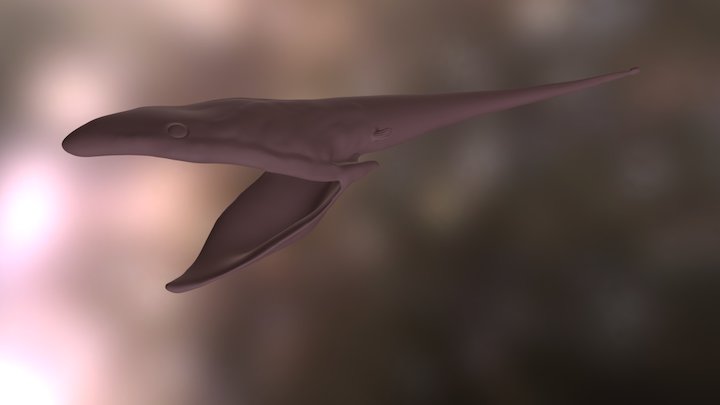
3D model
- Source
- Sketchfab
- Credit
- SpaceGolby
- Licence
- CC Attribution
- Commercial use
- cannot be read from the licence given — check the record
Smithsonian Open Access was not reached for this taxon, so this list is what the others held rather than everything there is.
The description on this site
- Licence
- CC BY-SA 4.0
This is what the site found, which is not the same as what exists.
Keep going
What may have been alongside itProcellariidae through timeThe world it lived on
Occurrence data from the Paleobiology Database, CC BY 4.0. Lacépède 1799