Pectinid sp.
No picture of Pectinid sp. was found. Wikidata was searched and had none. iDigBio and GBIF were not searched: the Paleobiology Database does not place Pectinid sp. firmly enough to tell it from something else bearing the same name, and a search on the name alone returns whichever of them was photographed. Wikipedia and Smithsonian Open Access did not answer, so this is what the others held rather than everything there is.
Time the record covers
At least 375 million years on record.
The record covers at least 382.31 Mya to 7.246 Mya. No occurrence read is dated outside 387.95 Mya to 5.333 Mya.
11 occurrences of Pectinid sp. on record, most of them in the Devonian. Bar height is expected occurrences, not a count: each fossil is spread across the span it is dated to, so a tall narrow bar means tight dating and a low wide one means loose.
When
11 occurrences- Devonian27%
- Late Triassic18%
- Early Jurassic9%
- Late Jurassic18%
- Oligocene7%
- Miocene20%
These are dates about fossils, not the animal: the record can only begin after it arose and end before it died out, so either end may reach further. Shares are expected occurrences: a fossil dated to a span is counted partly in each period it straddles. More on what this infers.
Found in
4 formations
- Moscow Formation · Hamilton Group3
- Martin Bridge Limestone Formation2
- Hauberg Mountains Formation · Latady Group1
- Chagres Sandstone Formation1
Loading coastlines…
The named rock units Pectinid sp. has been recovered from, largest first. Drawn where the rock is now, not where it formed. 4 occurrences have no formation on record, which is common for older literature.
Pectinid sp. and its relatives
DevonianWhere Pectinid sp. and its relatives were recorded in the Devonian.
Found in the same rock
152 taxa- <Pectinid>5 sites
- Echinolampas2 sites
- Entolium (Entolium) corneolum2 sites
- Eupatagus2 sites
- Lovenia2 sites
- Plagiostoma2 sites
- Plicatula2 sites
- Scutella2 sites
- <Arcoid>1 site
- <bryzoan>1 site
- <conical burrow>1 site
- <indet.>1 site
- <Nuculoid>1 site
- Acesta1 site
- Actinostreon1 site
- Actinostreon gregarea1 site
- Ambocoelia umbonata1 site
- Amplexiphyllum1 site
- Ampullina1 site
- Anisocardia1 site
- Anoptychia oregonensis1 site
- Antiquilima1 site
- Astarte1 site
- Astraeospongium1 site
The Paleobiology Database records 7 sites for Pectinid sp., and this reads all of them. The number is how many of those sites it was catalogued from too. The 24 sharing the most are listed.
This is not a list of everything alive at the time. It is only what has come out of the same ground as this animal and been written down.
Entered from
7 references- Regional variation and paleontology of two coral beds in the Middle Devonian Hamilton Group of Western New York3
- A new late Oligocene to early Miocene species of Apatopygus (Echinoidea: Cassiduloida) from the Maltese Islands2
- Late Triassic Bivalves of the Martin Bridge Limestone, Hells Canyon, Oregon: Taphonomy, Paleoecology, Paleozoogeography2
- Palaeoecology and depositional environments of the Tendaguru Beds (Late Jurassic to Early Cretaceous, Tanzania)1
- A paleobiotic survey of Caribbean faunas from the Neogene of the Isthmus of Panama1
- Late Jurassic (Kimmeridgian-Tithonian) macrofossil assemblage from Jason Peninsula, Graham Land: evidence for a significant northward extension of the Latady Formation1
- Palokologie und zeitliche Verbreitung benthischer Faunengemeinschaften im Unterjura von Chile1
Each of the 11 occurrences read was entered from one of these publications, ordered by how many each accounts for. This is not a search for papers mentioning the name. Entries link to doi.org where the Paleobiology Database holds an identifier, and to its own record where it does not. Relayed as the Paleobiology Database holds them, not checked against what they resolve to.
Media and terms
Media content1
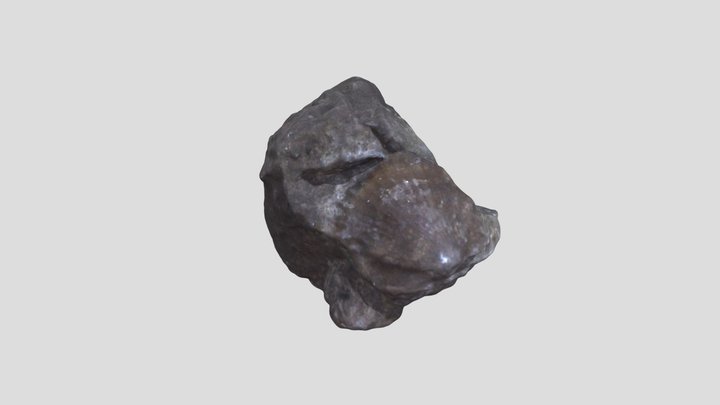
3D model
- Source
- Sketchfab
- Credit
- Chapel_Prints_CO
- Licence
- CC Attribution
- Commercial use
- cannot be read from the licence given — check the record
No picture of Pectinid sp. was found. Wikidata was searched and had none.
iDigBio and GBIF were not searched: the Paleobiology Database does not place Pectinid sp. firmly enough to tell it from something else bearing the same name, and a search on the name alone returns whichever of them was photographed.
Wikipedia and Smithsonian Open Access did not answer, so this is what the others held rather than everything there is.
Smithsonian Open Access and MorphoSource were not reached for this taxon, so this list is what the others held rather than everything there is.
This is what the site found, which is not the same as what exists.
Keep going
What may have been alongside itFormations of the DevonianThe world it lived on
Occurrence data from the Paleobiology Database, CC BY 4.0.