Eupatagus
Euptagus is a genus of sea urchins. It is in the family Eupatagidae.

James St. John · CC BY 2.0 · via Wikipedia/Commons. May be a photograph of a specimen, or an artist’s reconstruction — an interpretation of a skeleton, since colour and soft tissue are almost never preserved.
On record
Recorded, not inferred- Sits inside
- BrissidaePBDB
- Diet
- deposit feeder, detritivorePBDB, for Spatangoida
- Life habit
- shallow infaunalPBDB, for Spatangoida
- Motility
- slow-movingPBDB, for Spatangoida
- Vision
- limitedPBDB, for Echinoidea
- Environment
- marinePBDB, for Spatangoida
Time the record covers
At least 36 million years on record.
The record covers at least 48.07 Mya to 11.63 Mya. No occurrence read is dated outside 56 Mya to 5.333 Mya.
74 occurrences of Eupatagus on record, most of them in the Eocene. The Paleobiology Database records this as a living group, and the chart stops with its fossils rather than at the present. Bar height is expected occurrences, not a count: each fossil is spread across the span it is dated to, so a tall narrow bar means tight dating and a low wide one means loose.
When
74 occurrencesThese are dates about fossils, not the animal: the record can only begin after it arose and end before it died out, so either end may reach further. Shares are expected occurrences: a fossil dated to a span is counted partly in each period it straddles. More on what this infers.
Found in
34 formations
- Castle Hayne Formation8
- Moodys Branch Formation4
- Inglis Limestone Formation · Ocala Group4
- Ocala Formation4
- Maniyara Fort Formation4
- Glen Massey Formation4
Loading coastlines…
The named rock units Eupatagus has been recovered from, largest first. Drawn where the rock is now, not where it formed. 10 further formations hold fewer occurrences each and are not listed. 14 occurrences have no formation on record, which is common for older literature.
Eupatagus and its relatives
EoceneWhere Eupatagus and its relatives were recorded in the Eocene.
Found in the same rock
475 taxa- Echinolampas9 sites
- Periarchus lyelli7 sites
- Cidaris pratti6 sites
- Ostrea6 sites
- Schizaster6 sites
- Oligopygus haldermani5 sites
- Velates perversus5 sites
- Venericardia5 sites
- Chlamys4 sites
- Chlamys nupera4 sites
- Echinocyamus4 sites
- Echinocyamus vaughani4 sites
- Rhyncholampas4 sites
- Chama3 sites
- Chlamys deshayesii3 sites
- Conus3 sites
- Euspatangus clevei3 sites
- Fibularia alabamensis3 sites
- Linthia hanoverensis3 sites
- Lovenia3 sites
- Neolaganum3 sites
- Periarchus3 sites
- Scutella3 sites
- Striatolamia macrota3 sites
The Paleobiology Database records 56 sites for Eupatagus, and this reads all of them. The number is how many of those sites it was catalogued from too. The 24 sharing the most are listed.
This is not a list of everything alive at the time. It is only what has come out of the same ground as this animal and been written down.
Entered from
35 references- The Echinoids of the Middle Eocene Warley Hill Formation, Santee Limestone, and Castle Hayne Limestone of North and South Carolina8
- Cenozoic Spatangoid Echinoids from New Zealand8
- Nuevos Equinidos fosiles de la fauna Cubana7
- Stratigraphic Distribution of Paleocene and Eocene Fossils in the Eastern Gulf Coast Region6
- Cyclone trends constrain monsoon variability during late Oligocene sea level highstands (Kachchh Basin, NW India)4
- Cenozoic irregular echinoids of the Eastern United States4
- A new late Oligocene to early Miocene species of Apatopygus (Echinoidea: Cassiduloida) from the Maltese Islands3
- The echinoid fauna from Japan and adjacent regions, Part II3
- Two new Middle Miocene spatangoids (Echinoidea) from the Murray Basin, South Australia2
- Diversity patterns and biostratigraphy of Cenozoic echinodems from Florida2
- Fossil Echinoidea from the Barton Beds (Eocene, Bartonian) of the type locality at Barton-on-Sea in the Hampshire Basin, England2
- The Mesozoic and Cenozoic Echinodermata of the United States2
Each of the 74 occurrences read was entered from one of these publications, ordered by how many each accounts for. This is not a search for papers mentioning the name. 23 further references are not listed. Entries link to doi.org where the Paleobiology Database holds an identifier, and to its own record where it does not. Relayed as the Paleobiology Database holds them, not checked against what they resolve to.
Media and terms
Media content3

Picture of Eupatagus
- Source
- Wikipedia/Commons
- Credit
- James St. John
- Licence
- CC BY 2.0
- Commercial use
- the licence allows it
CT scan
- Source
- MorphoSource
- Licence
- not stated by the source
- Commercial use
- cannot be read from the licence given — check the record
- Specimen
- Eupatagus antillarum · UF:IP:1154
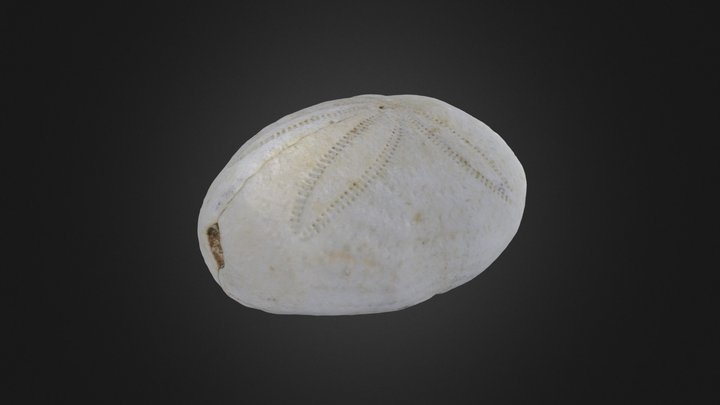
3D model
- Source
- Sketchfab
- Licence
- CC0 Public Domain
- Commercial use
- the licence allows it
Smithsonian Open Access was not reached for this taxon, so this list is what the others held rather than everything there is.
The description on this site
- Source
- Wikipedia, “Eupatagus”
- Licence
- CC BY-SA 4.0
This is what the site found, which is not the same as what exists.
Keep going
What may have been alongside itBrissidae through timeFormations of the EoceneThe world it lived on
Occurrence data from the Paleobiology Database, CC BY 4.0. (Agassiz 1847)