Pachycephalosauridae
Pachycephalosauria is a clade of ornithischian dinosaurs. Along with Ceratopsia, it makes up the clade Marginocephalia. Pachycephalosaurs lived exclusively in the Northern Hemisphere during the Cretaceous period, with all members being found in North America and Asia. They were all bipedal, herbivorous/omnivorous animals with thick skulls. Skulls can be domed, flat, or wedge-shaped depending on the species, and are all heavily ossified. The domes were often surrounded by nodes and/or spikes. Partial skeletons have been found of several pachycephalosaur species, but to date no complete skeletons have been discovered. Often isolated skull fragments are the only bones that are found.

PaleoNeolitic (montage creator) Lewis Kelly Tylwyth Eldar Momotarou2012 FunkMonk · CC BY 4.0 · via Wikipedia/Commons. May be a photograph of a specimen, or an artist’s reconstruction — an interpretation of a skeleton, since colour and soft tissue are almost never preserved.
On record
Recorded, not inferred- Sits inside
- PachycephalosauriaPBDB
- Diet
- herbivorePBDB, for Ornithischia
- Life habit
- ground dwelling, gregariousPBDB, for Ornithischia
- Motility
- actively mobilePBDB, for Ornithischia
- Environment
- terrestrialPBDB, for Ornithischia
Time the record covers
At least 11 million years on record.
The record covers at least 83.6 Mya to 72.2 Mya. No occurrence read is dated outside 100.5 Mya to 66 Mya.
79 occurrences of Pachycephalosauridae on record, most of them in the Late Cretaceous. Bar height is expected occurrences, not a count: each fossil is spread across the span it is dated to, so a tall narrow bar means tight dating and a low wide one means loose.
When
79 occurrences- Late Cretaceous100%
These are dates about fossils, not the animal: the record can only begin after it arose and end before it died out, so either end may reach further. Shares are expected occurrences: a fossil dated to a span is counted partly in each period it straddles. More on what this infers.
Found in
22 formations
- Oldman Formation · Belly River Group13
- Hell Creek Formation · Montana Group10
- Dinosaur Park Formation · Belly River Group10
- Aguja Formation7
- Foremost Formation · Belly River Group7
- Two Medicine Formation · Montana Group5
Loading coastlines…
The named rock units Pachycephalosauridae has been recovered from, largest first. Drawn where the rock is now, not where it formed. 4 occurrences have no formation on record, which is common for older literature.
Pachycephalosauridae and its relatives
Late CretaceousWhere Pachycephalosauridae and its relatives were recorded in the Late Cretaceous.
Found in the same rock
332 taxa- Hadrosauridae39 sites
- Ceratopsidae28 sites
- Multituberculata24 sites
- Anura23 sites
- Aves22 sites
- Baenidae22 sites
- Opisthotriton kayi22 sites
- Saurornitholestes langstoni22 sites
- Scapherpeton tectum22 sites
- Chelydridae21 sites
- Theropoda21 sites
- Tyrannosauridae21 sites
- Crocodylia19 sites
- Myledaphus bipartitus19 sites
- Paronychodon19 sites
- Teleostei19 sites
- Coriops amnicolus18 sites
- Trionychidae17 sites
- Champsosaurus16 sites
- Paralbula casei16 sites
- Lepisosteus15 sites
- Ankylosauridae14 sites
- Ankylosauria13 sites
- Holostei13 sites
The Paleobiology Database records 76 sites for Pachycephalosauridae, and this reads all of them. The number is how many of those sites it was catalogued from too. The 24 sharing the most are listed.
This is not a list of everything alive at the time. It is only what has come out of the same ground as this animal and been written down.
Entered from
38 references- The paleogeographic and stratigraphic distribution of ceratopsids (Ornithischia) in the Upper Judith River Group of western Canada12
- Vertebrate microsite assemblages (exclusive of mammals) from the Foremost and Oldman Formations of the Judith River Group (Campanian) of southeastern Alberta: an illustrated guide9
- The Cretaceous genus Stegoceras typifying a new family referred provisionally to the Stegosauria5
- The first pachycephalosaurid from the Late Cretaceous Two Medicine Formation: effects of the Western Interior Seaway on North American pachycephalosaurid evolution4
- Revision of the dinosaur Stegoceras Lambe (Ornithischia, Pachycephalosauridae)4
- A new genus of derived pachycephalosaurian from western North America3
- Late Campanian southern dinosaurs, Aguja Formation, Big Bend, Texas3
- An unusual microsite from the Upper Cretaceous Horseshoe Canyon Formation of Alberta, Canada2
- Two new species of small-bodied pachycephalosaurine (Dinosauria, Marginocephalia) from the uppermost Cretaceous of North America suggest hidden diversity in well-sampled formations2
- Pachycephalosauridae from the San Carlos and Aguja Formations (Upper Cretaceous) of West Texas, and observations of the frontoparietal dome2
- Texacephale langstoni, a new genus of pachycephalosaurid (Dinosauria: Ornithischia) from the upper Campanian Aguja Formation, southern Texas, USA2
- Comparative taphonomy and paleoecological reconstruction of two microvertebrate accumulations from the Late Cretaceous Hell Creek Formation (Maastrichtian), eastern Montana2
Each of the 79 occurrences read was entered from one of these publications, ordered by how many each accounts for. This is not a search for papers mentioning the name. 26 further references are not listed. Entries link to doi.org where the Paleobiology Database holds an identifier, and to its own record where it does not. Relayed as the Paleobiology Database holds them, not checked against what they resolve to.
Media and terms
Media content3

Picture of Pachycephalosauridae
- Source
- Wikipedia/Commons
- Credit
- PaleoNeolitic (montage creator) Lewis Kelly Tylwyth Eldar Momotarou2012 FunkMonk
- Licence
- CC BY 4.0
- Commercial use
- the licence allows it
Photogrammetry
- Source
- MorphoSource
- Licence
- not stated by the source
- Commercial use
- cannot be read from the licence given — check the record
- Specimen
- Pachycephalosauridae indet. · CMN:CMNFV:22039
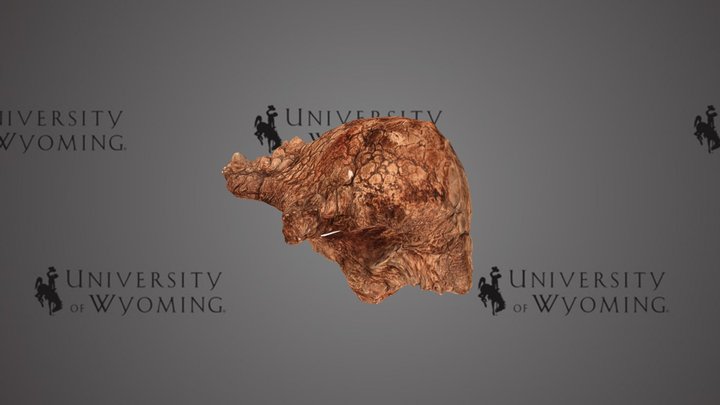
3D model
- Source
- Sketchfab
- Licence
- CC Attribution-NonCommercial
- Commercial use
- the licence does not allow it
The description on this site
- Licence
- CC BY-SA 4.0
This is what the site found, which is not the same as what exists.
Keep going
What may have been alongside itPachycephalosauria through timeFormations of the Late CretaceousThe world it lived on
Occurrence data from the Paleobiology Database, CC BY 4.0. Sternberg 1945