Ostrea (Ostrea)
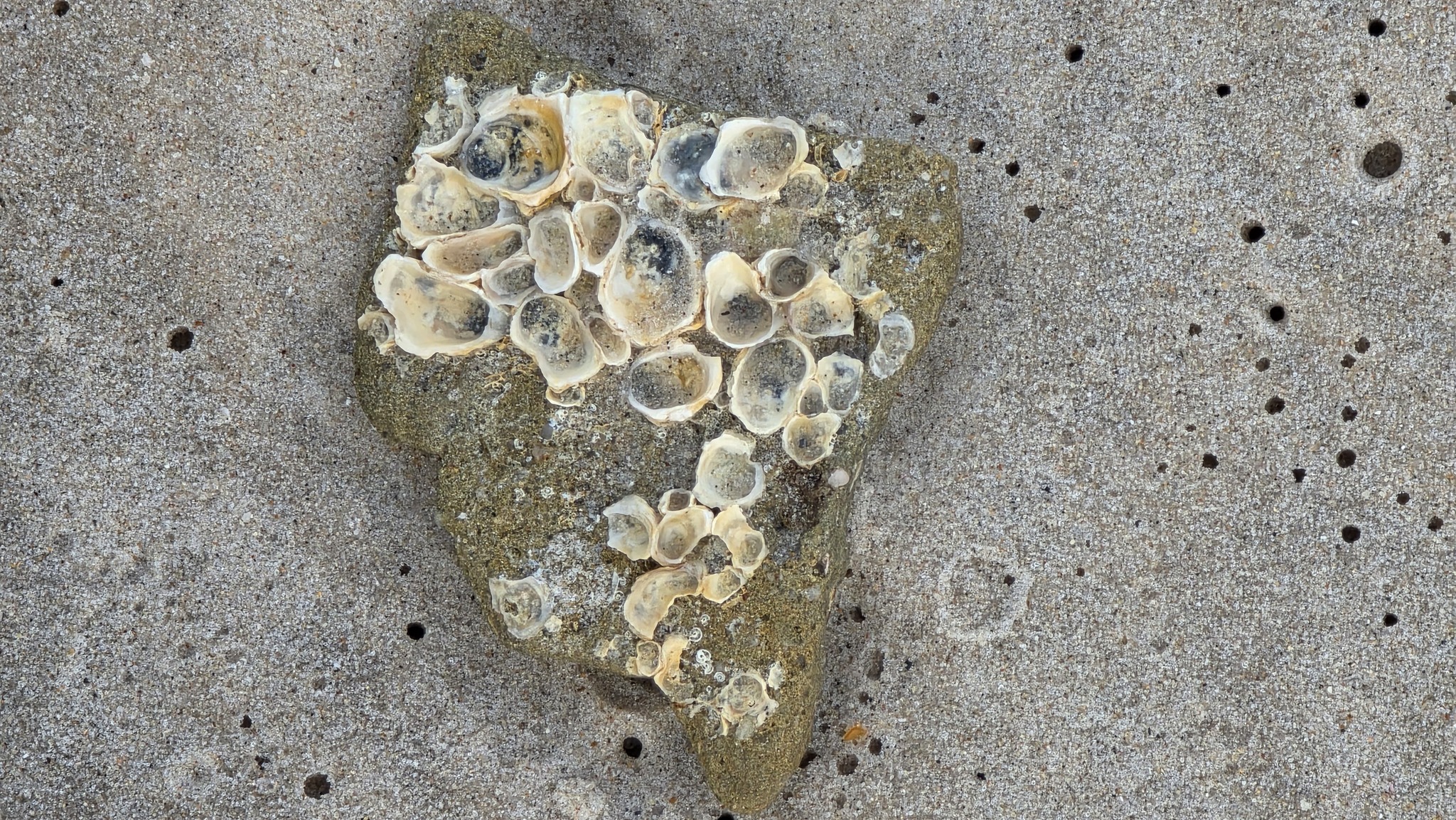
Johanna Williams · CC BY-NC 4.0 · via GBIF. May be a photograph of a specimen, or an artist’s reconstruction — an interpretation of a skeleton, since colour and soft tissue are almost never preserved.
On record
Recorded, not inferred- Sits inside
- OstreaPBDB
- Diet
- suspension feederPBDB, for Ostreidae
- Life habit
- epifaunalPBDB, for Ostreidae
- Motility
- stationary, attachedPBDB, for Ostreidae
- Vision
- blindPBDB, for Bivalvia
- Environment
- hypersaline,marine,brackishPBDB, for Ostreidae
Time the record covers
At least 69 million years on record.
The record covers at least 72.2 Mya to 2.58 Mya. No occurrence read is dated outside 83.6 Mya to 11.7 ka.
124 occurrences of Ostrea (Ostrea) on record, most of them in the Pliocene. The Paleobiology Database records this as a living group. Bar height is expected occurrences, not a count: each fossil is spread across the span it is dated to, so a tall narrow bar means tight dating and a low wide one means loose.
When
124 occurrences- Late Cretaceous2%
- Paleocene19%
- Eocene19%
- Oligocene2%
- Miocene25%
- Pliocene27%
- Pleistocene6%
These are dates about fossils, not the animal: the record can only begin after it arose and end before it died out, so either end may reach further. Shares are expected occurrences: a fossil dated to a span is counted partly in each period it straddles. More on what this infers.
Found in
34 formations
- Pancho Rico Formation17
- Indio Formation · Wilcox Group9
- Crystal River Limestone Formation · Ocala Group8
- Etchegoin Formation8
- Marthaville Formation · Wilcox Group7
- Black Mingo Formation6
Loading coastlines…
The named rock units Ostrea (Ostrea) has been recovered from, largest first. Drawn where the rock is now, not where it formed. 10 further formations hold fewer occurrences each and are not listed. 24 occurrences have no formation on record, which is common for older literature.
Ostrea (Ostrea) and its relatives
PlioceneWhere Ostrea (Ostrea) and its relatives were recorded in the Pliocene.
Found in the same rock
979 taxa- Chlamys13 sites
- Amusium12 sites
- Lyropecten terminus12 sites
- Anadara trilineata11 sites
- Turritella11 sites
- Calyptraea filosa10 sites
- Anadara9 sites
- Leporimetis obesa9 sites
- Calicantharus kettlemanensis8 sites
- Patinopecten lohri8 sites
- Turritella vanvlecki8 sites
- Anomia7 sites
- Balanus gregarius7 sites
- Macoma nasuta7 sites
- Balanus6 sites
- Caesia californiana6 sites
- Glossaulax reclusiana6 sites
- Glycymeris (Glycymeris)6 sites
- Nuculana6 sites
- Pitar6 sites
- Tonna6 sites
- Tresus nuttallii6 sites
- Cardita5 sites
- Cardium5 sites
The Paleobiology Database records 79 sites for Ostrea (Ostrea), and this reads all of them. The number is how many of those sites it was catalogued from too. The 24 sharing the most are listed.
This is not a list of everything alive at the time. It is only what has come out of the same ground as this animal and been written down.
Entered from
32 references- Catalogue of the Paleocene and Eocene mollusca of the southern and eastern United States. Part 1. Pelecypoda, Amphineura, Pteropoda, Scaphopoda and Cephalopoda18
- Pancho Rico Formation, Salinas Valley17
- Die Mollusken des Pliozäns von Boemiajoe (Java)13
- Mollusca of the Tertiary formations of Northeastern Mexico9
- The Etchegoin Pliocene of middle California9
- Skwarko, 19947
- Geology of the Coastal Plain of South Carolina6
- New anadarid and associated molluscan fauna from the Haneji Formation, Okinawa-jima, Ryukyu Islands4
- Late Cenozoic pelecypods from northern Venezuela4
- Summary of the geology and paleontology of the Atsumi Peninsula, Aichi Prefecture, Japan4
- Unpublished census data from Atlantic coastal plain and circum-Caribbean Neogene assemblages and taxonomic opinions3
- Changes in Late Cretaceous - early Tertiary benthic marine assemblages: analyses from the North American coastal plain shallow-shelf3
Each of the 124 occurrences read was entered from one of these publications, ordered by how many each accounts for. This is not a search for papers mentioning the name. 20 further references are not listed. Entries link to doi.org where the Paleobiology Database holds an identifier, and to its own record where it does not. Relayed as the Paleobiology Database holds them, not checked against what they resolve to.
Media and terms
Media content3
Picture of Ostrea (Ostrea)
- Source
- GBIF
- Credit
- Johanna Williams
- Licence
- CC BY-NC 4.0
- Commercial use
- the licence does not allow it
CT scan
- Source
- MorphoSource
- Licence
- In Copyright
- Commercial use
- cannot be read from the licence given — check the record
- Specimen
- Ostrea stentina · FMNH:Invertebrate Zoology:279417
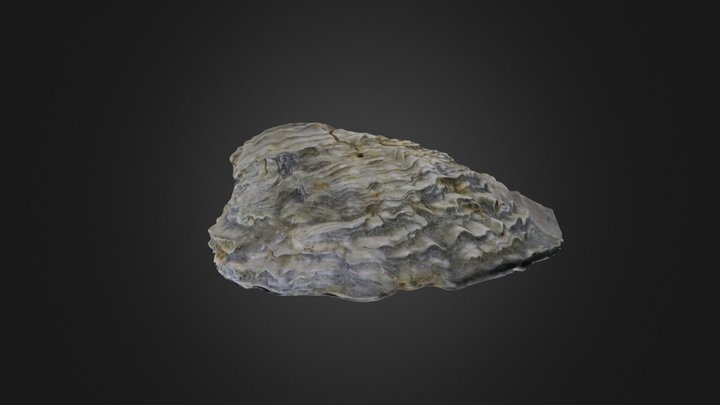
3D model
- Source
- Sketchfab
- Licence
- CC0 Public Domain
- Commercial use
- the licence allows it
Smithsonian Open Access was not reached for this taxon, so this list is what the others held rather than everything there is.
This is what the site found, which is not the same as what exists.
Keep going
What may have been alongside itOstrea through timeFormations of the PlioceneThe world it lived on
Occurrence data from the Paleobiology Database, CC BY 4.0. Linnaeus 1758