Oryx
Oryx is a genus consisting of four large antelope species called oryxes. Their pelage is pale with contrasting dark markings in the face and on the legs, and their long horns are almost straight and annulated. The exception is the scimitar oryx, which lacks dark markings on the legs, only has faint dark markings on the head, has an ochre neck, and has horns that are clearly decurved. All oryx species prefer near-desert conditions and can survive without water for long periods.

Alchemist-hp ( talk ) ( www.pse-mendelejew.de ) · FAL · via Wikipedia/Commons. May be a photograph of a specimen, or an artist’s reconstruction — an interpretation of a skeleton, since colour and soft tissue are almost never preserved.
On record
Recorded, not inferred- Also called
- oryxPBDB
- Sits inside
- HippotraginiPBDB
- Diet
- grazer, browserPBDB, for Bovidae
- Life habit
- ground dwellingPBDB, for Bovidae
- Motility
- actively mobilePBDB, for Osteichthyes
- Environment
- terrestrialPBDB, for Artiodactyla
Time the record covers
At least 2.5 million years on record.
The record covers at least 2.58 Mya to 11.7 ka. No occurrence read is dated outside 5.333 Mya to 0 Mya.
42 occurrences of Oryx on record, most of them in the Pleistocene. The Paleobiology Database records this as a living group. Bar height is expected occurrences, not a count: each fossil is spread across the span it is dated to, so a tall narrow bar means tight dating and a low wide one means loose.
When
42 occurrences- Pliocene13%
- Pleistocene80%
- Holocene7%
These are dates about fossils, not the animal: the record can only begin after it arose and end before it died out, so either end may reach further. Shares are expected occurrences: a fossil dated to a span is counted partly in each period it straddles. More on what this infers.
Found in
9 formations
- Koobi Fora Formation8
- Shungura Formation · Omo Group3
- Chiwondo Formation2
- Nubia Formation1
- Kapthurin Formation1
- Matabaietu Formation · Awash Group1
Loading coastlines…
The named rock units Oryx has been recovered from, largest first. Drawn where the rock is now, not where it formed. 23 occurrences have no formation on record, which is common for older literature.
Oryx and its relatives
PleistoceneWhere Oryx and its relatives were recorded in the Pleistocene.
Found in the same rock
444 taxa- Equus25 sites
- Alcelaphini15 sites
- Aepyceros melampus14 sites
- Ceratotherium simum14 sites
- Hipparion14 sites
- Kolpochoerus limnetes14 sites
- Palaeoloxodon recki13 sites
- Connochaetes taurinus12 sites
- Gazella12 sites
- Panthera leo12 sites
- Crocuta crocuta11 sites
- Giraffa11 sites
- Tragelaphus strepsiceros11 sites
- Damaliscus10 sites
- Kobus sigmoidalis10 sites
- Metridiochoerus andrewsi10 sites
- Reduncini9 sites
- Adenota recki8 sites
- Bovidae8 sites
- Diceros bicornis8 sites
- Equus quagga burchelli8 sites
- Giraffa camelopardalis8 sites
- Taurotragus oryx8 sites
- Deinotherium bozasi7 sites
The Paleobiology Database records 40 sites for Oryx, and this reads all of them. The number is how many of those sites it was catalogued from too. The 24 sharing the most are listed.
This is not a list of everything alive at the time. It is only what has come out of the same ground as this animal and been written down.
Entered from
31 references- Family Bovidae8
- Plio-Pleistocene mammalian biostratigraphy of Atlantic Morocco2
- Mid-Pleistocene change in large mammal faunas of East Africa2
- Implications of Late Quaternary mammalian fauna from Lukenya Hill (South-Central Kenya) for paleoenvironmental change and faunal extinctions2
- Taphonomy, Paleoecology, and Hominids of Lainyamok, Kenya2
- Subsistence patterns of Early Pleistocene hominids in the Levant - taphonomic evidence from the 'Ubeidiya Formation1
- Plio-Pleistocene terrestrial mammal assemblage from Konso, Southern Ethiopia1
- Paleobiogeography of the Malawi Rift: Age and vertebrate paleontology of the Chiwondo Beds, northern Malawi1
- New antelope fossils from Awash, Ethiopia, and phylogenetic analysis of Hippotragini (Bovidae, Mammalia)1
- The Mousterian site of Jebel Irhoud, Morocco: new data on the fauna and biochronology, and description of a new human fossil1
- Le site paleontologique et archeologique de DoukkalaII:premier jalon en Afrique du Nord dun comportement humain assimilable a un charongnage controle et actif1
- Oldest Homo and Pliocene biogeography of the Malawi Rift1
Each of the 42 occurrences read was entered from one of these publications, ordered by how many each accounts for. This is not a search for papers mentioning the name. 19 further references are not listed. Entries link to doi.org where the Paleobiology Database holds an identifier, and to its own record where it does not. Relayed as the Paleobiology Database holds them, not checked against what they resolve to.
Media and terms
Media content3
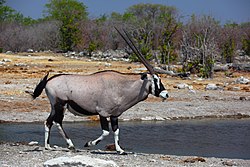
Picture of Oryx
- Source
- Wikipedia/Commons
- Credit
- Alchemist-hp ( talk ) ( www.pse-mendelejew.de )
- Licence
- FAL
- Commercial use
- the licence allows it
CT scan
- Source
- MorphoSource
- Licence
- In Copyright
- Commercial use
- cannot be read from the licence given — check the record
- Specimen
- Oryx gazella · ummz:mammals:168361
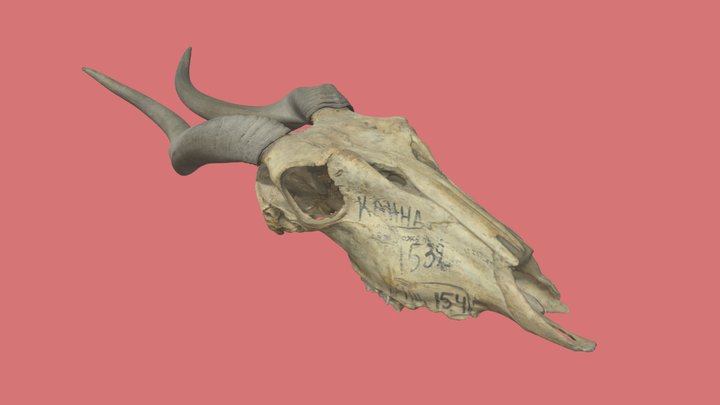
3D model
- Source
- Sketchfab
- Credit
- SchmalhausenEvolMorph
- Licence
- CC Attribution
- Commercial use
- cannot be read from the licence given — check the record
The description on this site
- Source
- Wikipedia, “Oryx”
- Licence
- CC BY-SA 4.0
This is what the site found, which is not the same as what exists.
Keep going
What may have been alongside itHippotragini through timeFormations of the PleistoceneThe world it lived on
Occurrence data from the Paleobiology Database, CC BY 4.0. de Blainville 1816