Ochrophyta
Ochrophytes, also known as heterokontophytes or stramenochromes, are a phylum of algae. They are the photosynthetic stramenopiles, a group of eukaryotes, organisms with a cell nucleus, characterized by the presence of two unequal flagella, one of which has tripartite hairs called mastigonemes. In particular, they are characterized by photosynthetic organelles or plastids enclosed by four membranes, with membrane-bound compartments called thylakoids organized in piles of three, chlorophyll a and c as their photosynthetic pigments, and additional pigments such as β-carotene and xanthophylls. Ochrophytes are one of the most diverse lineages of eukaryotes, containing ecologically important algae such as brown algae and diatoms. They are classified either as phylum Ochrophyta, Heterokontophyta or as subphylum Ochrophytina within phylum Gyrista. Their plastids are of red algal origin.

Uncredited · via Wikipedia/Commons. May be a photograph of a specimen, or an artist’s reconstruction — an interpretation of a skeleton, since colour and soft tissue are almost never preserved.
On record
Recorded, not inferred- Sits inside
- StramenopilesPBDB
Time the record covers
At least 419 million years on record.
The record covers at least 419.62 Mya to 11.7 ka. No occurrence read is dated outside 486.85 Mya to 0 Mya.
12,000+ occurrences of Ochrophyta on record. The Paleobiology Database records this as a living group. Bar height is expected occurrences, not a count: each fossil is spread across the span it is dated to, so a tall narrow bar means tight dating and a low wide one means loose.
When
12,000 occurrences read- Ordovicianunder 1%
- Silurianunder 1%
- Permianunder 1%
- Early Triassicunder 1%
- Late Triassicunder 1%
- Middle Jurassicunder 1%
- Late Jurassicunder 1%
- Early Cretaceousunder 1%
- Late Cretaceous16%
- Paleocene6%
- Eoceneunder 1%
- Oligocene1%
- Miocene26%
- Pliocene19%
- Pleistocene28%
- Holocene1%
These are dates about fossils, not the animal: the record can only begin after it arose and end before it died out, so either end may reach further. Shares are expected occurrences: a fossil dated to a span is counted partly in each period it straddles. The read hit its cap, so every figure above is a floor and the shares are of the occurrences read. More on what this infers.
Found in
at least 59 formations
- Mason River Formation1,233
- Lopez de Bertodano Formation874
- Sobral Formation394
- Kanguk Formation166
- Pungo River Formation100
- Latah Formation69
Loading coastlines…
The named rock units Ochrophyta has been recovered from, largest first. Drawn where the rock is now, not where it formed. The read hit its cap, so each count is a floor. 35 further formations hold fewer occurrences each and are not listed. 8,704 occurrences have no formation on record, which is common for older literature.
Found in the same rock
485 taxa- Stephanopyxis65 sites
- Hemiaulus60 sites
- Trinacria53 sites
- Stephanopyxis turris51 sites
- Pterotheca46 sites
- Costopyxis41 sites
- Triceratium40 sites
- Stephanopyxis simonseni36 sites
- Acanthodiscus33 sites
- Coscinodiscus33 sites
- Hemiaulus polymorphus31 sites
- Paralia sulcata29 sites
- Actinoptychus28 sites
- Goniothecium28 sites
- Pseudopyxilla28 sites
- Rhizosolenia28 sites
- Endictya27 sites
- Pyxidicula27 sites
- Gladiopsis speciosus26 sites
- Melosira26 sites
- Thalassiosiropsis26 sites
- Radiolaria24 sites
- Sceptroneis23 sites
- Odontotropis21 sites
The Paleobiology Database records at least 113 sites for Ochrophyta, and this reads 113 of them. The number is how many of those sites it was catalogued from too. The 24 sharing the most are listed.
This is not a list of everything alive at the time. It is only what has come out of the same ground as this animal and been written down.
Entered from
at least 92 references- Site U13591,777
- Upper Cretaceous diatom biostratigraphy of the Arctic archipelago and northern continental margin, Canada1,441
- Upper Cretaceous and lower Paleocene diatom and silicoflagellate biostratigraphy of Seymour Island, eastern Antarctic Peninsula1,268
- Site U15221,046
- Site U1356960
- Site U1524763
- Site U1361675
- Site U1427635
- Site U1426608
- Site U1525538
- Site U1355233
- Site U1422215
Each of the 12,000 occurrences read was entered from one of these publications, ordered by how many each accounts for. This is not a search for papers mentioning the name. That read hit its cap, so each count is a floor. 80 further references are not listed. Each entry links to doi.org. Relayed as the Paleobiology Database holds them, not checked against what they resolve to.
Media and terms
Media content1
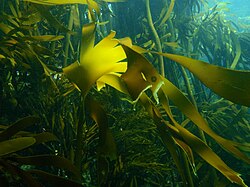
Picture of Ochrophyta
- Source
- Wikipedia/Commons
- Credit
- nobody named on the record
- Licence
- not stated by the source
- Commercial use
- cannot be read from the licence given — check the record
No 3D scan of Ochrophyta was found in Sketchfab.
Smithsonian Open Access and MorphoSource were not reached for this taxon, so this list is what the others held rather than everything there is.
The description on this site
- Source
- Wikipedia, “Ochrophyte”
- Licence
- CC BY-SA 4.0
This is what the site found, which is not the same as what exists.
Keep going
What may have been alongside itStramenopiles through timeThe world it lived on
Occurrence data from the Paleobiology Database, CC BY 4.0. Cavalier-Smith 1995