Musculus (Musculus)
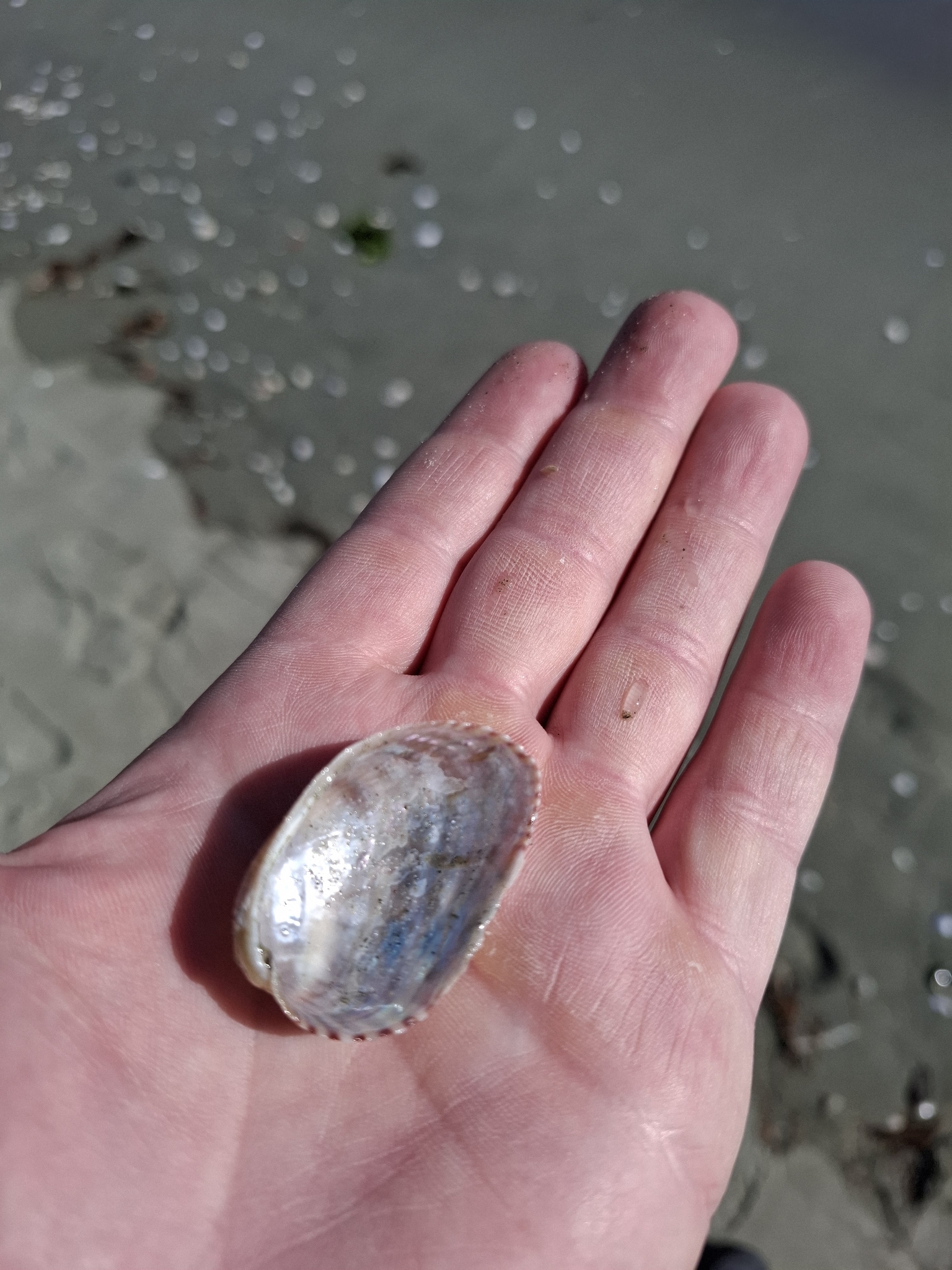
Max St Clair-Smith · CC BY-NC 4.0 · via GBIF. May be a photograph of a specimen, or an artist’s reconstruction — an interpretation of a skeleton, since colour and soft tissue are almost never preserved.
On record
Recorded, not inferred- Sits inside
- MusculusPBDB
- Diet
- suspension feederPBDB, for Musculus
- Life habit
- epifaunalPBDB, for Musculus
- Motility
- stationaryPBDB, for Musculus
- Vision
- blindPBDB, for Bivalvia
Time the record covers
At least 162 million years on record.
The record covers at least 168.2 Mya to 5.333 Mya. No occurrence read is dated outside 170.9 Mya to 2.58 Mya.
13 occurrences of Musculus (Musculus) on record, most of them in the Early Cretaceous. The Paleobiology Database records this as a living group, and the chart stops with its fossils rather than at the present. Bar height is expected occurrences, not a count: each fossil is spread across the span it is dated to, so a tall narrow bar means tight dating and a low wide one means loose.
When
13 occurrencesThese are dates about fossils, not the animal: the record can only begin after it arose and end before it died out, so either end may reach further. Shares are expected occurrences: a fossil dated to a span is counted partly in each period it straddles. More on what this infers.
Found in
6 formations
- Spilsby Sandstone Formation5
- Dhahab Formation · Azab Group1
- Sandringham Sands Formation1
- Wadi As Sir Formation1
- Rio Dell Formation · Wildcat Group1
- Jagüel Formation · Malargüe Group1
Loading coastlines…
The named rock units Musculus (Musculus) has been recovered from, largest first. Drawn where the rock is now, not where it formed. 3 occurrences have no formation on record, which is common for older literature.
Musculus (Musculus) and its relatives
Early CretaceousWhere Musculus (Musculus) and its relatives were recorded in the Early Cretaceous.
Found in the same rock
339 taxa- Dicranodonta3 sites
- Entolium orbiculare3 sites
- Lyapinella3 sites
- Mesomiltha3 sites
- Nanogyra (Nanogyra) nana3 sites
- Nicaniella3 sites
- Aequipecten2 sites
- Arctotis2 sites
- Callista (Callista) chione2 sites
- Codakia2 sites
- Ensis2 sites
- Falcimytilus suprajurensis2 sites
- Limopsis2 sites
- Modiolus (Modiolus)2 sites
- Myophorella2 sites
- Myophorella (Myophorella)2 sites
- Nucula (Nucula) nucleus2 sites
- Nuculoma2 sites
- Parvicardium2 sites
- Pinna (Pinna)2 sites
- Plagiostoma2 sites
- Plicatula2 sites
- Pressastarte (Pinguiastarte)2 sites
- Scapharca (Scapharca) diluvii2 sites
The Paleobiology Database records 10 sites for Musculus (Musculus), and this reads all of them. The number is how many of those sites it was catalogued from too. The 24 sharing the most are listed.
This is not a list of everything alive at the time. It is only what has come out of the same ground as this animal and been written down.
Entered from
8 references- Bivalvia of the Spilsby Sandstone and Sandringham Sands (Late Jurassic-Early Cretaceous) of eastern England; Part I6
- Fish otoliths from the Konkian (Miocene, early Serravallian) of Mangyshlak (Kazakhstan): testimony to an early endemic evolution in the Eastern Paratethys1
- Maastrichtian and Danian species of Turkostreini (Ostreidae, Crassostreinae) from the Neuquén Basin, Argentina1
- Palaeoecology and taxonomy of the macrobenthic fauna from the Upper Cretaceous Ajlun Group, southern Jordan1
- Die Fauna des marinen Miozäns von Kevelaer (Niederrhein). Band 2 Bivalvia, Scaphopoda, Cephalopoda, Bryozoa, Annelida, Brachiopoda1
- Taxonomy and palaeoecology of the benthic macroinvertebrate fauna from the Middle Jurassic of northwestern Jordan1
- Bivalve Molluscs from the Badenian of Northwestern Bulgaria1
- Descriptions of new species of fossil Mollusca from the later marine Neocene of California1
Each of the 13 occurrences read was entered from one of these publications, ordered by how many each accounts for. This is not a search for papers mentioning the name. Entries link to doi.org where the Paleobiology Database holds an identifier, and to its own record where it does not. Relayed as the Paleobiology Database holds them, not checked against what they resolve to.
Media and terms
Media content3
Picture of Musculus (Musculus)
- Source
- GBIF
- Credit
- Max St Clair-Smith
- Licence
- CC BY-NC 4.0
- Commercial use
- the licence does not allow it
CT scan
- Source
- MorphoSource
- Licence
- In Copyright
- Commercial use
- cannot be read from the licence given — check the record
- Specimen
- Mus musculus domesticus · isem:K7503
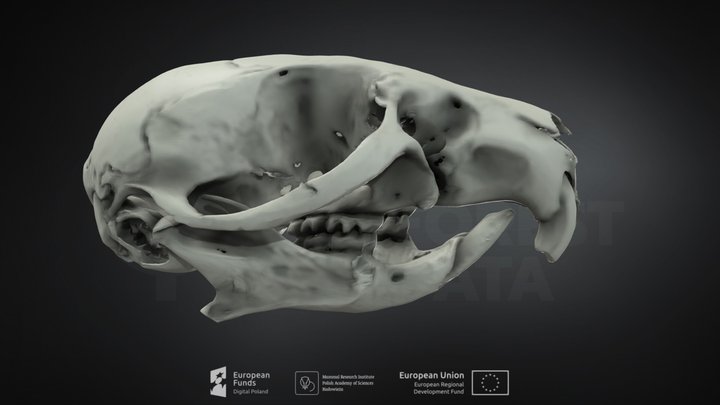
3D model
- Source
- Sketchfab
- Licence
- CC Attribution
- Commercial use
- cannot be read from the licence given — check the record
Smithsonian Open Access was not reached for this taxon, so this list is what the others held rather than everything there is.
This is what the site found, which is not the same as what exists.
Keep going
What may have been alongside itMusculus through timeFormations of the Early CretaceousThe world it lived on
Occurrence data from the Paleobiology Database, CC BY 4.0. Moore 1983