Pinna (Pinna)
No picture of Pinna (Pinna) was found. Wikipedia, Wikidata, iDigBio and Smithsonian Open Access were searched and had none. GBIF was asked, and what came back is not recorded: nothing, or a picture this site could not tie to Pinna (Pinna), or no answer at all. This entry cannot say which.
On record
Recorded, not inferred- Sits inside
- PinnaPBDB
- Diet
- suspension feederPBDB, for Pinna
- Life habit
- semi-infaunalPBDB, for Pinna
- Motility
- stationary, attachedPBDB, for Pinna
- Vision
- blindPBDB, for Bivalvia
- Environment
- marine,brackishPBDB, for Ostreida
Time the record covers
At least 239 million years on record.
The record covers at least 247 Mya to 7.246 Mya. No occurrence read is dated outside 251.902 Mya to 3.6 Mya.
264 occurrences of Pinna (Pinna) on record, most of them in the Early Jurassic. The Paleobiology Database records this as a living group, and the chart stops with its fossils rather than at the present. Bar height is expected occurrences, not a count: each fossil is spread across the span it is dated to, so a tall narrow bar means tight dating and a low wide one means loose.
When
264 occurrences- Early Triassicunder 1%
- Middle Triassicunder 1%
- Late Triassic14%
- Early Jurassic47%
- Middle Jurassic1%
- Late Jurassic17%
- Early Cretaceous2%
- Late Cretaceous7%
- Paleocene2%
- Eocene2%
- Miocene5%
- Plioceneunder 1%
These are dates about fossils, not the animal: the record can only begin after it arose and end before it died out, so either end may reach further. Shares are expected occurrences: a fossil dated to a span is counted partly in each period it straddles. More on what this infers.
Found in
46 formations
- Turmiel Fm Formation25
- Nayband Formation21
- Neuburg Formation18
- Vaqueros Formation10
- Spilsby Sandstone Formation7
- Prairie Bluff Formation6
Loading coastlines…
The named rock units Pinna (Pinna) has been recovered from, largest first. Drawn where the rock is now, not where it formed. 22 further formations hold fewer occurrences each and are not listed. 108 occurrences have no formation on record, which is common for older literature.
Pinna (Pinna) and its relatives
Early JurassicWhere Pinna (Pinna) and its relatives were recorded in the Early Jurassic.
Found in the same rock
1,438 taxa- Protocardia striatula63 sites
- Pleuromya uniformis61 sites
- Entolium (Entolium) corneolum55 sites
- Grammatodon concinnus47 sites
- Plagiostoma45 sites
- Gryphaea (Gryphaea) dumortieri29 sites
- Parvamussium pumilum29 sites
- Modiolus27 sites
- Camptonectes (Camptonectes) auritus26 sites
- Chlamys textoria26 sites
- Inoperna sowerbiana26 sites
- Parallelodon hirsonensis26 sites
- Actinostreon gregarea25 sites
- Gryphaea (Bilobissa) sublobata25 sites
- Montlivaltia25 sites
- Pseudomelania25 sites
- Katosira24 sites
- Lobothyris punctata24 sites
- Nanogyra (Nanogyra) nana24 sites
- Serpula22 sites
- Pholadomya (Pholadomya) fidicula21 sites
- Ctenostreon rugosum20 sites
- Astarte19 sites
- Pholadomya (Pholadomya)19 sites
The Paleobiology Database records 250 sites for Pinna (Pinna), and this reads 240 of them. The number is how many of those sites it was catalogued from too. The 24 sharing the most are listed.
This is not a list of everything alive at the time. It is only what has come out of the same ground as this animal and been written down.
Entered from
47 references- Palökologie benthischer Faunen aus dem Unter-Toarc SW-Europas42
- Palokologie und zeitliche Verbreitung benthischer Faunengemeinschaften im Unterjura von Chile29
- Temperature-related body size change of marine benthic macroinvertebrates across the Early Toarcian Anoxic Event28
- Die Muschelfauna der Nayband-Formation (Obertrias, Nor - Rhät) des östlichen Zentraliran21
- Zur Pelecypodenfauna der Neuburger Bankkalke (Mittel-Tithon)19
- Unpublished data13
- Early Jurassic Bivalvia of western Canada. Part I. Subclasses Palaeotaxodonta, Pteriomorpha, and Isofilibranchia12
- Upper Cretaceous (Maestrichtian) Mollusca from the Haustator bilira Assemblage Zone in the East Gulf Coastal Plain11
- The Vaqueros Formation, Lower Miocene of California. I. Paleontology10
- Bivalvia of the Spilsby Sandstone and Sandringham Sands (Late Jurassic-Early Cretaceous) of eastern England; Part I8
- A systematic survey of the Mesozoic Bivalvia from Japan8
- Géologie et paléontologie des couches à Avicula contorta en Lombardie5
Each of the 264 occurrences read was entered from one of these publications, ordered by how many each accounts for. This is not a search for papers mentioning the name. 35 further references are not listed. Entries link to doi.org where the Paleobiology Database holds an identifier, and to its own record where it does not. Relayed as the Paleobiology Database holds them, not checked against what they resolve to.
Media and terms
Media content2
Laser scan
- Source
- MorphoSource
- Licence
- not stated by the source
- Commercial use
- cannot be read from the licence given — check the record
- Specimen
- Pinna sp. · YPM:IP:YPM IP 008880
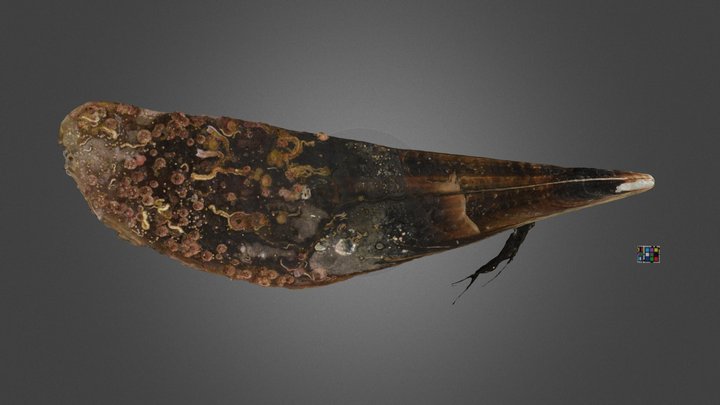
3D model
- Source
- Sketchfab
- Licence
- CC0 Public Domain
- Commercial use
- the licence allows it
No picture of Pinna (Pinna) was found. Wikipedia, Wikidata, iDigBio and Smithsonian Open Access were searched and had none.
GBIF was asked, and what came back is not recorded: nothing, or a picture this site could not tie to Pinna (Pinna), or no answer at all. This entry cannot say which.
This is what the site found, which is not the same as what exists.
Keep going
What may have been alongside itPinna through timeFormations of the Early JurassicThe world it lived on
Occurrence data from the Paleobiology Database, CC BY 4.0. Linnaeus 1758