Montipora tuberculosa

Philippe Bourjon · CC BY-SA 4.0 · via Wikidata/Commons. May be a photograph of a specimen, or an artist’s reconstruction — an interpretation of a skeleton, since colour and soft tissue are almost never preserved.
On record
Recorded, not inferred- Sits inside
- MontiporaPBDB
- Diet
- photosymbiotic, suspension feederPBDB, for Acroporidae
- Life habit
- colonial, clonalPBDB, for Acroporidae
- Motility
- stationary, attachedPBDB, for Scleractinia
- Vision
- blindPBDB, for Anthozoa
- Environment
- marinePBDB, for Scleractinia
Time the record covers
At most 2.6 million years on record.
Every occurrence read is dated to somewhere between 2.58 Mya and 0 Mya, and nothing in the dating separates them, so that window is what the record shows rather than a span.
5 occurrences of Montipora tuberculosa on record, most of them in the Pleistocene. The Paleobiology Database records this as a living group. Bar height is expected occurrences, not a count: each fossil is spread across the span it is dated to, so a tall narrow bar means tight dating and a low wide one means loose.
When
5 occurrences- Pleistocene80%
- Holocene20%
These are dates about fossils, not the animal: the record can only begin after it arose and end before it died out, so either end may reach further. Shares are expected occurrences: a fossil dated to a span is counted partly in each period it straddles. More on what this infers.
Montipora tuberculosa and its relatives
PleistoceneWhere Montipora tuberculosa and its relatives were recorded in the Pleistocene.
Found in the same rock
85 taxa- Acropora2 sites
- Dipsastraea pallida2 sites
- Favites2 sites
- Galaxea astreata2 sites
- Goniastrea retiformis2 sites
- Leptoria phrygia2 sites
- Acropora muricata1 site
- Acropora pulchra1 site
- Agaricia1 site
- Annachlamys flabellatus1 site
- Arca1 site
- Barbatia (Ustularca) fusca1 site
- Bullia1 site
- Calliostoma1 site
- Cancellaria (Olivia)1 site
- Cardita1 site
- Cardium1 site
- Chama1 site
- Chlamys1 site
- Cochlespira1 site
- Coeloseris1 site
- Conus1 site
- Conus (Dendroconus) figulinus1 site
- Corallinaceae1 site
The Paleobiology Database records 3 sites for Montipora tuberculosa, and this reads all of them. The number is how many of those sites it was catalogued from too. The 24 sharing the most are listed.
This is not a list of everything alive at the time. It is only what has come out of the same ground as this animal and been written down.
Entered from
4 references- Variation in deglacial coralgal assemblages and their paleoenvironmental significance: IODP Expedition 310, "Tahiti Sea Level"2
- Occurence of submerged Pleistocene stony corals and marine molluscs at Vazhakala near Cochin and their significance on sea level changes1
- Holocene initiation and development of New Caledonian fringing reefs, SW Pacific1
- Geological and geographical distribution of reef-corals in Japan1
Each of the 5 occurrences read was entered from one of these publications, ordered by how many each accounts for. This is not a search for papers mentioning the name. Entries link to doi.org where the Paleobiology Database holds an identifier, and to its own record where it does not. Relayed as the Paleobiology Database holds them, not checked against what they resolve to.
Media and terms
Media content2
Picture of Montipora tuberculosa
- Source
- Wikidata/Commons
- Credit
- Philippe Bourjon
- Licence
- CC BY-SA 4.0
- Commercial use
- the licence allows it
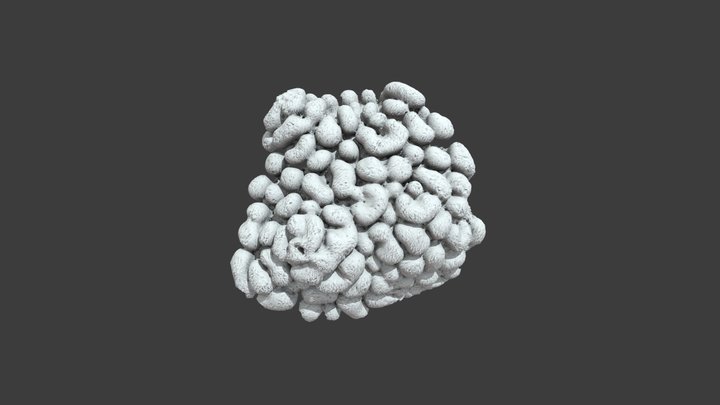
3D model
- Source
- Sketchfab
- Licence
- CC0 Public Domain
- Commercial use
- the licence allows it
This is what the site found, which is not the same as what exists.
Keep going
What may have been alongside itMontipora through timeFormations of the PleistoceneThe world it lived on
Occurrence data from the Paleobiology Database, CC BY 4.0. (Lamarck 1816)