Mizuhopecten
Mizuhopecten is a genus of bivalves belonging to the family Pectinidae.

A. C. Tatarinov · CC BY-SA 3.0 · via Wikipedia/Commons. May be a photograph of a specimen, or an artist’s reconstruction — an interpretation of a skeleton, since colour and soft tissue are almost never preserved.
On record
Recorded, not inferred- Sits inside
- FortipectininiPBDB
- Diet
- suspension feederPBDB, for Pectinidae
- Life habit
- low-level epifaunalPBDB, for Pectinidae
- Motility
- facultatively mobilePBDB, for Pectinidae
- Vision
- limitedPBDB, for Pectinidae
- Environment
- marinePBDB, for Pectinida
Time the record covers
At least 15 million years on record.
The record covers at least 15.98 Mya to 774 ka. No occurrence read is dated outside 23.04 Mya to 129 ka.
64 occurrences of Mizuhopecten on record, most of them in the Miocene. The Paleobiology Database records this as a living group, and the chart stops with its fossils rather than at the present. Bar height is expected occurrences, not a count: each fossil is spread across the span it is dated to, so a tall narrow bar means tight dating and a low wide one means loose.
When
64 occurrences- Miocene72%
- Pliocene23%
- Pleistocene5%
These are dates about fossils, not the animal: the record can only begin after it arose and end before it died out, so either end may reach further. Shares are expected occurrences: a fossil dated to a span is counted partly in each period it straddles. More on what this infers.
Found in
31 formations
- Tentokuji Formation6
- Atsunai Formation4
- Tachilni Formation3
- Etolonskaya Formation3
- Kamitoyo Formation · Higashi-Tanakura Group3
- Kanomatazawa Formation · Shioya Group3
Loading coastlines…
The named rock units Mizuhopecten has been recovered from, largest first. Drawn where the rock is now, not where it formed. 7 further formations hold fewer occurrences each and are not listed. 8 occurrences have no formation on record, which is common for older literature.
Mizuhopecten and its relatives
MioceneWhere Mizuhopecten and its relatives were recorded in the Miocene.
Found in the same rock
437 taxa- Anadara15 sites
- Diplodonta14 sites
- Lucinoma annulata13 sites
- Macoma12 sites
- Mercenaria12 sites
- Chlamys (Nomurachlamys) kaneharai11 sites
- Cyclocardia11 sites
- Turritella11 sites
- Dosinia (Phacosoma)9 sites
- Glycymeris9 sites
- Panopea9 sites
- Acila (Truncacila)7 sites
- Anadara (Anadara)7 sites
- Clinocardium7 sites
- Glossaulax didyma7 sites
- Glycymeris cisshuensis7 sites
- Laevicardium7 sites
- Nassarius7 sites
- Chlamys6 sites
- Chlamys (Chlamys) cosibensis6 sites
- Crassatella6 sites
- Crepidula6 sites
- Leukoma6 sites
- Mactromeris polynyma6 sites
The Paleobiology Database records 39 sites for Mizuhopecten, and this reads all of them. The number is how many of those sites it was catalogued from too. The 24 sharing the most are listed.
This is not a list of everything alive at the time. It is only what has come out of the same ground as this animal and been written down.
Entered from
23 references- The Shiobara-type Molluscan Fauna: An ecological analysis of fossil molluscs10
- Neogene and Paleogene Molluscan (Bivalvia) Cenozones of Sakhalin and Kurile Islands8
- Neogene and Paleogene Molluscan (Bivalvia) Cenozones of the Russian Northeast.6
- Warm-water influx into Japan Sea in the middle Pliocene - Molluscan faunas from the Tentokuji FOrmation around Mt. Taihei in Akita Prefecture6
- Characteristics of the Miocene molluscan assemblages from central San-in District, Southwest Honshu, Japan6
- Late Cenozoic elasmobranchs from the Hokuriku district, central Japan5
- Molluscan paleontology, paleoecology, and North Pacific correlations of the Miocene Tachilni Formation, Alaska Peninsula, Alaska3
- Discovery of the Hydrodamalinae (Sirenia, Mammalia) from the Late Pliocene Shiroiwa Formation in Nagaoka City, Niigata Prefecture2
- Paleogene molluscan faunas from the Kushiro Coal Field, Eastern Hokkaido2
- Molluscan fossils from the Atsunai Group, Kushiro Coal Field, Eastern Hokkaido, Northern Japan2
- Comparative study of teeth from Naganuma Formation of Middle Pleistocene and Recent specimens of the great white shark, Carcharodon carcharias from Japan2
- Molluscan fossils associated with the fossil whale from Shiriuchi-machu, Hachinohe City, Northeast Japan1
Each of the 64 occurrences read was entered from one of these publications, ordered by how many each accounts for. This is not a search for papers mentioning the name. 11 further references are not listed. Each entry links to the Paleobiology Database's own record for the work.
Media and terms
Media content3

Picture of Mizuhopecten
- Source
- Wikipedia/Commons
- Credit
- A. C. Tatarinov
- Licence
- CC BY-SA 3.0
- Commercial use
- the licence allows it
CT scan
- Source
- MorphoSource
- Licence
- not stated by the source
- Commercial use
- cannot be read from the licence given — check the record
- Specimen
- Mizuhopecten yessoensis · usnm:invertebrate zoology:606865
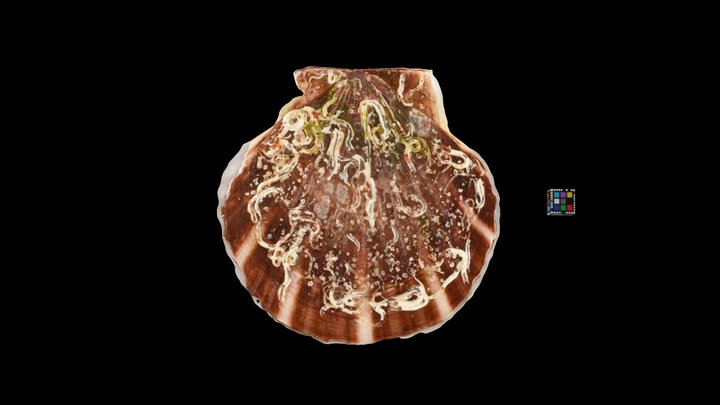
3D model
- Source
- Sketchfab
- Licence
- CC0 Public Domain
- Commercial use
- the licence allows it
The description on this site
- Licence
- CC BY-SA 4.0
This is what the site found, which is not the same as what exists.
Keep going
What may have been alongside itFortipectinini through timeFormations of the MioceneThe world it lived on
Occurrence data from the Paleobiology Database, CC BY 4.0. (Masuda 1963)