Metoposaurus
Metoposaurus meaning "front lizard" is an extinct genus of stereospondyl temnospondyls, known from the Late Triassic of Germany, Italy, Poland, and Portugal. This animal was mostly aquatic, possessing small, weak limbs, sharp teeth, and a large, flat head. This highly flattened creature mainly fed on fish, which it captured with its wide jaws lined with needle-like teeth. Many Metoposaurus mass graves have been found, probably from creatures that grouped together in drying pools during drought.

Shalom · CC BY 3.0 · via Wikipedia/Commons. May be a photograph of a specimen, or an artist’s reconstruction — an interpretation of a skeleton, since colour and soft tissue are almost never preserved.
On record
Recorded, not inferred- Sits inside
- MetoposauridaePBDB
- Diet
- piscivorePBDB
- Life habit
- amphibiousPBDB, for Temnospondyli
- Motility
- actively mobilePBDB, for Temnospondyli
- Environment
- brackish,freshwater,terrestrialPBDB, for Tetrapoda
- Length
- 3 mWikidata
- Mass
- 450 kgWikidata
Time the record covers
At least 27 million years on record.
The record covers at least 233.6 Mya to 205.7 Mya. No occurrence read is dated outside 237 Mya to 201.4 Mya.
30 occurrences of Metoposaurus on record, most of them in the Late Triassic. Bar height is expected occurrences, not a count: each fossil is spread across the span it is dated to, so a tall narrow bar means tight dating and a low wide one means loose.
When
30 occurrences- Late Triassic100%
These are dates about fossils, not the animal: the record can only begin after it arose and end before it died out, so either end may reach further. Shares are expected occurrences: a fossil dated to a span is counted partly in each period it straddles. More on what this infers.
Found in
17 formations
- Hassberge Formation · Keuper Group4
- Stuttgart Formation · Keuper Group4
- Weser Formation · Keuper Group4
- Tiki Formation · Gondwana Group3
- Dockum Formation2
- Timezgadiouine Formation · Argana Group2
Loading coastlines…
The named rock units Metoposaurus has been recovered from, largest first. Drawn where the rock is now, not where it formed.
Metoposaurus and its relatives
Late TriassicWhere Metoposaurus and its relatives were recorded in the Late Triassic.
Found in the same rock
154 taxa- Phytosauria9 sites
- Ceratodus4 sites
- Osteichthyes3 sites
- Parasuchus3 sites
- Temnospondyli3 sites
- Aetosauria2 sites
- Archosauria2 sites
- Archosauriformes2 sites
- Archosauromorpha2 sites
- Coelacanthidae2 sites
- Coleoptera2 sites
- Cyclotosaurus2 sites
- Cyclotosaurus intermedius2 sites
- Gerrothorax pulcherrimus2 sites
- Hyperodapedon huxleyi2 sites
- Lissodus2 sites
- Mystriosuchinae2 sites
- Parasuchus hislopi2 sites
- Rauisuchidae2 sites
- Silesaurus opolensis2 sites
- Stagonolepis olenkae2 sites
- Theropoda2 sites
- Unionidae2 sites
- Unionites2 sites
The Paleobiology Database records 29 sites for Metoposaurus, and this reads all of them. The number is how many of those sites it was catalogued from too. The 24 sharing the most are listed.
This is not a list of everything alive at the time. It is only what has come out of the same ground as this animal and been written down.
Entered from
20 references- A new species of Metoposaurus from the Late Triassic of Portugal and comments on the systematics and biogeography of metoposaurid temnospondyls3
- The latest metoposaurids from Europe3
- Micro and mega-vertebrate fossils from the Late Triassic Tiki Formation, South Rewa Gondwana Basin, India: palaeoenvironmental and palaeobiogeographic implications2
- Fossil Vertebrate Collections2
- Species discrimination of the Late Triassic temnospondyl amphibian Metoposaurus diagnosticus2
- Les Vertébrés permiens et triasiques de la Formation d’Argana (Haut Atlas occidental): liste faunique préliminaire et implications stratigraphiques [The Permian and Triassic vertebrates of the Argana Formation (western High Atlas): preliminary faunal list and stratigraphic implications]2
- Weitere Parasuchier und Labyrinthodonten aus dem Blasensandstein des mittleren Keuper von Ebrach [Further parasuchians and labyrinthodonts from the Blasensandstein of the middle Keuper of Ebrach]2
- Labyrinthodonten und Parasuchier aus dem mittleren Keuper von Ebrach in Oberfranken2
- A dicynodont mandible from the Triassic of Germany forms the first evidence of large herbivores in the Central European Carnian1
- Lithostratigraphy, chemostratigraphy, and vertebrate biostratigraphy of the Dockum Group (Upper Triassic), of southern Garza County, West Texas. Unpublished PhD thesis, Texas Tech University1
- Póznotriasowe cmentarzysko kregowców ladowych w Krasiejowie na Slasku Opolskim [Post-Triassic graveyard of terrestrial vertebrates in Krasiejów in Opole, Silesia]1
- Stereospondyli1
Each of the 30 occurrences read was entered from one of these publications, ordered by how many each accounts for. This is not a search for papers mentioning the name. 8 further references are not listed. Entries link to doi.org where the Paleobiology Database holds an identifier, and to its own record where it does not. Relayed as the Paleobiology Database holds them, not checked against what they resolve to.
Media and terms
Media content2

Picture of Metoposaurus
- Source
- Wikipedia/Commons
- Credit
- Shalom
- Licence
- CC BY 3.0
- Commercial use
- the licence allows it
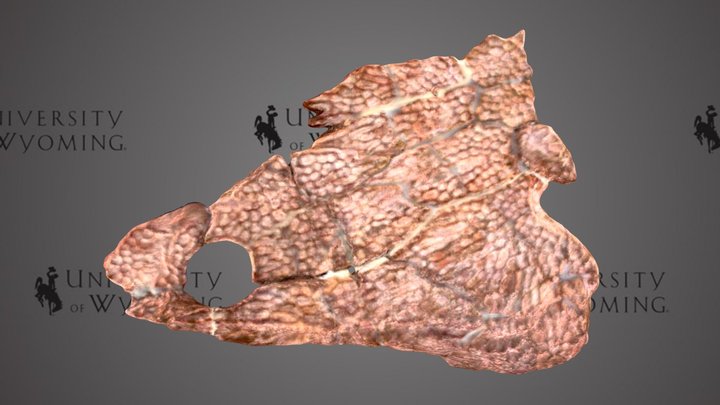
3D model
- Source
- Sketchfab
- Licence
- CC Attribution-NonCommercial
- Commercial use
- the licence does not allow it
The description on this site
- Licence
- CC BY-SA 4.0
This is what the site found, which is not the same as what exists.
Keep going
What may have been alongside itMetoposauridae through timeFormations of the Late TriassicThe world it lived on
Occurrence data from the Paleobiology Database, CC BY 4.0. Lydekker 1890