Mawsonia
Mawsonia is an extinct genus of prehistoric coelacanth fish. It is amongst the largest of all coelacanths, with one quadrate specimen possibly belonging to an individual measuring 5.3 metres in length. It lived in freshwater and brackish environments from the late Jurassic to the mid-Cretaceous of South America, eastern North America, and Africa. Mawsonia was first described by British paleontologist Arthur Smith Woodward in 1907.

Lionel Cavin, André Piuz, Christophe Ferrante & Guillaume Guinot · CC BY 4.0 · via Wikipedia/Commons. May be a photograph of a specimen, or an artist’s reconstruction — an interpretation of a skeleton, since colour and soft tissue are almost never preserved.
On record
Recorded, not inferred- Sits inside
- MawsoniidaePBDB
- Motility
- actively mobilePBDB, for Osteichthyes
Time the record covers
At least 42 million years on record.
The record covers at least 143.1 Mya to 100.5 Mya. No occurrence read is dated outside 174.7 Mya to 93.9 Mya.
34 occurrences of Mawsonia on record, most of them in the Early Cretaceous. Bar height is expected occurrences, not a count: each fossil is spread across the span it is dated to, so a tall narrow bar means tight dating and a low wide one means loose.
When
34 occurrencesThese are dates about fossils, not the animal: the record can only begin after it arose and end before it died out, so either end may reach further. Shares are expected occurrences: a fossil dated to a span is counted partly in each period it straddles. More on what this infers.
Found in
13 formations
- Bahariya Formation8
- Brejo Santo Formation5
- Romualdo Formation · Santana Group4
- Tacuarembó Formation4
- Aïn el Guettar Formation2
- Aliança Formation2
Loading coastlines…
The named rock units Mawsonia has been recovered from, largest first. Drawn where the rock is now, not where it formed. 2 occurrences have no formation on record, which is common for older literature.
Mawsonia and its relatives
Early CretaceousWhere Mawsonia and its relatives were recorded in the Early Cretaceous.
Found in the same rock
167 taxa- Lepidotes13 sites
- Theropoda6 sites
- Cyzicus5 sites
- Ostracoda5 sites
- Sauropoda5 sites
- Crocodylia4 sites
- Mesoeucrocodylia4 sites
- Vinctifer4 sites
- Anhangueridae3 sites
- Calamopleurus cylindricus3 sites
- Cladocyclus gardneri3 sites
- Crocodyliformes3 sites
- Distobatus nutiae3 sites
- Hybodontidae3 sites
- Neoceratodus africanus3 sites
- Onchopristis numidus3 sites
- Osteichthyes3 sites
- Paraelops3 sites
- Rhacolepis buccalis3 sites
- Tharrhias araripis3 sites
- Torvosaurus3 sites
- Brannerion2 sites
- Carcharodontosaurus2 sites
- Ceratosaurus2 sites
The Paleobiology Database records 34 sites for Mawsonia, and this reads all of them. The number is how many of those sites it was catalogued from too. The 24 sharing the most are listed.
This is not a list of everything alive at the time. It is only what has come out of the same ground as this animal and been written down.
Entered from
17 references- Ergebnisse der Forschungsreisen Prof. E. Stromers in den Wüsten Ägyptens II. Wirbeltierreste der Baharije-Stufe (unterstes Cenoman) 16. Neue Untersuchungen an den Fischresten8
- A Fauna da Formação Brejo Santo, Neojurássico da Bacia do Araripe, Brasil: Interpretações Paleoambientais5
- Coelacanth remains from the Late Jurassic–?earliest Cretaceous of Uruguay: the southernmost occurrence of the Mawsoniidae4
- New Fossiliferous Sites of the Romualdo Formation, Lower Cretaceous, Araripe Basin, Exu, Pernambuco, Northeast of Brazil3
- On the Cretaceous formation of Bahia (Brazil), and on vertebrate fossils collected therein2
- The first dinosaur from the Jurassic Aliança Formation of northeastern Brazil, west Gondwana: a basal Neotheropoda and its age and paleobiogeographical significance1
- New Crocodylomorpha remains from the late jurassic Aliança Formation (Dom João stage), Jatobá Basin1
- First occurrence of a mawsoniid (Sarcopterygii: Actinistia), Mawsonia soba sp. nov., in pre-Aptian Cretaceous deposits from Cameroon1
- Evidence of iguanodontian dinosaurs from the Lower Cretaceous of Tunisia1
- Le Crétacé continental à vertébrés de la bordure sud du plateau de Tinhert: découvertes paléontologiques et considérations stratigraphiques [The continental Cretaceous vertebrates of the southern border of the Tinhert Plateau: paleontological discoveries and stratigraphic considerations]1
- The Cretaceous (Cenomanian) continental record of the Laje do Coringa flagstone (Alcântara Formation), northeastern South America1
- Position stratigraphique des niveaux à vertébrés du Mésozoïque Sud-Est de la Tunisie [Stratigraphic position of beds with Mesozoic vertebrates from southeastern Tunisia]1
Each of the 34 occurrences read was entered from one of these publications, ordered by how many each accounts for. This is not a search for papers mentioning the name. 5 further references are not listed. Entries link to doi.org where the Paleobiology Database holds an identifier, and to its own record where it does not. Relayed as the Paleobiology Database holds them, not checked against what they resolve to.
Media and terms
Media content2

Picture of Mawsonia
- Source
- Wikipedia/Commons
- Credit
- Lionel Cavin, André Piuz, Christophe Ferrante & Guillaume Guinot
- Licence
- CC BY 4.0
- Commercial use
- the licence allows it
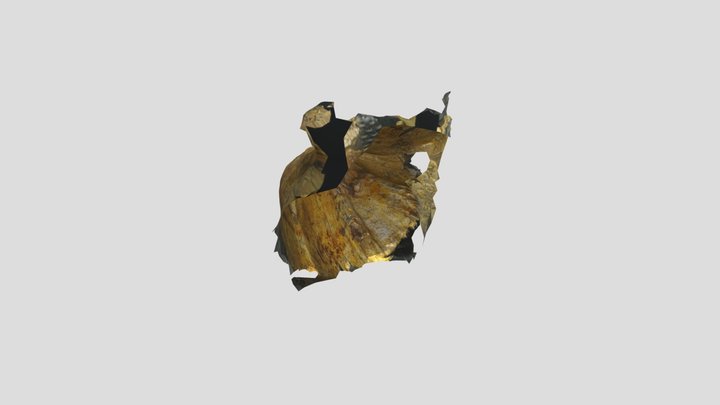
3D model
- Source
- Sketchfab
- Credit
- Paulo Ricardo
- Licence
- CC Attribution
- Commercial use
- cannot be read from the licence given — check the record
Smithsonian Open Access was not reached for this taxon, so this list is what the others held rather than everything there is.
The description on this site
- Licence
- CC BY-SA 4.0
This is what the site found, which is not the same as what exists.
Keep going
What may have been alongside itMawsoniidae through timeFormations of the Early CretaceousThe world it lived on
Occurrence data from the Paleobiology Database, CC BY 4.0. Mawson and Woodward 1907