Inoceramus
Inoceramus is an extinct genus of fossil marine pteriomorphian bivalves that superficially resembled the related winged pearly oysters of the extant genus Pteria. They lived from the Early Jurassic to latest Cretaceous.

Eunostos · CC BY-SA 4.0 · via Wikipedia/Commons. May be a photograph of a specimen, or an artist’s reconstruction — an interpretation of a skeleton, since colour and soft tissue are almost never preserved.
On record
Recorded, not inferred- Sits inside
- InoceramidaePBDB
- Diet
- suspension feederPBDB
- Life habit
- epifaunalPBDB
- Motility
- facultatively mobilePBDB
- Vision
- blindPBDB, for Bivalvia
Time the record covers
At least 143 million years on record.
The record covers at least 215.38 Mya to 72.2 Mya. No occurrence read is dated outside 227.3 Mya to 66 Mya.
2,595 occurrences of Inoceramus on record, most of them in the Late Cretaceous. Bar height is expected occurrences, not a count: each fossil is spread across the span it is dated to, so a tall narrow bar means tight dating and a low wide one means loose.
When
2,595 occurrences- Late Triassic1%
- Early Jurassicunder 1%
- Middle Jurassic6%
- Late Jurassic1%
- Early Cretaceous9%
- Late Cretaceous82%
These are dates about fossils, not the animal: the record can only begin after it arose and end before it died out, so either end may reach further. Shares are expected occurrences: a fossil dated to a span is counted partly in each period it straddles. More on what this infers.
Found in
293 formations
- Mancos Shale Formation89
- Matanuska Formation64
- Hinoshima Formation · Himenoura Group61
- Pierre Shale Formation · Montana Group60
- Niobrara Formation · Colorado Group55
- Greenhorn Limestone Formation · Colorado Group49
Loading coastlines…
The named rock units Inoceramus has been recovered from, largest first. Drawn where the rock is now, not where it formed. 269 further formations hold fewer occurrences each and are not listed. 1,127 occurrences have no formation on record, which is common for older literature.
Inoceramus and its relatives
Late CretaceousWhere Inoceramus and its relatives were recorded in the Late Cretaceous.
Found in the same rock
1,126 taxa- Nuculana59 sites
- Pycnodonte56 sites
- Pycnodonte vesicularis53 sites
- Inoceramidae52 sites
- Exogyra (Exogyra) costata43 sites
- Bryozoa41 sites
- Anomia argentaria39 sites
- Drepanocheilus38 sites
- Idonearca capax37 sites
- Veniella conradi37 sites
- Lucina36 sites
- Spondylus35 sites
- Nucula34 sites
- Turritella34 sites
- Crassatella vadosa33 sites
- Panopea33 sites
- Crenella serica32 sites
- Cyprimeria32 sites
- Granocardium32 sites
- Ostreidae32 sites
- Serpula32 sites
- Astarte31 sites
- Cymbophora30 sites
- Modiolus30 sites
The Paleobiology Database records at least 1,271 sites for Inoceramus, and this reads 240 of them. The number is how many of those sites it was catalogued from too. The 24 sharing the most are listed.
This is not a list of everything alive at the time. It is only what has come out of the same ground as this animal and been written down.
Entered from
348 references- Die Oberkreide der Sack-Mulde bei Alfeld (Cenoman-Unter-Coniac) Lithologie, Biostratigraphie und Inoceramen540
- Unpublished data on Cretaceous-Paleocene molluscan assemblages131
- Biostratigraphy of the Lower and Middle Jurassic deposits of the Far East97
- The paleoecology of the Cenomanian-Turonian (Cretaceous) stage boundary extinctions at Black Mesa, Arizona93
- Upper Cretaceous (Campanian and Maestrichtian) ammonites from southern Alaska85
- Distribution, stratigraphy and stratigraphic relationships of Cretaceous sediments, western Raukumara Peninsula, New Zealand68
- The Red Bird Section of the Upper Cretaceous Pierre Shale in Wyoming52
- Upper Cretaceous of the Pacific Coast47
- Upper Cretaceous ammonites of California. Part III45
- Stratigraphy of the Upper Cretaceous Niobrara Formation in the Raton basin, New Mexico41
- A systematic survey of the Mesozoic Bivalvia from Japan41
- Upper Cretaceous (Maestrichtian) Mollusca from the Haustator bilira Assemblage Zone in the East Gulf Coastal Plain40
Each of the 2,595 occurrences read was entered from one of these publications, ordered by how many each accounts for. This is not a search for papers mentioning the name. 336 further references are not listed. Entries link to doi.org where the Paleobiology Database holds an identifier, and to its own record where it does not. Relayed as the Paleobiology Database holds them, not checked against what they resolve to.
Media and terms
Media content3

Picture of Inoceramus
- Source
- Wikipedia/Commons
- Credit
- Eunostos
- Licence
- CC BY-SA 4.0
- Commercial use
- the licence allows it
Laser scan
- Source
- MorphoSource
- Licence
- not stated by the source
- Commercial use
- cannot be read from the licence given — check the record
- Specimen
- Inoceramus sp. · ypm:ip:YPM IP 614951
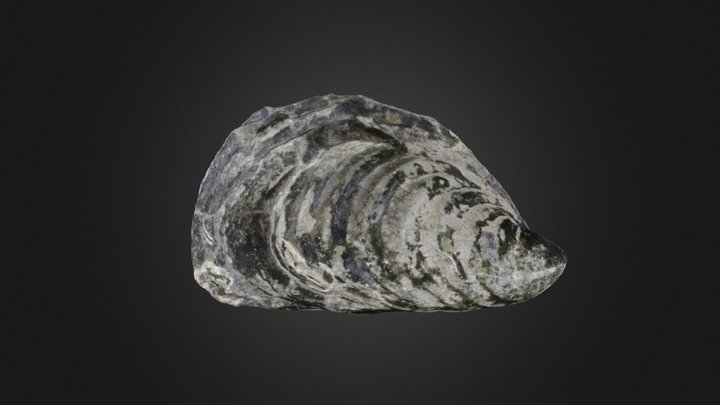
3D model
- Source
- Sketchfab
- Licence
- CC0 Public Domain
- Commercial use
- the licence allows it
The description on this site
- Source
- Wikipedia, “Inoceramus”
- Licence
- CC BY-SA 4.0
This is what the site found, which is not the same as what exists.
Keep going
What may have been alongside itInoceramidae through timeFormations of the Late CretaceousThe world it lived on
Occurrence data from the Paleobiology Database, CC BY 4.0. Sowerby 1814