Hippophae
Hippophae is a genus of flowering plants in the family Elaeagnaceae. They are deciduous shrubs. They are exceptionally hardy plants, able to withstand winter temperatures as low as −43 °C (−45 °F). As Hippophae species develop an aggressive and extensive root system, they are planted to inhibit soil erosion and used in land reclamation for their nitrogen fixing properties, wildlife habitat, and soil enrichment. Hippophae berries and leaves are manufactured into various human and animal food and skincare products.

No machine-readable author provided. Svdmolen assumed (based on copyright claims). · CC BY-SA 3.0 · via Wikipedia/Commons. May be a photograph of a specimen, or an artist’s reconstruction — an interpretation of a skeleton, since colour and soft tissue are almost never preserved.
On record
Recorded, not inferred- Also called
- sea buckthornPBDB
- Sits inside
- ElaeagnaceaePBDB
- Diet
- "photoautotroph"PBDB, for Angiospermae
Time the record covers
At least 2.5 million years on record.
The record covers at least 2.58 Mya to 11.7 ka. No occurrence read is dated outside 5.333 Mya to 0 Mya.
3 occurrences of Hippophae on record. The Paleobiology Database records this as a living group. Bar height is expected occurrences, not a count: each fossil is spread across the span it is dated to, so a tall narrow bar means tight dating and a low wide one means loose.
When
3 occurrencesThese are dates about fossils, not the animal: the record can only begin after it arose and end before it died out, so either end may reach further. Shares are expected occurrences: a fossil dated to a span is counted partly in each period it straddles. More on what this infers.
Found in
1 formation
Loading coastlines…
The named rock units Hippophae has been recovered from, largest first. Drawn where the rock is now, not where it formed. 2 occurrences have no formation on record, which is common for older literature.
Found in the same rock
65 taxa- Salix3 sites
- Abies2 sites
- Alnus2 sites
- Apiaceae2 sites
- Artemisia2 sites
- Asteraceae2 sites
- Betula2 sites
- Bupleurum2 sites
- Caryophyllaceae2 sites
- Cedrus2 sites
- Chenopodiaceae2 sites
- Corylus2 sites
- Cyperaceae2 sites
- Ephedra2 sites
- Ericaceae2 sites
- Fabaceae2 sites
- Juniperus2 sites
- Lamiaceae2 sites
- Liliaceae2 sites
- Oleaceae2 sites
- Osmunda2 sites
- Parnassia2 sites
- Pedicularis2 sites
- Picea2 sites
The Paleobiology Database records 3 sites for Hippophae, and this reads all of them. The number is how many of those sites it was catalogued from too. The 24 sharing the most are listed.
This is not a list of everything alive at the time. It is only what has come out of the same ground as this animal and been written down.
Entered from
2 references- A Catalogue of Fossil Plants from India Part 6: Cenozoic (Quaternary) Palynology and Palaeobotany2
- Pliocene flora and paleoenvironment of Zanda Basin, Tibet, China1
Each of the 3 occurrences read was entered from one of these publications, ordered by how many each accounts for. This is not a search for papers mentioning the name. Entries link to doi.org where the Paleobiology Database holds an identifier, and to its own record where it does not. Relayed as the Paleobiology Database holds them, not checked against what they resolve to.
Media and terms
Media content1
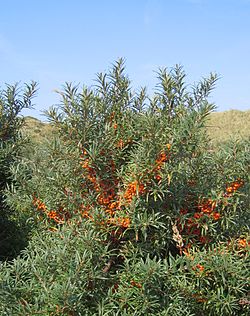
Picture of Hippophae
- Source
- Wikipedia/Commons
- Credit
- No machine-readable author provided. Svdmolen assumed (based on copyright claims).
- Licence
- CC BY-SA 3.0
- Commercial use
- the licence allows it
No 3D scan was found. Smithsonian Open Access, MorphoSource and Sketchfab were all searched.
The description on this site
- Source
- Wikipedia, “Hippophae”
- Licence
- CC BY-SA 4.0
This is what the site found, which is not the same as what exists.
Keep going
What may have been alongside itElaeagnaceae through timeThe world it lived on
Occurrence data from the Paleobiology Database, CC BY 4.0. Linnaeus 1753