Hadromeros
No picture of Hadromeros was found. Wikidata, iDigBio and Smithsonian Open Access were searched and had none. Wikipedia did not answer, so this is what the others held rather than everything there is. GBIF was asked, and what came back is not recorded: nothing, or a picture this site could not tie to Hadromeros, or no answer at all. This entry cannot say which.
On record
Recorded, not inferred- Sits inside
- CheirurinaePBDB
- Diet
- carnivorePBDB, for Cheiruridae
- Life habit
- low-level epifaunalPBDB, for Trilobita
- Motility
- fast-movingPBDB, for Trilobita
- Environment
- marinePBDB, for Trilobita
Time the record covers
At least 26 million years on record.
The record covers at least 457.2 Mya to 430.6 Mya. No occurrence read is dated outside 458.2 Mya to 422.7 Mya.
75 occurrences of Hadromeros on record, most of them in the Ordovician. Bar height is expected occurrences, not a count: each fossil is spread across the span it is dated to, so a tall narrow bar means tight dating and a low wide one means loose.
When
75 occurrences- Ordovician53%
- Silurian47%
These are dates about fossils, not the animal: the record can only begin after it arose and end before it died out, so either end may reach further. Shares are expected occurrences: a fossil dated to a span is counted partly in each period it straddles. More on what this infers.
Found in
29 formations
- Jupiter Formation16
- Boda Limestone Formation9
- Kildare Limestone Formation6
- Delorme Formation4
- Langåra Formation4
- Zelkovice Formation3
Loading coastlines…
The named rock units Hadromeros has been recovered from, largest first. Drawn where the rock is now, not where it formed. 5 further formations hold fewer occurrences each and are not listed. 1 occurrence has no formation on record, which is common for older literature.
Hadromeros and its relatives
OrdovicianWhere Hadromeros and its relatives were recorded in the Ordovician.
Found in the same rock
852 taxa- Acernaspis orestes14 sites
- Acernaspis11 sites
- Leonaspis11 sites
- Stenopareia11 sites
- Lonchodomas10 sites
- Calymene nowlani9 sites
- Ceratocephala9 sites
- Deiphon9 sites
- Dicranopeltis8 sites
- Sphaerexochus calvus8 sites
- Acidaspis7 sites
- Calymene gamachei7 sites
- Decoroproetus7 sites
- Dudleyaspis7 sites
- Encrinurus deomenos7 sites
- Holotrachelus punctillosus7 sites
- Kosovopeltis7 sites
- Diacalymene schucherti6 sites
- Distyrax maccormicki6 sites
- Harpidella6 sites
- Ostracoda6 sites
- Ambonychinia corrugata5 sites
- Amphilichas lineatus5 sites
- Calymene5 sites
The Paleobiology Database records 72 sites for Hadromeros, and this reads all of them. The number is how many of those sites it was catalogued from too. The 24 sharing the most are listed.
This is not a list of everything alive at the time. It is only what has come out of the same ground as this animal and been written down.
Entered from
21 references- Early Silurian trilobites of Anticosti Island, Québec, Canada19
- The Ashgill Trilobites of the Oslo Region, Norway10
- The Trilobites of the Leptæna Limestone in Dalarne7
- The Trilobites of the Chair of Kildare Limestone (Upper Ordovician) of Eastern Ireland6
- Cheirurina (Trilobita) from the upper Ordovician of Västergötland and other regions of Sweden5
- Silurian cheirurid trilobites from the Mackenzie Mountains, northwestern Canada5
- Scottish Silurian trilobites4
- Trilobites and biofacies of the Ordovician Pagoda Formation, Donggongsi of Zunyi, Guizhou Province, China3
- Hirnantia sagittifera (Brachiopoda) and Mucronaspis mucronata s.l. (Trilobita) in the Upper Ordovician of the East Baltic: taxonomy and distribution2
- The Llandovery trilobites of England and Wales. Part 12
- The trilobite fauna of the Middle Ordovician Doularg Formation of the Girvan district, Scotland, and its palaeoenvironmental significance2
- Trilobite faunas of the Duncannon Group: Caradoc stratigraphy, environments and palaeobiogeography of the Leinster Terrane, Ireland1
Each of the 75 occurrences read was entered from one of these publications, ordered by how many each accounts for. This is not a search for papers mentioning the name. 9 further references are not listed. Entries link to doi.org where the Paleobiology Database holds an identifier, and to its own record where it does not. Relayed as the Paleobiology Database holds them, not checked against what they resolve to.
Media and terms
Media content1
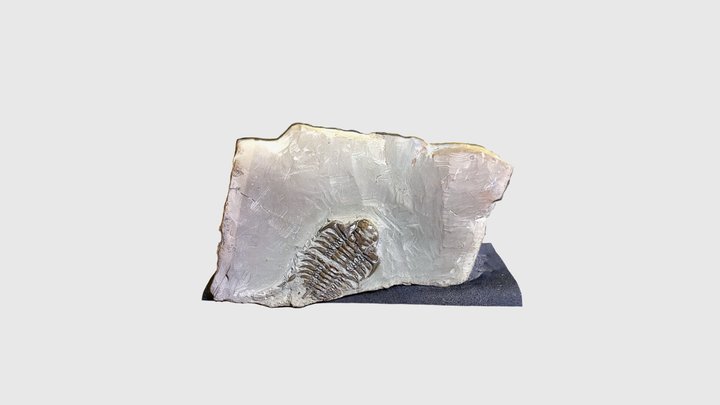
3D model
- Source
- Sketchfab
- Credit
- Adrian Gyllingberg
- Licence
- CC Attribution-NonCommercial-ShareAlike
- Commercial use
- the licence does not allow it
No picture of Hadromeros was found. Wikidata, iDigBio and Smithsonian Open Access were searched and had none.
Wikipedia did not answer, so this is what the others held rather than everything there is.
GBIF was asked, and what came back is not recorded: nothing, or a picture this site could not tie to Hadromeros, or no answer at all. This entry cannot say which.
This is what the site found, which is not the same as what exists.
Keep going
What may have been alongside itCheirurinae through timeFormations of the OrdovicianThe world it lived on
Occurrence data from the Paleobiology Database, CC BY 4.0. Lane 1971