Gigantopithecus
Gigantopithecus is an extinct genus of great ape that lived in central to southern China from two million to approximately 215,000–295,000 years ago during the Early to Middle Pleistocene, represented by one species, Gigantopithecus blacki. The first remains of Gigantopithecus, two third-molar teeth, were identified in a drugstore by anthropologist Ralph von Koenigswald in 1935 in England, who subsequently described the ape. In 1956, the first mandible and more than 1,000 teeth were found in Liucheng, and numerous more remains have since been found in at least 16 sites. Only teeth and four mandibles are known currently. Other skeletal elements were likely consumed by porcupines before they could fossilize. Gigantopithecus was once argued to be a hominin, a member of the human line, but it is now thought to be closely allied with orangutans, classified in the subfamily Ponginae.

Jonathan Chen · CC BY-SA 4.0 · via Wikipedia/Commons. May be a photograph of a specimen, or an artist’s reconstruction — an interpretation of a skeleton, since colour and soft tissue are almost never preserved.
On record
Recorded, not inferred- Sits inside
- SivapitheciniPBDB
- Diet
- omnivorePBDB, for Hominidae
- Life habit
- ground dwellingPBDB, for Hominidae
- Motility
- actively mobilePBDB, for Osteichthyes
- Environment
- terrestrialPBDB, for Eutheria
- Mass
- 300 kgWikidata
Time the record covers
At least 4.5 million years on record.
The record covers at least 5.333 Mya to 774 ka. No occurrence read is dated outside 11.63 Mya to 129 ka.
10 occurrences of Gigantopithecus on record, most of them in the Pleistocene. Bar height is expected occurrences, not a count: each fossil is spread across the span it is dated to, so a tall narrow bar means tight dating and a low wide one means loose.
When
10 occurrences- Miocene10%
- Pleistocene90%
These are dates about fossils, not the animal: the record can only begin after it arose and end before it died out, so either end may reach further. Shares are expected occurrences: a fossil dated to a span is counted partly in each period it straddles. More on what this infers.
Found in
1 formation
- Dhok Pathan Formation · Siwalik Group1
Loading coastlines…
The named rock units Gigantopithecus has been recovered from, largest first. Drawn where the rock is now, not where it formed. 9 occurrences have no formation on record, which is common for older literature.
Gigantopithecus and its relatives
PleistoceneWhere Gigantopithecus and its relatives were recorded in the Pleistocene.
Found in the same rock
123 taxa- Hystrix7 sites
- Sus7 sites
- Macaca6 sites
- Rhinoceros sinensis6 sites
- Ailuropoda melanoleuca4 sites
- Atherurus4 sites
- Megalovis4 sites
- Pongo4 sites
- Rattus4 sites
- Rhizomys4 sites
- Arctonyx collaris3 sites
- Bos (Bibos)3 sites
- Caprinae3 sites
- Cervavitus fenqii3 sites
- Cervus3 sites
- Cuon3 sites
- Felis3 sites
- Hippopotamodon3 sites
- Hylobates3 sites
- Stegodon insignis3 sites
- Stegodon preorientalis3 sites
- Sus scrofa3 sites
- Tapirus3 sites
- Ursus3 sites
The Paleobiology Database records 10 sites for Gigantopithecus, and this reads all of them. The number is how many of those sites it was catalogued from too. The 24 sharing the most are listed.
This is not a list of everything alive at the time. It is only what has come out of the same ground as this animal and been written down.
Entered from
9 references- Geochronology of Ailuropoda–Stegodon fauna and Gigantopithecus in Guangxi Province, southern China2
- Gigantopithecus blacki: a giant ape from the Pleistocene of Asia revisited1
- Earliest record of Sinicuon in Zanda Basin, southern Tibet and implications for hypercarnivores in cold environments1
- New discoveries of Gigantopithecus blacki teeth from Chuifeng Cave in the Bubing Basin, Guangxi, south China1
- A newly discovered Gigantopithecus fauna from Sanhe Cave, Chongzuo, Guangxi, South China1
- A review of the Pleistocene hominoid fauna of the Socialist Republic of Vietnam (excluding Hylobatidae)1
- A diverse hominoid fauna from the late middle Pleistocene breccia cave of Tham Khuyen, Socialist Republic of Vietnam1
- A new discovery of fossil giant ape [= Gigantopithecus] teeth in Wuming County, Guangxi Zhuang Autonomous Region1
- Gigantopithecus (Pongidae, Hominoidea) a new species from North India1
Each of the 10 occurrences read was entered from one of these publications, ordered by how many each accounts for. This is not a search for papers mentioning the name. Entries link to doi.org where the Paleobiology Database holds an identifier, and to its own record where it does not. Relayed as the Paleobiology Database holds them, not checked against what they resolve to.
Media and terms
Media content2

Picture of Gigantopithecus
- Source
- Wikipedia/Commons
- Credit
- Jonathan Chen
- Licence
- CC BY-SA 4.0
- Commercial use
- the licence allows it
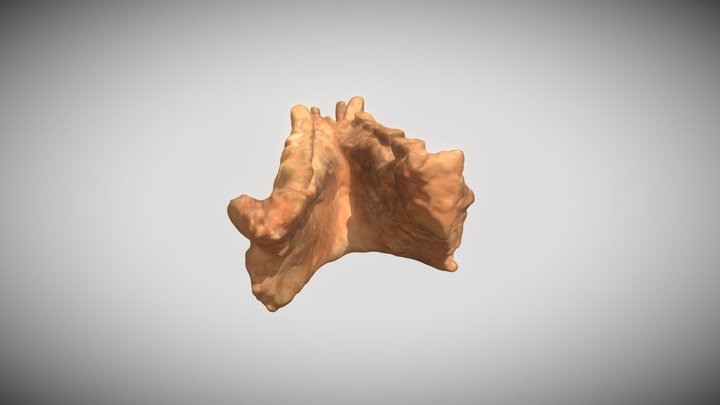
3D model
- Source
- Sketchfab
- Credit
- digitalkenyon
- Licence
- CC Attribution
- Commercial use
- cannot be read from the licence given — check the record
The description on this site
- Licence
- CC BY-SA 4.0
This is what the site found, which is not the same as what exists.
Keep going
What may have been alongside itSivapithecini through timeFormations of the PleistoceneThe world it lived on
Occurrence data from the Paleobiology Database, CC BY 4.0. von Koenigswald 1935