Favia
Favia is a genus of reef-building stony corals in the family Mussidae. Members of the genus are massive or thickly encrusting colonial corals, either dome-shaped or flat, and a few are foliaceous. There is a great diversity of form even among individuals of the same species. The corallites project slightly above the surface of the coral and each has its own wall. In most species, the corallites are plocoid and in some, monocentric. The septa and costae linked to the corallite wall are well developed and covered by fine teeth. The polyps only extend and feed during the night. Each one has a small number of tapering tentacles which often have a darker coloured tip; these are called stinger tentacles, or sweeper tentacles. They use these to sweep the water to see if any other coral is in its area; if so, then they begin to sting the other coral. This is commonly known as coral war. Each coral is trying to make sure it has enough room around it so it can continue to grow and have more surface area for its offspring. The columella is parietal and spongy, and there are vesicles on both the endotheca and exotheca. Members of this genus are widespread in both the Atlantic Ocean and the Indo-Pacific.

Diego Delso · CC BY-SA 4.0 · via Wikipedia/Commons. May be a photograph of a specimen, or an artist’s reconstruction — an interpretation of a skeleton, since colour and soft tissue are almost never preserved.
On record
Recorded, not inferred- Sits inside
- FaviidaePBDB
- Diet
- photosymbiotic, microcarnivorePBDB, for Faviidae
- Life habit
- low-level epifaunalPBDB, for Faviidae
- Motility
- stationaryPBDB, for Faviidae
- Vision
- blindPBDB, for Anthozoa
- Environment
- marinePBDB, for Scleractinia
Time the record covers
At least 168 million years on record.
The record covers at least 168.6 Mya to 11.7 ka. No occurrence read is dated outside 174.7 Mya to 0 Mya.
477 occurrences of Favia on record, most of them in the Pleistocene. The Paleobiology Database records this as a living group. Bar height is expected occurrences, not a count: each fossil is spread across the span it is dated to, so a tall narrow bar means tight dating and a low wide one means loose.
When
477 occurrences- Middle Jurassicunder 1%
- Late Jurassicunder 1%
- Early Cretaceous4%
- Late Cretaceous1%
- Paleoceneunder 1%
- Eocene5%
- Oligocene7%
- Miocene19%
- Pliocene5%
- Pleistocene50%
- Holocene6%
These are dates about fossils, not the animal: the record can only begin after it arose and end before it died out, so either end may reach further. Shares are expected occurrences: a fossil dated to a span is counted partly in each period it straddles. More on what this infers.
Found in
84 formations
- Ironshore Formation29
- Salcedo Formation9
- Quebrada Chocolate Formation · Limon Group7
- Sobe Formation · Ryukyu Group7
- Rudeis Formation6
- Hato Formation6
Loading coastlines…
The named rock units Favia has been recovered from, largest first. Drawn where the rock is now, not where it formed. 60 further formations hold fewer occurrences each and are not listed. 269 occurrences have no formation on record, which is common for older literature.
Favia and its relatives
PleistoceneWhere Favia and its relatives were recorded in the Pleistocene.
Found in the same rock
1,501 taxa- Porites76 sites
- Acropora31 sites
- Favites24 sites
- Goniopora22 sites
- Montipora22 sites
- Montastraea21 sites
- Pavona21 sites
- Goniastrea20 sites
- Platygyra20 sites
- Cyphastrea18 sites
- Galaxea fascicularis18 sites
- Stylophora18 sites
- Astreopora16 sites
- Tarbellastraea15 sites
- Agaricia agaricites13 sites
- Orbicella limbata12 sites
- Plesiastrea12 sites
- Porites baracoaensis12 sites
- Caulastrea11 sites
- Leptoria11 sites
- Acanthastrea10 sites
- Actinacis rollei10 sites
- Alveopora10 sites
- Antiguastrea10 sites
The Paleobiology Database records 171 sites for Favia, and this reads all of them. The number is how many of those sites it was catalogued from too. The 24 sharing the most are listed.
This is not a list of everything alive at the time. It is only what has come out of the same ground as this animal and been written down.
Entered from
170 references- Field work Sinai29
- Coral associations of the Pleistocene Ironshore Formation, Grand Cayman29
- Escaping the heat: range shifts of reef coral taxa in coastal Western Australia25
- Ecological stratification in the Pleistocene coral reefs of the Kenya coast22
- Variations in Pleistocene coral assemblages in space and time in southern and northern central Ryukyu Islands, Japan19
- Systematics and paleobiogeography of Quaternary corals from Cabo Verde Archipelago12
- Neogene reef coral assemblages of the Bocas del Toro region, Panama: the rise of Acropora palmata10
- Ecological persistence interrupted in Caribbean coral reefs10
- Recherches sur les Madreporaires et les formations recifales Miocenes de la Mediterranee occidentale [Miocene corals and reefs from the western Mediterranean]10
- Systematische und paläoökologische Untersuchungen an oligozänen Korallen der Umgebung von San Luca (Provinz Vicenza, Norditalien) [Systematic and paleoecologic studies of Oligocene corals from San Luca area (Vicenza, northern Italy)]9
- Neogene Paleontology in the northern Dominican Republic 19: The family Faviidae (Anthozoa, Scleractinia) part II: The genera Caulastraea, Favia, Diploria, Thysanus, Hadrophyllia, Manicina and Colpophyllia8
- Faunal response to the instability of reef habitats: Pleistocene molluscan assemblages of Aldabra Atoll8
Each of the 477 occurrences read was entered from one of these publications, ordered by how many each accounts for. This is not a search for papers mentioning the name. 158 further references are not listed. Entries link to doi.org where the Paleobiology Database holds an identifier, and to its own record where it does not. Relayed as the Paleobiology Database holds them, not checked against what they resolve to.
Media and terms
Media content3

Picture of Favia
- Source
- Wikipedia/Commons
- Credit
- Diego Delso
- Licence
- CC BY-SA 4.0
- Commercial use
- the licence allows it
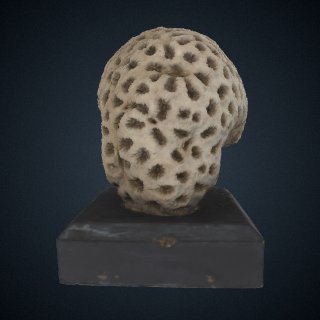
3D scan
- Source
- Smithsonian
- Licence
- CC0 — this site’s default, not the record’s
- Commercial use
- the licence allows it
- Specimen
- Favia danai
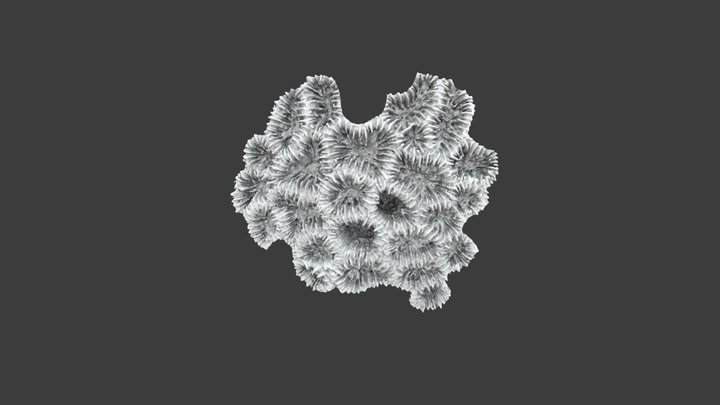
3D model
- Source
- Sketchfab
- Licence
- CC0 Public Domain
- Commercial use
- the licence allows it
The description on this site
- Source
- Wikipedia, “Favia”
- Licence
- CC BY-SA 4.0
This is what the site found, which is not the same as what exists.
Keep going
Everything alive alongside itFaviidae through timeFormations of the PleistoceneThe world it lived on
Occurrence data from the Paleobiology Database, CC BY 4.0. Oken 1815