Dactylioceratidae
The family Dactylioceratidae comprises Early Jurassic ammonite genera with ribbed and commonly tuberculate shells that resembled later Middle Jurassic stephanoceratids and Upper Jurassic perisphinctids. Shells may be either evolute or involute.

Uncredited · via Wikipedia/Commons. May be a photograph of a specimen, or an artist’s reconstruction — an interpretation of a skeleton, since colour and soft tissue are almost never preserved.
On record
Recorded, not inferred- Sits inside
- EoderoceratoideaPBDB
- Diet
- carnivorePBDB, for Ammonoidea
- Life habit
- nektonicPBDB, for Ammonoidea
- Motility
- fast-movingPBDB, for Ammonoidea
- Vision
- well-developedPBDB, for Cephalopoda
- Environment
- marinePBDB, for Cephalopoda
Time the record covers
At least 19 million years on record.
The record covers at least 199.5 Mya to 180.4 Mya. No occurrence read is dated outside 201.4 Mya to 161.5 Mya.
1,427 occurrences of Dactylioceratidae on record, most of them in the Early Jurassic. Bar height is expected occurrences, not a count: each fossil is spread across the span it is dated to, so a tall narrow bar means tight dating and a low wide one means loose.
When
1,427 occurrences- Early Jurassic100%
- Middle Jurassicunder 1%
These are dates about fossils, not the animal: the record can only begin after it arose and end before it died out, so either end may reach further. Shares are expected occurrences: a fossil dated to a span is counted partly in each period it straddles. More on what this infers.
Found in
70 formations
- Alum Shale Formation79
- Bugarone Formation72
- Subbetic Basin Formation64
- Sunrise Formation55
- Spatsizi Formation · Hazelton Group46
- Kisgerecse Formation43
Loading coastlines…
The named rock units Dactylioceratidae has been recovered from, largest first. Drawn where the rock is now, not where it formed. 46 further formations hold fewer occurrences each and are not listed. 609 occurrences have no formation on record, which is common for older literature.
Dactylioceratidae and its relatives
Early JurassicWhere Dactylioceratidae and its relatives were recorded in the Early Jurassic.
Found in the same rock
321 taxa- Dactylioceras59 sites
- Peronoceras48 sites
- Ammonoidea31 sites
- Harpoceras29 sites
- Fuciniceras23 sites
- Parainoceramya matsumotoi22 sites
- Phymatoceras22 sites
- Catacoeloceras raquinianum17 sites
- Dactylioceras kanense17 sites
- Lytoceras16 sites
- Ammonitina14 sites
- Bositra buchi13 sites
- Bivalvia12 sites
- Collina12 sites
- Eleganticeras exaratum12 sites
- Protogrammoceras12 sites
- Calliphylloceras11 sites
- Catacoeloceras engeli11 sites
- Cleviceras10 sites
- Dactylioceras commune10 sites
- Pseudolioceras10 sites
- Phylloceras9 sites
- Polyplectus pluricostatus9 sites
- Rarenodia planulata9 sites
The Paleobiology Database records 758 sites for Dactylioceratidae, and this reads 240 of them. The number is how many of those sites it was catalogued from too. The 24 sharing the most are listed.
This is not a list of everything alive at the time. It is only what has come out of the same ground as this animal and been written down.
Entered from
116 references- Toarcian (Early Jurassic) ammonoids from western North America109
- The Jet Rock Series and the Alum Shale Series of the Yorkshire coast97
- The Toarcian in the Subbetic basin (southern Spain): Bio-events (ammonite and calcareous nannofossils) and carbon-isotope stratigraphy89
- Cingolites n. gen., a new lower Toarcian Hildoceratinae (Ammonitina) from the Marchean Apennines (Cingoli, Macerata, Italy)62
- Les Harpoceratinae, Hildoceratinae et Parinoceratinae du Toarcien de la Vendée et des Deux-Sèvres (France)61
- Das Makrobenthos der Causses (Südfrankreich): Palökologie einer mittel- bis oberliassischen Mergelfolge58
- Pliensbachian–Toarcian (Early Jurassic) Ammonoids from the Luning Embayment, West-Central Nevada, U.S.A.55
- Réparation biostratigraphique des ammonites du Toarcien moyen de la bordure sud des Causses (France) et révision des ammonites décrites et figurées par Monestier (1931)52
- Middle Toarcian Ammonitina from the Gerecse Mts, Hungary46
- Lower Toarcian ammonite and foraminifera assemblages in the San Miguel de Aguayo Section (Basque-Cantabrian Basin, Spain)41
- Die Ammoniten-Gattung Catacoeloceras im S-franzoesischen und S-deutschen Ober-Toarcien. The ammonite genus Catacoeloceras in the upper Toarcian of southern France and southern Germany38
- Early Jurrasic Macrofauna of the Oxygen-Depleted Epicontinental Marin Basin in the Toyora Area, West Japan36
Each of the 1,427 occurrences read was entered from one of these publications, ordered by how many each accounts for. This is not a search for papers mentioning the name. 104 further references are not listed. Entries link to doi.org where the Paleobiology Database holds an identifier, and to its own record where it does not. Relayed as the Paleobiology Database holds them, not checked against what they resolve to.
Media and terms
Media content2
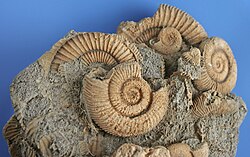
Picture of Dactylioceratidae
- Source
- Wikipedia/Commons
- Credit
- nobody named on the record
- Licence
- not stated by the source
- Commercial use
- cannot be read from the licence given — check the record
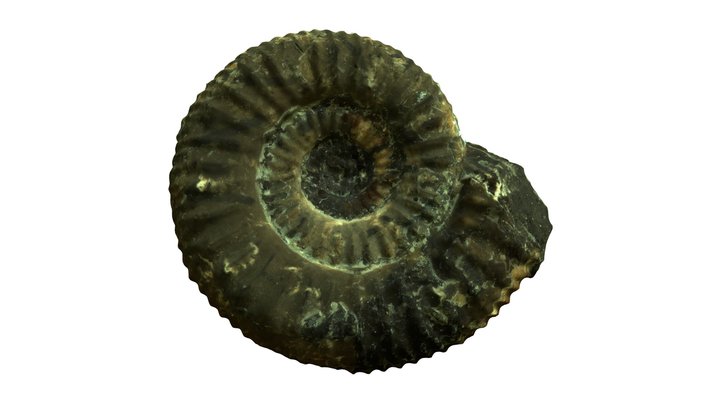
3D model
- Source
- Sketchfab
- Licence
- CC Attribution
- Commercial use
- cannot be read from the licence given — check the record
The description on this site
- Licence
- CC BY-SA 4.0
This is what the site found, which is not the same as what exists.
Keep going
What may have been alongside itEoderoceratoidea through timeFormations of the Early JurassicThe world it lived on
Occurrence data from the Paleobiology Database, CC BY 4.0. Hyatt 1867