Phylloceras
Phylloceras is an extinct genus of ammonoid cephalopods belonging to the family Phylloceratidae. These nektonic carnivores lived from Early Jurassic to Late Cretaceous.

NobuTamura email:nobu.tamura@yahoo.com palaeocritti · CC BY-SA 3.0 · via Wikipedia/Commons. May be a photograph of a specimen, or an artist’s reconstruction — an interpretation of a skeleton, since colour and soft tissue are almost never preserved.
On record
Recorded, not inferred- Sits inside
- PhylloceratinaePBDB
- Diet
- carnivorePBDB, for Phylloceratida
- Life habit
- nektonicPBDB, for Phylloceratida
- Motility
- actively mobilePBDB, for Phylloceratida
- Vision
- well-developedPBDB, for Cephalopoda
- Environment
- marinePBDB, for Cephalopoda
Time the record covers
At least 155 million years on record.
The record covers at least 227.3 Mya to 72.2 Mya. No occurrence read is dated outside 237 Mya to 66 Mya.
958 occurrences of Phylloceras on record, most of them in the Early Jurassic. Bar height is expected occurrences, not a count: each fossil is spread across the span it is dated to, so a tall narrow bar means tight dating and a low wide one means loose.
When
958 occurrences- Late Triassicunder 1%
- Early Jurassic58%
- Middle Jurassic8%
- Late Jurassic9%
- Early Cretaceous22%
- Late Cretaceous3%
These are dates about fossils, not the animal: the record can only begin after it arose and end before it died out, so either end may reach further. Shares are expected occurrences: a fossil dated to a span is counted partly in each period it straddles. More on what this infers.
Found in
108 formations
- Bugarone Formation69
- Tűzkövesárok Limestone Formation38
- Isztimér Formation34
- Isztimér Limestone Formation24
- Kisgerecse Marl Formation20
- Grès verts helvétiques Formation18
Loading coastlines…
The named rock units Phylloceras has been recovered from, largest first. Drawn where the rock is now, not where it formed. 84 further formations hold fewer occurrences each and are not listed. 455 occurrences have no formation on record, which is common for older literature.
Phylloceras and its relatives
Early JurassicWhere Phylloceras and its relatives were recorded in the Early Jurassic.
Found in the same rock
1,180 taxa- Lytoceras71 sites
- Juraphyllites38 sites
- Partschiceras28 sites
- Calliphylloceras24 sites
- Fuciniceras16 sites
- Geyeroceras cylindricum15 sites
- Lenticulina15 sites
- Neolissoceras grasianum15 sites
- Desmoceras (Desmoceras) latidorsatum14 sites
- Gastropoda14 sites
- Gaudryceras14 sites
- Calliphylloceras bicicolae12 sites
- Galaticeras12 sites
- Tintinnopsella12 sites
- Oppelia11 sites
- Hemiaster10 sites
- Nautiloidea10 sites
- Crioceratites9 sites
- Holaster9 sites
- Olcostephanus9 sites
- Remaniella9 sites
- Tetragonites glabrus9 sites
- Calpionella alpina8 sites
- Discoides8 sites
The Paleobiology Database records 754 sites for Phylloceras, and this reads 240 of them. The number is how many of those sites it was catalogued from too. The 24 sharing the most are listed.
This is not a list of everything alive at the time. It is only what has come out of the same ground as this animal and been written down.
Entered from
185 references- Les ammonites du Sinémurien et du Pliensbachien inférieur de la montagne du Bakony (Hongrie)100
- Les ammonites du Domérien de la montagne du Bakony (Hongrie)99
- L'évolution des ammonites du Valanginien-Hauterivien inférieur du bassin Vocontien et de la plate-form Provençale (sud-est de la France): relations avec la stratigraphie séquentielle et implications biostratigraphiques72
- Cingolites n. gen., a new lower Toarcian Hildoceratinae (Ammonitina) from the Marchean Apennines (Cingoli, Macerata, Italy)69
- Liassic ammonites from the central and eastern Pontides (Ankara and Kelkit areas, Turkey)28
- Lower Toarcian Ammonitida fauna and biostratigraphy of the Gerecse Mountains (Hungary)23
- Phylloceratids from the Upper Jurassic deposits of Hăghimaş Mts. (the Eastern Carpathians - Romania)22
- Les grès verts helvétiques (Aptien moyen-Albien supérieur) de Haute-Savoie, Valais et Vaud (Alpes occidentales franco-suisses)22
- Integrated Lower Cretaceous biostratigraphy of the Bersek Quarry, Gerecse Mountains, Transdanubian Range. Hungary20
- Ammonite stratigraphy of a Toarcian (Lower Jurassic) section on Nagy-Pisznice Hill (Gerecse Mts, Hungary)19
- Middle and late Hettangian (Early Jurassic) ammonites from the Queen Charlotte Islands, British Columbia, Canada18
- The Jet Rock Series and the Alum Shale Series of the Yorkshire coast18
Each of the 958 occurrences read was entered from one of these publications, ordered by how many each accounts for. This is not a search for papers mentioning the name. 173 further references are not listed. Entries link to doi.org where the Paleobiology Database holds an identifier, and to its own record where it does not. Relayed as the Paleobiology Database holds them, not checked against what they resolve to.
Media and terms
Media content2
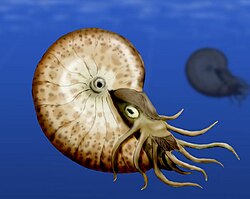
Picture of Phylloceras
- Source
- Wikipedia/Commons
- Credit
- NobuTamura email:nobu.tamura@yahoo.com palaeocritti
- Licence
- CC BY-SA 3.0
- Commercial use
- the licence allows it
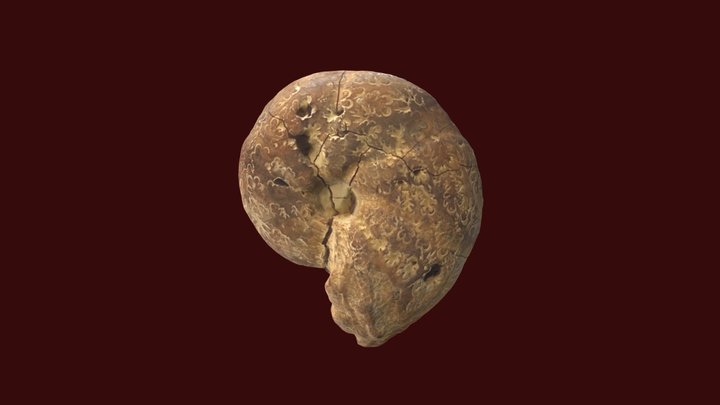
3D model
- Source
- Sketchfab
- Credit
- Shellie Luallin
- Licence
- CC Attribution
- Commercial use
- cannot be read from the licence given — check the record
This entry was cached before the site began recording what Smithsonian Open Access and MorphoSource did, so a search that failed cannot be told from one that found nothing.
The description on this site
- Source
- Wikipedia, “Phylloceras”
- Licence
- CC BY-SA 4.0
This is what the site found, which is not the same as what exists.
Keep going
What may have been alongside itPhylloceratinae through timeFormations of the Early JurassicThe world it lived on
Occurrence data from the Paleobiology Database, CC BY 4.0. (Suess 1865)