Crioceratites
Crioceratites is an ammonite genus from the Early Cretaceous belonging to the Ancyloceratoidea.

Woudloper · CC BY-SA 1.0 · via Wikipedia/Commons. May be a photograph of a specimen, or an artist’s reconstruction — an interpretation of a skeleton, since colour and soft tissue are almost never preserved.
On record
Recorded, not inferred- Sits inside
- CrioceratitidaePBDB
- Diet
- carnivorePBDB, for Ammonoidea
- Life habit
- nektonicPBDB, for Ammonoidea
- Motility
- fast-movingPBDB, for Ammonoidea
- Vision
- well-developedPBDB, for Cephalopoda
- Environment
- marinePBDB, for Cephalopoda
Time the record covers
At least 42 million years on record.
The record covers at least 143.1 Mya to 100.5 Mya. No occurrence read is dated outside 149.2 Mya to 93.9 Mya.
406 occurrences of Crioceratites on record, most of them in the Early Cretaceous. Bar height is expected occurrences, not a count: each fossil is spread across the span it is dated to, so a tall narrow bar means tight dating and a low wide one means loose.
When
406 occurrences- Late Jurassicunder 1%
- Early Cretaceous99%
- Late Cretaceousunder 1%
These are dates about fossils, not the animal: the record can only begin after it arose and end before it died out, so either end may reach further. Shares are expected occurrences: a fossil dated to a span is counted partly in each period it straddles. More on what this infers.
Found in
39 formations
- Totoralillo Formation · Chanarcillo Group38
- Maiolica Formation18
- Bersek Marl Formation12
- Taboulouart Formation11
- Budden Canyon Formation10
- Makatini Formation8
Loading coastlines…
The named rock units Crioceratites has been recovered from, largest first. Drawn where the rock is now, not where it formed. 15 further formations hold fewer occurrences each and are not listed. 244 occurrences have no formation on record, which is common for older literature.
Crioceratites and its relatives
Early CretaceousWhere Crioceratites and its relatives were recorded in the Early Cretaceous.
Found in the same rock
671 taxa- Phyllopachyceras infundibulum76 sites
- Lytoceras66 sites
- Neolissoceras grasianum59 sites
- Euphylloceras thetys56 sites
- Phyllopachyceras winkleri53 sites
- Olcostephanus40 sites
- Barremites36 sites
- Spitidiscus31 sites
- Anahamulina23 sites
- Phylloceras20 sites
- Phylloceras (Hypophylloceras) ponticuli20 sites
- Bochianites neocomiensis19 sites
- Plesiospitidiscus19 sites
- Lytoceras subfimbriatum18 sites
- Oosterella17 sites
- Lyticoceras16 sites
- Plesiospitidiscus subdifficilis16 sites
- Subpulchellia16 sites
- Hamulinites15 sites
- Paraspiticeras15 sites
- Holcodiscus13 sites
- Neocomites (Teschenites) subpachydicranus12 sites
- Olcostephanus (Olcostephanus) sayni12 sites
- Acrioceras tabarelli11 sites
The Paleobiology Database records 297 sites for Crioceratites, and this reads 240 of them. The number is how many of those sites it was catalogued from too. The 24 sharing the most are listed.
This is not a list of everything alive at the time. It is only what has come out of the same ground as this animal and been written down.
Entered from
64 references- L'évolution des ammonites du Valanginien-Hauterivien inférieur du bassin Vocontien et de la plate-form Provençale (sud-est de la France): relations avec la stratigraphie séquentielle et implications biostratigraphiques82
- Le Crétacé inférieur de l'arc subalpin de Castellane entre l'Asse et le Var: Stratigraphy et Sédimentologie41
- Lower Barremian ammonite biostratigraphy in the Subbetic Domain (Betic Cordillera, southern Spain)28
- Ammonite biostratigraphy of the uppermost Hauterivian in the Betic Cordillera (SE Spain)21
- Geología del Área Carrizal Bajo - Chacritas, Región de Atacama. Servicio Nacional de Geología y Minería, Carta Geológica de Chile, Serie Geología Básica 111: 67 p, 1 mapa escala 1:100.000. Santiago17
- Early Crioceratites (heteromorphic ammonites) from the lower Hauterivian of south-eastern France: systematics, intraspecific variation and biostratigraphic implications15
- Geología del Área Vallenar-Domeyko, Región de Atacama. Servicio Nacional de Geología y Minería, Carta Geológica de Chile, Serie Geología Básica 120: 64 p, 1 mapa escala 1:100.00014
- Integrated Lower Cretaceous biostratigraphy of the Bersek Quarry, Gerecse Mountains, Transdanubian Range. Hungary14
- Barremian ammonite faunas from the western High Atlas, Morocco - biostratigraphy and palaoebiogeography11
- Geología del Área de Estación Chañar-Junta de Chingoles. Regiones de Atacama y Coquimbo. Carta Geología de Chile. Serie Geología Básica. No 1509
- Carta Copiapó, Región de Atacama, Servicio Nacional de Geología y Minería, Carta Geológica de Chile, Serie Geología Básica, No. 91, 53 p, 1 mapa escala 1:100.0007
- Latest Hauterivian (Early Cretaceous) ammonites from Umbria-Marche Apennines (central Italy)7
Each of the 406 occurrences read was entered from one of these publications, ordered by how many each accounts for. This is not a search for papers mentioning the name. 52 further references are not listed. Entries link to doi.org where the Paleobiology Database holds an identifier, and to its own record where it does not. Relayed as the Paleobiology Database holds them, not checked against what they resolve to.
Media and terms
Media content2

Picture of Crioceratites
- Source
- Wikipedia/Commons
- Credit
- Woudloper
- Licence
- CC BY-SA 1.0
- Commercial use
- the licence allows it
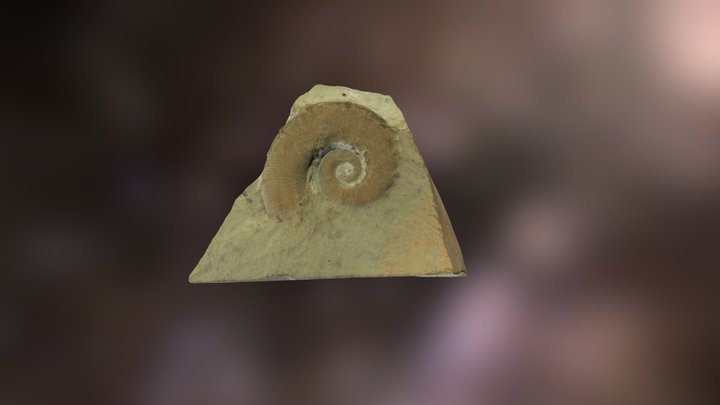
3D model
- Source
- Sketchfab
- Credit
- Shellie Luallin
- Licence
- CC Attribution
- Commercial use
- cannot be read from the licence given — check the record
Smithsonian Open Access was not reached for this taxon, so this list is what the others held rather than everything there is.
The description on this site
- Licence
- CC BY-SA 4.0
This is what the site found, which is not the same as what exists.
Keep going
What may have been alongside itCrioceratitidae through timeFormations of the Early CretaceousThe world it lived on
Occurrence data from the Paleobiology Database, CC BY 4.0. Leveillé 1837