Cyprinus
Cyprinus is the genus of typical carps in family Cyprinidae. Most species in the genus are of East Asia origin with only the common carp in Western Asia and Europe; this invasive species has also been introduced to many other regions around the world. Cyprinus are closely related to some more barb-like genera, such as Cyclocheilichthys and Barbonymus (tinfoils). The crucian carps (Carassius) of western Eurasia, which include the goldfish, are apparently not as closely related.

Dezidor · CC BY-SA 3.0 · via Wikipedia/Commons. May be a photograph of a specimen, or an artist’s reconstruction — an interpretation of a skeleton, since colour and soft tissue are almost never preserved.
On record
Recorded, not inferred- Sits inside
- CyprinidaePBDB
- Diet
- omnivorePBDB, for Cypriniformes
- Life habit
- nektonicPBDB, for Cypriniformes
- Motility
- actively mobilePBDB, for Cypriniformes
- Environment
- freshwaterPBDB, for Cypriniformes
Time the record covers
At least 37 million years on record.
The record covers at least 37.71 Mya to 11.7 ka. No occurrence read is dated outside 48.07 Mya to 0 Mya.
12 occurrences of Cyprinus on record, most of them in the Eocene. The Paleobiology Database records this as a living group. Bar height is expected occurrences, not a count: each fossil is spread across the span it is dated to, so a tall narrow bar means tight dating and a low wide one means loose.
When
12 occurrences- Eocene33%
- Miocene33%
- Pliocene8%
- Pleistocene17%
- Holocene8%
These are dates about fossils, not the animal: the record can only begin after it arose and end before it died out, so either end may reach further. Shares are expected occurrences: a fossil dated to a span is counted partly in each period it straddles. More on what this infers.
Found in
4 formations
Loading coastlines…
The named rock units Cyprinus has been recovered from, largest first. Drawn where the rock is now, not where it formed. 7 occurrences have no formation on record, which is common for older literature.
Cyprinus and its relatives
EoceneWhere Cyprinus and its relatives were recorded in the Eocene.
Found in the same rock
267 taxa- Crocodylidae3 sites
- Ctenopharyngodon sp.3 sites
- Dicrocerus3 sites
- Dorcatherium3 sites
- Galerix3 sites
- Lanthanotherium3 sites
- Rana3 sites
- Spermophilinus3 sites
- Suidae3 sites
- Alloptox2 sites
- Anosteira maomingensis2 sites
- Bovidae2 sites
- Cervidae2 sites
- Chinemys reevesii2 sites
- Democricetodon brevis2 sites
- Diatomys shantungensis2 sites
- Elopichthys sp.2 sites
- Emydidae2 sites
- Equus2 sites
- Hypophthalmichthys sp.2 sites
- Lutrinae2 sites
- Maomingosuchus petrolica2 sites
- Megacricetodon collongensis2 sites
- Mimomys2 sites
The Paleobiology Database records 11 sites for Cyprinus, and this reads all of them. The number is how many of those sites it was catalogued from too. The 24 sharing the most are listed.
This is not a list of everything alive at the time. It is only what has come out of the same ground as this animal and been written down.
Entered from
10 references- The Aragonian vertebrate fauna of Xiacaowan, Jiangsu2
- Poissons fossiles2
- Tomistominae gen. et sp. indet. (Crocodylia: Crocodylidae) from the Lower Yage Formation (Middle Pleistocene) in Hamamatsu City, Shizuoka Prefecture, Japan1
- Geoemydid turtles from the Late Eocene Maoming basin, southern China1
- The First Cyprinid Fish and Small Mammal Fossils1
- Archaeozoological material from the Eneolithic and early Bronze Age settlement at Sozopol1
- The Early Middle Pleistocene vertebrate fauna from Little Oakley, Essex1
- Stratigraphic summarization of Ramapithecus fossil locality, Lufeng, Yunnan1
- An early Pleistocene mammalian fauna and its stratigraphy of the River You, Weinan, Shensi1
- A new crocodile from Maoming, Kwangtung1
Each of the 12 occurrences read was entered from one of these publications, ordered by how many each accounts for. This is not a search for papers mentioning the name. Entries link to doi.org where the Paleobiology Database holds an identifier, and to its own record where it does not. Relayed as the Paleobiology Database holds them, not checked against what they resolve to.
Media and terms
Media content3

Picture of Cyprinus
- Source
- Wikipedia/Commons
- Credit
- Dezidor
- Licence
- CC BY-SA 3.0
- Commercial use
- the licence allows it
CT scan
- Source
- MorphoSource
- Licence
- not stated by the source
- Commercial use
- cannot be read from the licence given — check the record
- Specimen
- Carpiodes cyprinus · UF:Fish:238188
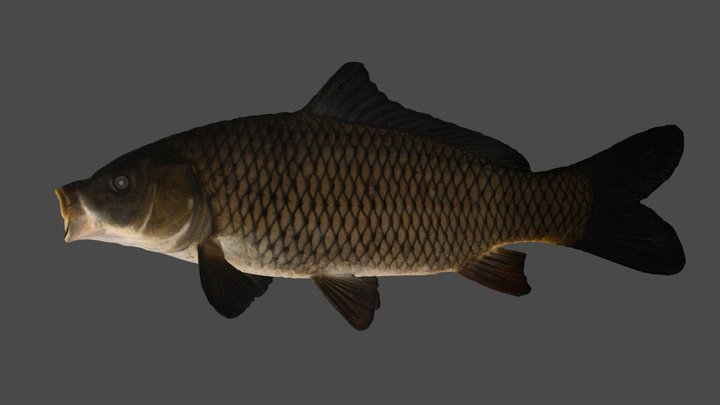
3D model
- Source
- Sketchfab
- Licence
- CC0 Public Domain
- Commercial use
- the licence allows it
The description on this site
- Source
- Wikipedia, “Cyprinus”
- Licence
- CC BY-SA 4.0
This is what the site found, which is not the same as what exists.
Keep going
What may have been alongside itCyprinidae through timeFormations of the EoceneThe world it lived on
Occurrence data from the Paleobiology Database, CC BY 4.0. Linnaeus 1758