Crocodylidae
A crocodile or true crocodile is a large, semiaquatic reptile that lives throughout the tropics in Africa, Asia, the Americas and Australia. The term "crocodile" is sometimes used more loosely to include all extant members of the order Crocodilia, which includes the alligators and caimans, the gharial and false gharial as well as other extinct taxa. This article uses "crocodile" or "true crocodile" to refer only to the species taxonomically included in the Crocodylidae family, extant or extinct.

Leigh Bedford · CC BY 2.0 · via Wikipedia/Commons. May be a photograph of a specimen, or an artist’s reconstruction — an interpretation of a skeleton, since colour and soft tissue are almost never preserved.
On record
Recorded, not inferred- Also called
- crocodilePBDB
- Sits inside
- CrocodyloideaPBDB
- Diet
- carnivorePBDB, for Crocodylia
- Motility
- actively mobilePBDB, for Osteichthyes
- Environment
- marinePBDB, for Mesoeucrocodylia
Time the record covers
At least 145 million years on record.
The record covers at least 145.06 Mya to 11.7 ka. No occurrence read is dated outside 152.21 Mya to 0 Mya.
546 occurrences of Crocodylidae on record, most of them in the Pleistocene. The Paleobiology Database records this as a living group. Bar height is expected occurrences, not a count: each fossil is spread across the span it is dated to, so a tall narrow bar means tight dating and a low wide one means loose.
When
546 occurrences- Late Jurassicunder 1%
- Early Cretaceousunder 1%
- Late Cretaceous7%
- Paleoceneunder 1%
- Eocene12%
- Oligoceneunder 1%
- Miocene24%
- Pliocene14%
- Pleistocene37%
- Holocene5%
These are dates about fossils, not the animal: the record can only begin after it arose and end before it died out, so either end may reach further. Shares are expected occurrences: a fossil dated to a span is counted partly in each period it straddles. More on what this infers.
Found in
132 formations
- Koobi Fora Formation · Omo Group78
- Olduvai Formation · Vogel River Series Group19
- Hell Creek Formation · Montana Group18
- Bridger Formation15
- Nachukui Formation · Omo Group12
- Maboko Formation9
Loading coastlines…
The named rock units Crocodylidae has been recovered from, largest first. Drawn where the rock is now, not where it formed. 108 further formations hold fewer occurrences each and are not listed. 167 occurrences have no formation on record, which is common for older literature.
Crocodylidae and its relatives
PleistoceneWhere Crocodylidae and its relatives were recorded in the Pleistocene.
Found in the same rock
2,625 taxa- Crocodylus103 sites
- Trionychidae56 sites
- Alcelaphini43 sites
- Clarias43 sites
- Osteichthyes41 sites
- Trionyx39 sites
- Crocodylus niloticus37 sites
- Equus37 sites
- Bovidae34 sites
- Polypterus34 sites
- Hipparion33 sites
- Euthecodon brumpti32 sites
- Gazella32 sites
- Mammalia32 sites
- Geochelone31 sites
- Aves30 sites
- Reptilia29 sites
- Palaeoloxodon recki27 sites
- Protopterus27 sites
- Suidae26 sites
- Lates25 sites
- Theropithecus oswaldi24 sites
- Reduncini23 sites
- Amphibia22 sites
The Paleobiology Database records 427 sites for Crocodylidae, and this reads 240 of them. The number is how many of those sites it was catalogued from too. The 24 sharing the most are listed.
This is not a list of everything alive at the time. It is only what has come out of the same ground as this animal and been written down.
Entered from
244 references- Koobi Fora Research Project The Fossil Ungulates: Proboscidea, Perissodactyla, Suidae31
- Fossil Vertebrate Collections21
- Extinct large Colobines from the Plio-Pleistocene of Africa15
- Early Eocene fossil vertebrates from the southwestern Green River Basin, Lincoln and Uinta counties, Wyoming13
- A giant crocodile from the Plio-Pleistocene of Kenya, the phylogenetic relationships of Neogene African crocodylines, and the antiquity of Crocodylus in Africa12
- A revision of the Dubois crocodylians, Gavialis bengawanicus and Crocodylus ossifragus, from the Pleistocene Homo erectus beds of Java12
- First European evidence for transcontinental dispersal of Crocodylus (late Neogene of southern Italy)10
- The Cuban crocodile (Crocodylus rhombifer) from late Quaternary fossil deposits in the Bahamas and Cayman Islands9
- The bone assemblages from the excavated sites9
- Summary of known occurrences of terrestrial vertebrates from Eocene strata of southern California9
- Extinction of eastern Sahul megafauna coincides with sustained environmental deterioration7
- Nouvelles decouvertes de vertebres miocenes dans le synclina de Dera Bugti (Balouchistan, Pakistan)7
Each of the 546 occurrences read was entered from one of these publications, ordered by how many each accounts for. This is not a search for papers mentioning the name. 232 further references are not listed. Entries link to doi.org where the Paleobiology Database holds an identifier, and to its own record where it does not. Relayed as the Paleobiology Database holds them, not checked against what they resolve to.
Media and terms
Media content2

Picture of Crocodylidae
- Source
- Wikipedia/Commons
- Credit
- Leigh Bedford
- Licence
- CC BY 2.0
- Commercial use
- the licence allows it
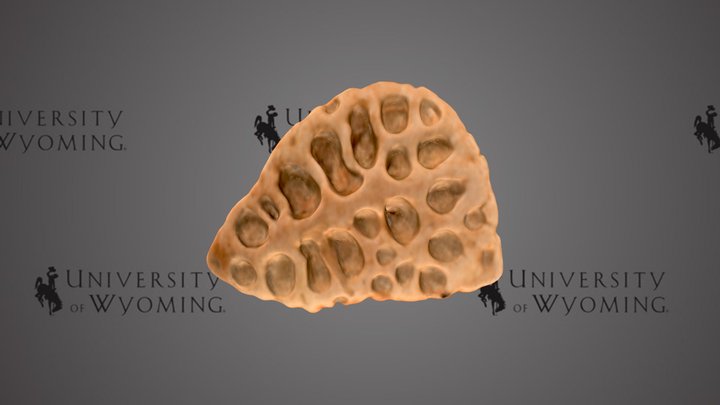
3D model
- Source
- Sketchfab
- Licence
- CC Attribution-NonCommercial
- Commercial use
- the licence does not allow it
The description on this site
- Source
- Wikipedia, “Crocodile”
- Licence
- CC BY-SA 4.0
This is what the site found, which is not the same as what exists.
Keep going
What may have been alongside itCrocodyloidea through timeFormations of the PleistoceneThe world it lived on
Occurrence data from the Paleobiology Database, CC BY 4.0. (Cuvier 1807)