Cheloniidae
Cheloniidae is a family of typically large marine turtles that are characterised by their common traits such as having a flat streamlined wide and rounded shell and almost paddle-like flippers for their forelimbs. They are the only sea turtles to have stronger front limbs than back limbs. The six living species that make up this family are the green sea turtle, loggerhead sea turtle, olive ridley sea turtle, hawksbill sea turtle, flatback sea turtle and the Kemp's ridley sea turtle.

Auregann · CC BY-SA 4.0 · via Wikipedia/Commons. May be a photograph of a specimen, or an artist’s reconstruction — an interpretation of a skeleton, since colour and soft tissue are almost never preserved.
On record
Recorded, not inferred- Sits inside
- ChelonioideaPBDB
- Diet
- omnivorePBDB, for Cryptodira
- Life habit
- aquaticPBDB, for Cryptodira
- Motility
- actively mobilePBDB, for Osteichthyes
- Environment
- marinePBDB, for Chelonioidea
Time the record covers
At least 132 million years on record.
The record covers at least 132.6 Mya to 11.7 ka. No occurrence read is dated outside 137.05 Mya to 0 Mya.
308 occurrences of Cheloniidae on record, most of them in the Eocene. The Paleobiology Database records this as a living group. Bar height is expected occurrences, not a count: each fossil is spread across the span it is dated to, so a tall narrow bar means tight dating and a low wide one means loose.
When
308 occurrences- Early Cretaceous2%
- Late Cretaceous11%
- Paleocene5%
- Eocene32%
- Oligocene13%
- Miocene27%
- Pliocene5%
- Pleistocene3%
- Holocene3%
These are dates about fossils, not the animal: the record can only begin after it arose and end before it died out, so either end may reach further. Shares are expected occurrences: a fossil dated to a span is counted partly in each period it straddles. More on what this infers.
Found in
115 formations
- Calvert Formation · Chesapeake Group27
- London Clay Formation10
- Selsey Formation · Bracklesham Group8
- Peace River Formation · Hawthorn Group7
- Chandler Bridge Formation · Cooper Group6
- Vic-Manlleu Marls Formation6
Loading coastlines…
The named rock units Cheloniidae has been recovered from, largest first. Drawn where the rock is now, not where it formed. 91 further formations hold fewer occurrences each and are not listed. 80 occurrences have no formation on record, which is common for older literature.
Cheloniidae and its relatives
EoceneWhere Cheloniidae and its relatives were recorded in the Eocene.
Found in the same rock
3,775 taxa- Myliobatis26 sites
- Carcharhinus20 sites
- Aetobatus19 sites
- Odontoceti18 sites
- Aves17 sites
- Crocodylia17 sites
- Hemipristis serra17 sites
- Mysticeti17 sites
- Otodus megalodon17 sites
- Dasyatis16 sites
- Striatolamia macrota16 sites
- Testudines16 sites
- Teleostei14 sites
- Scyliorhinus13 sites
- Trionychidae13 sites
- Chelone12 sites
- Galeocerdo aduncus12 sites
- Galeocerdo latidens12 sites
- Abdounia11 sites
- Aetomylaeus dixoni11 sites
- Carcharias11 sites
- Carcharias cuspidatus11 sites
- Carcharodon hastalis11 sites
- Lepisosteus11 sites
The Paleobiology Database records 247 sites for Cheloniidae, and this reads 240 of them. The number is how many of those sites it was catalogued from too. The 24 sharing the most are listed.
This is not a list of everything alive at the time. It is only what has come out of the same ground as this animal and been written down.
Entered from
174 references- Miocene and Pliocene Chelonians from the Calvert Cliffs and Nearby Regions14
- The Selsey Division (Bracklesham Group) at Lee-on-the-Solent, Gosport, (Hants)11
- The Italian fossil record of the sea turtles9
- Fossil sea turtles from the early Pliocene Bone Valley Formation, central Florida9
- The fossil reptiles (Reptilia: Chelonii, Crocodylia) from the marine early Oligocene of the Weisselster Basin (Central Germany: Saxonia)7
- The turtles from the upper Eocene, Osona County (Ebro Basin, Catalonia, Spain): new material and its faunistic and environmental context6
- An overview of the fossil turtles from Sardinia (Italy)5
- Oligocene Pancheloniid Sea Turtles from the Vicinity of Charleston, South Carolina, U.S.A.5
- Review of Mesozoic and Cenozoic sea turtles from the former USSR5
- Turtles of the Lee Creek Mine (Pliocene: North Carolina)5
- A new turtle, Peritresius virginianus, from the Miocene of Virginia5
- The fossil vertebrates of Belgium5
Each of the 308 occurrences read was entered from one of these publications, ordered by how many each accounts for. This is not a search for papers mentioning the name. 162 further references are not listed. Entries link to doi.org where the Paleobiology Database holds an identifier, and to its own record where it does not. Relayed as the Paleobiology Database holds them, not checked against what they resolve to.
Media and terms
Media content3

Picture of Cheloniidae
- Source
- Wikipedia/Commons
- Credit
- Auregann
- Licence
- CC BY-SA 4.0
- Commercial use
- the licence allows it
Structured light scan
- Source
- MorphoSource
- Licence
- In Copyright
- Commercial use
- cannot be read from the licence given — check the record
- Specimen
- Cheloniidae indet. · NMP:Ob-00080
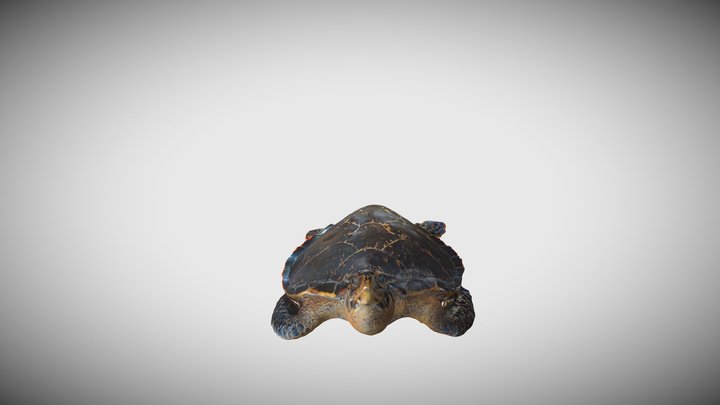
Smithsonian Open Access was not reached for this taxon, so this list is what the others held rather than everything there is.
The description on this site
- Source
- Wikipedia, “Cheloniidae”
- Licence
- CC BY-SA 4.0
This is what the site found, which is not the same as what exists.
Keep going
What may have been alongside itChelonioidea through timeFormations of the EoceneThe world it lived on
Occurrence data from the Paleobiology Database, CC BY 4.0. Bonaparte 1832