Cardiidae
A cockle is a marine bivalve mollusc. Although many small edible bivalves are loosely called cockles, true cockles are species in the family Cardiidae.

Féron Benjamin · CC BY-SA 2.0 · via Wikipedia/Commons. May be a photograph of a specimen, or an artist’s reconstruction — an interpretation of a skeleton, since colour and soft tissue are almost never preserved.
On record
Recorded, not inferred- Also called
- cocklePBDB
- Sits inside
- CardioideaPBDB
- Diet
- suspension feederPBDB
- Life habit
- infaunalPBDB
- Motility
- facultatively mobilePBDB
- Vision
- blindPBDB, for Bivalvia
Time the record covers
At least 430 million years on record.
The record covers at least 430.6 Mya to 11.7 ka. No occurrence read is dated outside 432.9 Mya to 0 Mya.
7,774 occurrences of Cardiidae on record, most of them in the Miocene. The Paleobiology Database records this as a living group. Bar height is expected occurrences, not a count: each fossil is spread across the span it is dated to, so a tall narrow bar means tight dating and a low wide one means loose.
When
7,774 occurrences- Silurianunder 1%
- Carboniferousunder 1%
- Middle Triassicunder 1%
- Late Triassic3%
- Early Jurassic3%
- Middle Jurassic4%
- Late Jurassic5%
- Early Cretaceous4%
- Late Cretaceous17%
- Paleocene3%
- Eocene10%
- Oligocene6%
- Miocene24%
- Pliocene7%
- Pleistocene12%
- Holocene1%
These are dates about fossils, not the animal: the record can only begin after it arose and end before it died out, so either end may reach further. Shares are expected occurrences: a fossil dated to a span is counted partly in each period it straddles. More on what this infers.
Found in
1019 formations
- Gatun Formation192
- Providence Formation160
- Cercado Formation105
- Prairie Bluff Formation · Selma Group103
- Tataouine Formation97
- Gurabo Formation91
Loading coastlines…
The named rock units Cardiidae has been recovered from, largest first. Drawn where the rock is now, not where it formed. 995 further formations hold fewer occurrences each and are not listed. 1,720 occurrences have no formation on record, which is common for older literature.
Cardiidae and its relatives
MioceneWhere Cardiidae and its relatives were recorded in the Miocene.
Found in the same rock
1,838 taxa- Nuculana70 sites
- Astarte57 sites
- Panopea53 sites
- Nucula50 sites
- Pholadomya50 sites
- Protocardia49 sites
- Modiolus46 sites
- Cyprimeria41 sites
- Pinna41 sites
- Ammonoidea39 sites
- Inoceramus39 sites
- Pycnodonte vesicularis39 sites
- Granocardium37 sites
- Camptonectes36 sites
- Cardium36 sites
- Trachycardium35 sites
- Lima32 sites
- Spondylus31 sites
- Aphrodina30 sites
- Cymbophora30 sites
- Arca29 sites
- Ostrea29 sites
- Syncyclonema29 sites
- Ambigostrea28 sites
The Paleobiology Database records at least 1,290 sites for Cardiidae, and this reads 240 of them. Of that, one read hit the database's own return limit, so every count below is a floor rather than a total. The number is how many of those sites it was catalogued from too. The 24 sharing the most are listed.
This is not a list of everything alive at the time. It is only what has come out of the same ground as this animal and been written down.
Entered from
1,131 references- Unpublished data on Cretaceous-Paleocene molluscan assemblages210
- Upper Cretaceous (Maestrichtian) Mollusca from the Haustator bilira Assemblage Zone in the East Gulf Coastal Plain208
- Neogene Paleontology in the Northern Dominican Republic 9. The Family Cardiidae (Mollusca: Bivalvia)177
- Unpublished data165
- Geology and paleontology of canal zone and adjoing parts of Panama: Description of Tertiary mollusks (Pelecypods: Propeamussiidae to Cuspidariidae).159
- Unpublished census data from Atlantic coastal plain and circum-Caribbean Neogene assemblages and taxonomic opinions156
- Upper Cretaceous (Maestrichtian) larger invertebrates from the Haustator bilira Assemblage Zone in the Atlantic Coastal Plain with further data for the East Gulf155
- The Molluscan Fauna of the Alum Bluff Group of Florida137
- Upper Cretaceous (Maestrichtian) larger invertebrate Fossils from the Haustator bilira Assemblage Zone in the west gulf Coastal Plain121
- Palökologie benthischer Faunengemeinschaften und Taxonomie der Bivalven im Jura von Südtunesien104
- Biostratigraphie et paleoecologie des gisements types du Stampian de la region d''Etampes (Essonne)102
- Die Fauna des marinen Miozäns von Kevelaer (Niederrhein). Band 2 Bivalvia, Scaphopoda, Cephalopoda, Bryozoa, Annelida, Brachiopoda92
Each of the 7,774 occurrences read was entered from one of these publications, ordered by how many each accounts for. This is not a search for papers mentioning the name. 1,119 further references are not listed. Entries link to doi.org where the Paleobiology Database holds an identifier, and to its own record where it does not. Relayed as the Paleobiology Database holds them, not checked against what they resolve to.
Media and terms
Media content2

Picture of Cardiidae
- Source
- Wikipedia/Commons
- Credit
- Féron Benjamin
- Licence
- CC BY-SA 2.0
- Commercial use
- the licence allows it
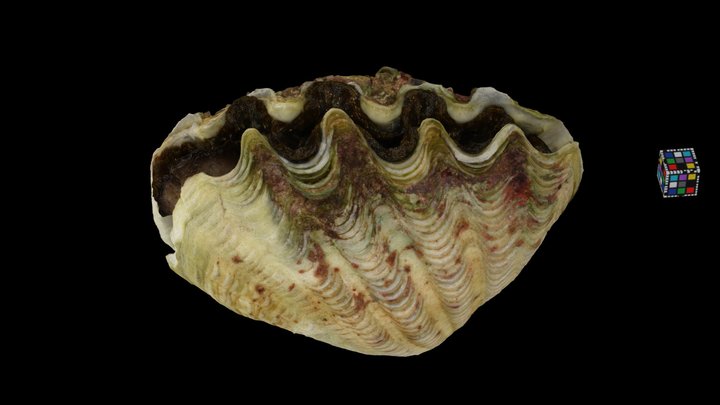
3D model
- Source
- Sketchfab
- Licence
- CC0 Public Domain
- Commercial use
- the licence allows it
The description on this site
- Licence
- CC BY-SA 4.0
This is what the site found, which is not the same as what exists.
Keep going
What may have been alongside itCardioidea through timeFormations of the MioceneThe world it lived on
Occurrence data from the Paleobiology Database, CC BY 4.0. Lamarck 1809