Bryozoan indet.
No picture of Bryozoan indet. was found. Wikidata was searched and had none. iDigBio and GBIF were not searched: the Paleobiology Database does not place Bryozoan indet. firmly enough to tell it from something else bearing the same name, and a search on the name alone returns whichever of them was photographed. Wikipedia and Smithsonian Open Access did not answer, so this is what the others held rather than everything there is.
Time the record covers
At least 404 million years on record.
The record covers at least 445.5 Mya to 41.03 Mya. No occurrence read is dated outside 449.6 Mya to 37.71 Mya.
8 occurrences of Bryozoan indet. on record, most of them in the Eocene. Bar height is expected occurrences, not a count: each fossil is spread across the span it is dated to, so a tall narrow bar means tight dating and a low wide one means loose.
When
8 occurrences- Ordovician13%
- Devonian13%
- Late Cretaceous25%
- Eocene50%
These are dates about fossils, not the animal: the record can only begin after it arose and end before it died out, so either end may reach further. Shares are expected occurrences: a fossil dated to a span is counted partly in each period it straddles. More on what this infers.
Found in
6 formations
- Stone City Formation2
- Tallahatta Formation2
- Ripley Formation1
- Black Creek Formation1
- Whitewater Formation1
- Jemelle Formation1
Loading coastlines…
The named rock units Bryozoan indet. has been recovered from, largest first. Drawn where the rock is now, not where it formed.
Bryozoan indet. and its relatives
EoceneWhere Bryozoan indet. and its relatives were recorded in the Eocene.
Found in the same rock
235 taxa- Caryocorbula deusseni3 sites
- Turritella3 sites
- Anomia2 sites
- Architectonica2 sites
- Calorhadia2 sites
- Cardium2 sites
- Caryocorbula2 sites
- Corbula (Caryocorbula) alabamiensis2 sites
- Crassatella2 sites
- Echinoidae indet.2 sites
- Glycymeris2 sites
- Litorhadia2 sites
- Pitar (Calpitaria) texibrazus2 sites
- Polinices2 sites
- Sinum bilix2 sites
- Turbinolia (Turbinolia) pharetra2 sites
- Turritella nasuta2 sites
- Venericardia2 sites
- <Shark>1 site
- Abra (Abra) petropolitana1 site
- Alcyonarian indet.1 site
- Allomorone burlesonis1 site
- Ancilla1 site
- Anomalodonta gigantea1 site
The Paleobiology Database records 7 sites for Bryozoan indet., and this reads all of them. The number is how many of those sites it was catalogued from too. The 24 sharing the most are listed.
This is not a list of everything alive at the time. It is only what has come out of the same ground as this animal and been written down.
Entered from
6 references- Environmental and biological controls on the diversity and ecology of Late Cretaceous through early Paleogene marine ecosystems in the US Gulf Coastal Plain2
- Community structure and evaluation of trophic analysis in paleoecology Stone City Formation (Middle Eocene, Texas)2
- Les brachiopodes (Pentamerida, Atrypida et Spiriferida) de la fin de l’Eifelien et du début du Givetien à Pondrôme (Belgique, bord sud du Synclinorium de Dinant)1
- The Black Creek-Peedee formational contact (Upper Cretaceous) in the Cape Fear river region of North Carolina1
- The coral horizons and stratigraphy of the upper Richmond Group in Kentucky west of the Cincinnati Arch1
- Archeogastropoda, Mesogastropoda and stratigraphy of the Ripley, Owl Creek, and Prairie Bluff Formations1
Each of the 8 occurrences read was entered from one of these publications, ordered by how many each accounts for. This is not a search for papers mentioning the name. Entries link to doi.org where the Paleobiology Database holds an identifier, and to its own record where it does not. Relayed as the Paleobiology Database holds them, not checked against what they resolve to.
Media and terms
Media content1
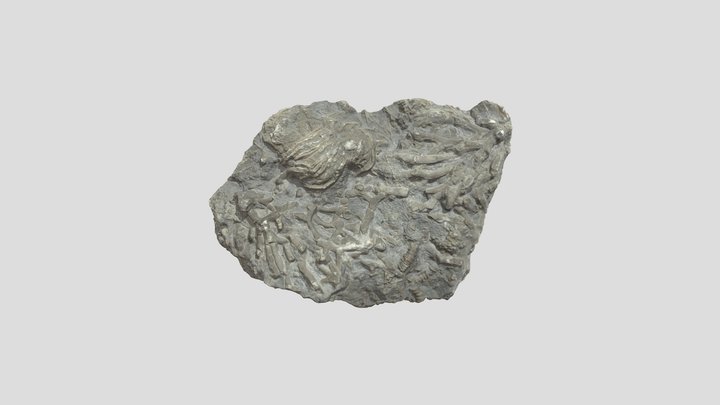
3D model
- Source
- Sketchfab
- Credit
- UIPaleoRepository
- Licence
- CC Attribution
- Commercial use
- cannot be read from the licence given — check the record
No picture of Bryozoan indet. was found. Wikidata was searched and had none.
iDigBio and GBIF were not searched: the Paleobiology Database does not place Bryozoan indet. firmly enough to tell it from something else bearing the same name, and a search on the name alone returns whichever of them was photographed.
Wikipedia and Smithsonian Open Access did not answer, so this is what the others held rather than everything there is.
Smithsonian Open Access and MorphoSource were not reached for this taxon, so this list is what the others held rather than everything there is.
This is what the site found, which is not the same as what exists.
Keep going
What may have been alongside itFormations of the EoceneThe world it lived on
Occurrence data from the Paleobiology Database, CC BY 4.0.