Bombus
A bumblebee is any of over 250 species in the genus Bombus, part of Apidae, one of the bee families. This genus is the only extant group in the tribe Bombini, though a few extinct related genera are known from fossils. They are found primarily in the Northern Hemisphere, although they are also found in South America, where a few lowland tropical species have been identified. European bumblebees have also been introduced to New Zealand and Tasmania. Female bumblebees can sting repeatedly, but generally ignore humans and other animals.

Ivar Leidus · CC BY-SA 4.0 · via Wikipedia/Commons. May be a photograph of a specimen, or an artist’s reconstruction — an interpretation of a skeleton, since colour and soft tissue are almost never preserved.
On record
Recorded, not inferred- Also called
- bumble beePBDB
- Sits inside
- BombiniPBDB
- Motility
- actively mobilePBDB, for Arthropoda
- Environment
- terrestrialPBDB, for Insecta
Time the record covers
At least 33 million years on record.
The record covers at least 33.9 Mya to 774 ka. No occurrence read is dated outside 37 Mya to 129 ka.
26 occurrences of Bombus on record, most of them in the Miocene. The Paleobiology Database records this as a living group, and the chart stops with its fossils rather than at the present. Bar height is expected occurrences, not a count: each fossil is spread across the span it is dated to, so a tall narrow bar means tight dating and a low wide one means loose.
When
26 occurrences- Eocene8%
- Oligocene19%
- Miocene69%
- Plioceneunder 1%
- Pleistocene4%
These are dates about fossils, not the animal: the record can only begin after it arose and end before it died out, so either end may reach further. Shares are expected occurrences: a fossil dated to a span is counted partly in each period it straddles. More on what this infers.
Found in
9 formations
- Shanwang Formation3
- Florissant Formation2
- Latah Formation2
- Upper Freshwater-Molasse Formation2
- Botchi Formation1
- Randeck Maar Formation1
Loading coastlines…
The named rock units Bombus has been recovered from, largest first. Drawn where the rock is now, not where it formed. 12 occurrences have no formation on record, which is common for older literature.
Bombus and its relatives
MioceneWhere Bombus and its relatives were recorded in the Miocene.
Found in the same rock
696 taxa- Anisoptera4 sites
- Coleoptera4 sites
- Belostomatidae3 sites
- Paraphaenogaster3 sites
- Paraphaenogaster loosi3 sites
- Anomala furva2 sites
- Apis2 sites
- Bibio2 sites
- Bibio angustatus2 sites
- Bibio brevis2 sites
- Bibio fusiformis2 sites
- Bibio moestus2 sites
- Bibionidae2 sites
- Calosoma escrobiculatum2 sites
- Camponotites lignitus2 sites
- Camponotus2 sites
- Capnodis antiqua2 sites
- Carbula crassiventris2 sites
- Cleonini2 sites
- Curculionidae2 sites
- Epiaeschna lucida2 sites
- Eurydema impudica2 sites
- Formica orbata2 sites
- Formicidae2 sites
The Paleobiology Database records 23 sites for Bombus, and this reads all of them. The number is how many of those sites it was catalogued from too. The 24 sharing the most are listed.
This is not a list of everything alive at the time. It is only what has come out of the same ground as this animal and been written down.
Entered from
19 references- 24 million years of pollination interaction between European linden flowers and bumble bees4
- New Palaeogene bees from Europe and Asia2
- Insectos del Mioceno inferior de Ribesalbes (Castellón, España). Hymenoptera2
- Zhang et al., 19942
- A monograph on fossil bees (Hymenoptera: Apoidea)2
- A fossil bumblebee (Hymenoptera, Apidae, Bombini) from the Middle Pleistocene Shiobara Group in Nasushiobara, Tochigi, Japan1
- Oligocene arthropods from the locality of Kosanička Rača (southern Serbia)1
- An Early Miocene bumble bee from northern Bohemia (Hymenoptera, Apidae)1
- Wing shape of four new bee fossils (Hymenoptera: Anthophila) provides insights to bee evolution1
- Geometric morphometric analysis of a new Miocene bumble bee from the Randeck Maar of southwestern Germany (Hymenoptera: Apidae)1
- Descriptions de quelques insectes fossiles du Miocène supérieur de la Montagne d'Andance (Ardèche, France)1
- Miocene fossil bumble bee from the Soviet Far East with comments on the chronology and distribution of fossil bees (Hymenoptera: Apidae)1
Each of the 26 occurrences read was entered from one of these publications, ordered by how many each accounts for. This is not a search for papers mentioning the name. 7 further references are not listed. Entries link to doi.org where the Paleobiology Database holds an identifier, and to its own record where it does not. Relayed as the Paleobiology Database holds them, not checked against what they resolve to.
Media and terms
Media content3

Picture of Bombus
- Source
- Wikipedia/Commons
- Credit
- Ivar Leidus
- Licence
- CC BY-SA 4.0
- Commercial use
- the licence allows it
Photogrammetry
- Source
- MorphoSource
- Licence
- not stated by the source
- Commercial use
- cannot be read from the licence given — check the record
- Specimen
- Bombus Bombus eximius · ETHZ:ENT:0575926
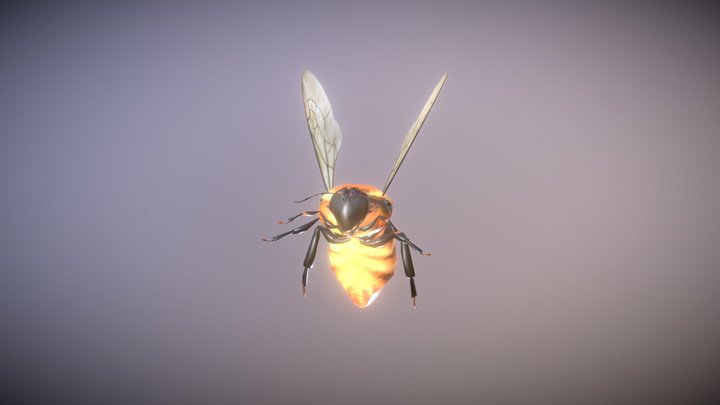
3D model
- Source
- Sketchfab
- Credit
- Philippe Sapiains
- Licence
- CC Attribution
- Commercial use
- cannot be read from the licence given — check the record
Smithsonian Open Access was not reached for this taxon, so this list is what the others held rather than everything there is.
The description on this site
- Source
- Wikipedia, “Bumblebee”
- Licence
- CC BY-SA 4.0
This is what the site found, which is not the same as what exists.
Keep going
What may have been alongside itBombini through timeFormations of the MioceneThe world it lived on
Occurrence data from the Paleobiology Database, CC BY 4.0. Latreille 1802