Asteracanthus
Asteracanthus is an extinct genus of hybodont, known from the Middle Jurassic (Bathonian) to the Early Cretaceous (Valanginian).

Sebastian Stumpf Faviel A. López‐Romero René Kindlimann Frederic Lacombat Burkhard Pohl Jürgen Kriwet · CC BY 4.0 · via Wikipedia/Commons. May be a photograph of a specimen, or an artist’s reconstruction — an interpretation of a skeleton, since colour and soft tissue are almost never preserved.
On record
Recorded, not inferred- Sits inside
- AcrodontinaePBDB
- Diet
- carnivorePBDB, for Chondrichthyes
- Life habit
- nektonicPBDB, for Chondrichthyes
- Motility
- actively mobilePBDB, for Chondrichthyes
Time the record covers
At least 351 million years on record.
The record covers at least 358.86 Mya to 7.246 Mya. No occurrence read is dated outside 419.62 Mya to 3.6 Mya.
56 occurrences of Asteracanthus on record, most of them in the Late Cretaceous. Bar height is expected occurrences, not a count: each fossil is spread across the span it is dated to, so a tall narrow bar means tight dating and a low wide one means loose.
When
56 occurrences- Devonian2%
- Permian2%
- Middle Triassic2%
- Late Triassic4%
- Early Jurassic10%
- Middle Jurassic22%
- Late Jurassic15%
- Early Cretaceous11%
- Late Cretaceous30%
- Mioceneunder 1%
- Plioceneunder 1%
These are dates about fossils, not the animal: the record can only begin after it arose and end before it died out, so either end may reach further. Shares are expected occurrences: a fossil dated to a span is counted partly in each period it straddles. More on what this infers.
Found in
27 formations
- Bahariya Formation8
- Isalo II Formation · Isalo Group4
- Korallenkalk Formation2
- Tar Heel Formation · Black Creek Group2
- Dukamaje Formation2
- Vuache Formation1
Loading coastlines…
The named rock units Asteracanthus has been recovered from, largest first. Drawn where the rock is now, not where it formed. 3 further formations hold fewer occurrences each and are not listed. 16 occurrences have no formation on record, which is common for older literature.
Asteracanthus and its relatives
Late CretaceousWhere Asteracanthus and its relatives were recorded in the Late Cretaceous.
Found in the same rock
645 taxa- Theropoda12 sites
- Lepidotes7 sites
- Coelodus5 sites
- Crocodylia5 sites
- Pterosauria5 sites
- Anura4 sites
- Distobatus nutiae4 sites
- Elasmobranchii4 sites
- Hybodus4 sites
- Osteichthyes4 sites
- Pycnodontidae4 sites
- Schizorhiza stromeri4 sites
- Stratodus apicalis4 sites
- Testudines4 sites
- Aegyptobatus kuehnei3 sites
- Caturus3 sites
- Coelurosauria3 sites
- Dromaeosauridae3 sites
- Enchodontidae3 sites
- Gastropoda3 sites
- Goniopholis3 sites
- Heterodontus3 sites
- Hybodus aschersoni3 sites
- Ischirhiza nigeriensis3 sites
The Paleobiology Database records 53 sites for Asteracanthus, and this reads all of them. The number is how many of those sites it was catalogued from too. The 24 sharing the most are listed.
This is not a list of everything alive at the time. It is only what has come out of the same ground as this animal and been written down.
Entered from
39 references- Ergebnisse der Forschungsreisen Prof. E. Stromers in den Wüsten Ägyptens II. Wirbeltier-Reste der Baharîje-Stufe (unterstes Cenoman) 9. Die Plagiostomen, mit einem Anhang über käno- und mesozoische Rückenflossenstacheln von Elasmobranchiern6
- Paleogeographic and biostratigraphic implications of new early Mesozoic vertebrates from Poamay central Morondava Basin, Madagascar4
- Die Elasmobranchier-Fauna des Gebel Dist Member der Bahariya Formation (Obercenoman) der Oase Bahariya, Ägypten3
- Étude derestes de poissons du Crétacé saharien [Study of fish remains from the Saharan Cretaceous]3
- Microvertebrates from the Lower Greensand Group (Lower Cretaceous) of Clophill, Bedfordshire, UK, and Nutfield, Surrey, UK2
- Le passage Aalénien-Bajocien près de Rumelange: la série biostratigraphique dans le Bassin d'Eschsur- Alzette (Grand-Duché de Luxembourg)2
- Teeth of ornithischian dinosaurs from the Upper Jurassic of Portugal, with description of a hypsilophodontid (Phyllodon henkeli gen. et sp. nov.) from the Guimarota lignite2
- Les poissons crétacés et tertiaires du bassin des Iullemmeden (République du Niger)2
- Ueber die im Korallenkalk des Lindner Berges bei Hannover vorkommenden Ueberreste von Fischen, mit Beschreibung und Abbildung einiger neuen Arten [On the remains of fishes occurring in the Coral Chalk of Lindner Mountain in Hannover, with description and images of some new forms]2
- Microvertebrate remains (Pisces, Archosauria) from the Middle Jurassic (Bathonian) of southern France1
- Die kontinentale Wirbeltierfauna aus der unteren Oberkreide des Sudan (Wadi Milk Formation) [The continental vertebrate fauna of the lower Upper Cretaceous of Sudan (Wadi Milk Formation)]1
- A new Bathonian (Middle Jurassic) microvertebrate site, within the Chipping Norton Limestone Formation at Honsleasow Quarry, Gloucestershire1
Each of the 56 occurrences read was entered from one of these publications, ordered by how many each accounts for. This is not a search for papers mentioning the name. 27 further references are not listed. Entries link to doi.org where the Paleobiology Database holds an identifier, and to its own record where it does not. Relayed as the Paleobiology Database holds them, not checked against what they resolve to.
Media and terms
Media content2

Picture of Asteracanthus
- Source
- Wikipedia/Commons
- Credit
- Sebastian Stumpf Faviel A. López‐Romero René Kindlimann Frederic Lacombat Burkhard Pohl Jürgen Kriwet
- Licence
- CC BY 4.0
- Commercial use
- the licence allows it
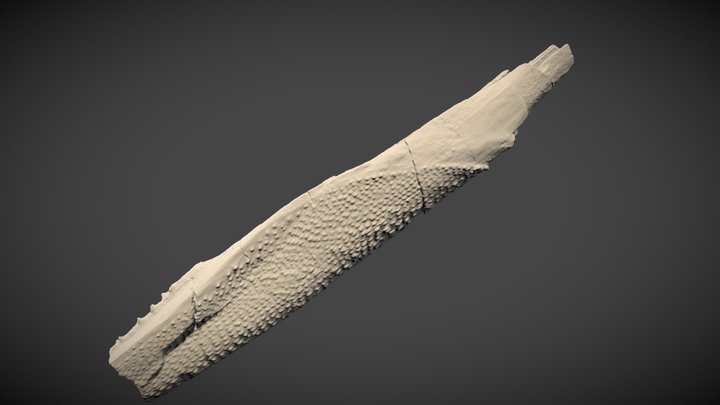
3D model
- Source
- Sketchfab
- Credit
- EDDyLab @ULiege
- Licence
- CC Attribution-NonCommercial
- Commercial use
- the licence does not allow it
The description on this site
- Licence
- CC BY-SA 4.0
This is what the site found, which is not the same as what exists.
Keep going
What may have been alongside itAcrodontinae through timeFormations of the Late CretaceousThe world it lived on
Occurrence data from the Paleobiology Database, CC BY 4.0. Agassiz 1836