Agassizodus
Agassizodus is an extinct genus of eugeneodont holocephalian fish that lived during the Carboniferous Period. It belongs to the family Helicoprionidae, which is sometimes called Agassizodontidae. Like other members of its family, it possessed a symphyseal tooth whorl, which was likely present at the tip of the lower jaw and associated with lateral crushing tooth plates. The type species, A. variabilis, was originally named Lophodus variabilis until the name "Lophodus" was determined to be preoccupied.

Jonathan Chen · CC BY-SA 4.0 · via Wikipedia/Commons. May be a photograph of a specimen, or an artist’s reconstruction — an interpretation of a skeleton, since colour and soft tissue are almost never preserved.
On record
Recorded, not inferred- Sits inside
- HelicoprionidaePBDB
- Diet
- carnivorePBDB, for Eugeneodontiformes
- Life habit
- nektonicPBDB, for Eugeneodontiformes
- Motility
- actively mobilePBDB, for Eugeneodontiformes
Time the record covers
At least 52 million years on record.
The record covers at least 307 Mya to 254.14 Mya. No occurrence read is dated outside 323.4 Mya to 251.902 Mya.
10 occurrences of Agassizodus on record, most of them in the Carboniferous. Bar height is expected occurrences, not a count: each fossil is spread across the span it is dated to, so a tall narrow bar means tight dating and a low wide one means loose.
When
10 occurrences- Carboniferous50%
- Permian50%
These are dates about fossils, not the animal: the record can only begin after it arose and end before it died out, so either end may reach further. Shares are expected occurrences: a fossil dated to a span is counted partly in each period it straddles. More on what this infers.
Found in
6 formations
- Grenola Formation · Council Grove Group2
- Hueco Formation1
- Phosphoria Formation1
- Ichinotani Formation1
- Altamont Formation · Marmaton Group1
- Dalong Formation1
Loading coastlines…
The named rock units Agassizodus has been recovered from, largest first. Drawn where the rock is now, not where it formed. 3 occurrences have no formation on record, which is common for older literature.
Agassizodus and its relatives
CarboniferousWhere Agassizodus and its relatives were recorded in the Carboniferous.
Found in the same rock
85 taxa- Glikmanius occidentalis3 sites
- Petalodus allegheniensis3 sites
- Cladodus2 sites
- Acharax radiata1 site
- Acondylacanthus browni1 site
- Acrodus1 site
- Actinopterygii1 site
- Alilepis1 site
- Antronaria1 site
- Arctacanthus multisectus1 site
- Arctacanthus phosphoriensis1 site
- Arctacanthus wyomingensis1 site
- Aviculopecten1 site
- Bakevellia sulcata1 site
- Bellerophontoidea1 site
- Cancrinella sparsispinosa1 site
- Chomatodus1 site
- Cochliodontidae1 site
- Composita1 site
- Composita bucculenta1 site
- Condranema magna1 site
- Crinoidea1 site
- Ctenacanthus1 site
- Ctenacanthus amblyxiphias1 site
The Paleobiology Database records 9 sites for Agassizodus, and this reads all of them. The number is how many of those sites it was catalogued from too. The 24 sharing the most are listed.
This is not a list of everything alive at the time. It is only what has come out of the same ground as this animal and been written down.
Entered from
7 references- Carboniferous fishes from the central western States3
- A Paleozoic shark fauna from the Council Grove Group (Lower Permian)2
- New ichthyofaunal microfossils from the Late Permian at Chaotian, Sichuan, southwest China1
- The chondrichthyan tooth remains from the Carboniferous and Permian of Fukuji, Gifu Prefecture, central Japan1
- Marine fauna of the Early Permian (Wolfcampian) Robledo Mountains Member, Hueco Formation, southern Robledo Mountains, New Mexico1
- The occurence of Petrodus and other fossil shark remains in the Pennsylvanian of Iowa1
- Fish fauna of the middle Phosphoria Formation1
Each of the 10 occurrences read was entered from one of these publications, ordered by how many each accounts for. This is not a search for papers mentioning the name. Entries link to doi.org where the Paleobiology Database holds an identifier, and to its own record where it does not. Relayed as the Paleobiology Database holds them, not checked against what they resolve to.
Media and terms
Media content2

Picture of Agassizodus
- Source
- Wikipedia/Commons
- Credit
- Jonathan Chen
- Licence
- CC BY-SA 4.0
- Commercial use
- the licence allows it
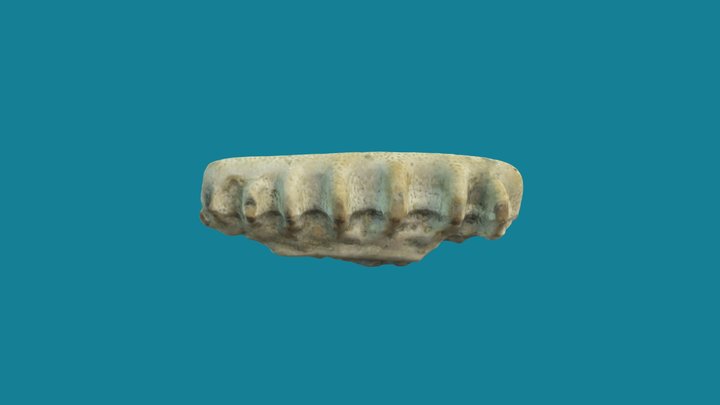
3D model
- Source
- Sketchfab
- Credit
- Shellie Luallin
- Licence
- CC Attribution
- Commercial use
- cannot be read from the licence given — check the record
The description on this site
- Source
- Wikipedia, “Agassizodus”
- Licence
- CC BY-SA 4.0
This is what the site found, which is not the same as what exists.
Keep going
What may have been alongside itHelicoprionidae through timeFormations of the CarboniferousThe world it lived on
Occurrence data from the Paleobiology Database, CC BY 4.0. St. John and Worthen 1875