Acrodus
Acrodus is an extinct genus of hybodont spanning from the Early Triassic to the Late Jurassic. It was durophagous, with blunt, broad teeth designed for crushing and grinding. Some Middle Triassic species have been suggested to have grown to lengths of 1.8–2.5 metres (5.9–8.2 ft). Species are known from both marine and freshwater environments, with all Middle and Late Jurassic species only known from freshwater.

Neil Pezzoni · CC BY 4.0 · via Wikipedia/Commons. May be a photograph of a specimen, or an artist’s reconstruction — an interpretation of a skeleton, since colour and soft tissue are almost never preserved.
On record
Recorded, not inferred- Sits inside
- AcrodontidaePBDB
- Diet
- carnivorePBDB, for Chondrichthyes
- Life habit
- nektonicPBDB, for Chondrichthyes
- Motility
- actively mobilePBDB, for Chondrichthyes
Time the record covers
At least 234 million years on record.
The record covers at least 293.52 Mya to 59.24 Mya. No occurrence read is dated outside 298.9 Mya to 56 Mya.
170 occurrences of Acrodus on record, most of them in the Middle Triassic. Bar height is expected occurrences, not a count: each fossil is spread across the span it is dated to, so a tall narrow bar means tight dating and a low wide one means loose.
When
170 occurrences- Permian10%
- Early Triassic15%
- Middle Triassic36%
- Late Triassic19%
- Early Jurassic9%
- Middle Jurassic2%
- Late Jurassic2%
- Early Cretaceous4%
- Late Cretaceous2%
- Paleoceneunder 1%
These are dates about fossils, not the animal: the record can only begin after it arose and end before it died out, so either end may reach further. Shares are expected occurrences: a fossil dated to a span is counted partly in each period it straddles. More on what this infers.
Found in
54 formations
- Besano Formation14
- Vikinghøgda Formation6
- Chinle Formation5
- Zhitkov Formation5
- Keuper Formation5
- Favret Formation · Star Peak Group4
Loading coastlines…
The named rock units Acrodus has been recovered from, largest first. Drawn where the rock is now, not where it formed. 30 further formations hold fewer occurrences each and are not listed. 62 occurrences have no formation on record, which is common for older literature.
Acrodus and its relatives
Middle TriassicWhere Acrodus and its relatives were recorded in the Middle Triassic.
Found in the same rock
976 taxa- Hybodus25 sites
- Actinopterygii11 sites
- Polyacrodus10 sites
- Gyrolepis9 sites
- Euselachii7 sites
- Saurichthys7 sites
- Birgeria6 sites
- Hybodus plicatilis6 sites
- Lepidotes6 sites
- Lissodus minimus6 sites
- Palaeobates angustissimus6 sites
- Theropoda6 sites
- Ceratodus5 sites
- Ichthyosauria5 sites
- Nothosaurus5 sites
- Reptilia5 sites
- Actinistia4 sites
- Birgeria acuminata4 sites
- Colobodus4 sites
- Cretalamna appendiculata4 sites
- Glikmanius occidentalis4 sites
- Gyrolepis albertii4 sites
- Hybodontidae4 sites
- Hybodus delabechei4 sites
The Paleobiology Database records 139 sites for Acrodus, and this reads all of them. The number is how many of those sites it was catalogued from too. The 24 sharing the most are listed.
This is not a list of everything alive at the time. It is only what has come out of the same ground as this animal and been written down.
Entered from
75 references- Catalogue of the Fossil Fishes in the British Museum (Natural History) Part 120
- Zur systematischen Stellungh einiger Bezahnugsreste von Acrodus georgii sp. nov. (Selachii, Hybodontoidea) aus der Grenzbitumenzone (Mittlere Trias) des Monte San Giorgio (Kanton Tessin, Schweiz)9
- Hybodontoidei (Chondrichthyes) from the Wichita-Albany Group (Early Permian) of Texas8
- Microfish remains from certain Triassic Sections in the Kasmir and Kumaun Himalayas8
- Stensiö, 19218
- Chondrichthyans from the Grippia bonebed (Early Triassic) of Marmierfjellet, Spitsbergen6
- Taxonomy and biostratigraphy of middle and late Triassic Elasmobranch Ichthyoliths from Northeastern British Columbia6
- The Lower Triassic System in the Abrek Bay area, south Primorye, Russia5
- The hybodontiform sharks from the Middle Triassic of Mte. San Giorgio, Switzerland4
- Les poissons et les reptiles du Muschelkalk et du Rhetien de Basse-Provence4
- Die Selachier aus dem oberen Muschelkalk lothringens4
- Vertebrate remains from the Lower Muschelkalk of Raciborowice Górne (North-Sudetic Basin, SW Poland)3
Each of the 170 occurrences read was entered from one of these publications, ordered by how many each accounts for. This is not a search for papers mentioning the name. 63 further references are not listed. Entries link to doi.org where the Paleobiology Database holds an identifier, and to its own record where it does not. Relayed as the Paleobiology Database holds them, not checked against what they resolve to.
Media and terms
Media content2
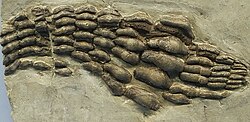
Picture of Acrodus
- Source
- Wikipedia/Commons
- Credit
- Neil Pezzoni
- Licence
- CC BY 4.0
- Commercial use
- the licence allows it
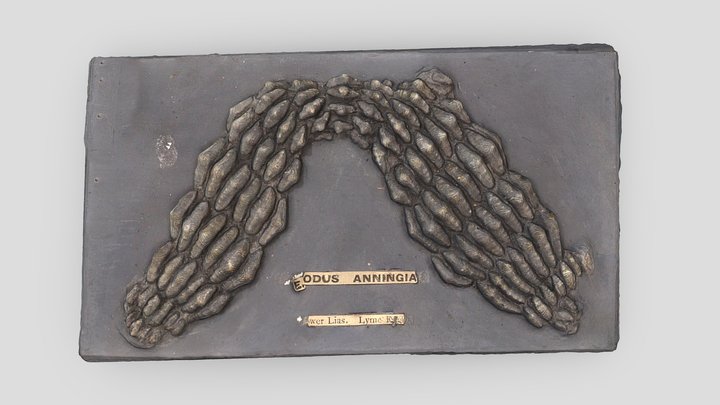
3D model
- Source
- Sketchfab
- Credit
- The Watt Institution
- Licence
- CC Attribution
- Commercial use
- cannot be read from the licence given — check the record
The description on this site
- Source
- Wikipedia, “Acrodus”
- Licence
- CC BY-SA 4.0
This is what the site found, which is not the same as what exists.
Keep going
What may have been alongside itAcrodontidae through timeFormations of the Middle TriassicThe world it lived on
Occurrence data from the Paleobiology Database, CC BY 4.0. Agassiz 1834