Vexillum (Vexillum)
No picture of Vexillum (Vexillum) was found. Wikipedia, Wikidata and iDigBio were searched and had none. Smithsonian Open Access did not answer, so this is what the others held rather than everything there is. GBIF was asked, and what came back is not recorded: nothing, or a picture this site could not tie to Vexillum (Vexillum), or no answer at all. This entry cannot say which.
On record
Recorded, not inferred- Sits inside
- VexillumPBDB
- Diet
- carnivorePBDB, for Costellariidae
- Life habit
- epifaunalPBDB, for Costellariidae
- Motility
- actively mobilePBDB, for Costellariidae
- Vision
- limitedPBDB, for Gastropoda
Time the record covers
At least 37 million years on record.
The record covers at least 37.71 Mya to 129 ka. No occurrence read is dated outside 48.07 Mya to 11.7 ka.
22 occurrences of Vexillum (Vexillum) on record, most of them in the Pliocene. The Paleobiology Database records this as a living group. Bar height is expected occurrences, not a count: each fossil is spread across the span it is dated to, so a tall narrow bar means tight dating and a low wide one means loose.
When
22 occurrences- Eocene9%
- Miocene7%
- Pliocene66%
- Pleistocene18%
These are dates about fossils, not the animal: the record can only begin after it arose and end before it died out, so either end may reach further. Shares are expected occurrences: a fossil dated to a span is counted partly in each period it straddles. More on what this infers.
Found in
5 formations
- Waisia Limestone Formation2
- Dampier Limestone Formation1
- Ndalithoni Limestone Formation1
- Gurabo Formation1
- Kalibiuk Formation1
Loading coastlines…
The named rock units Vexillum (Vexillum) has been recovered from, largest first. Drawn where the rock is now, not where it formed. 16 occurrences have no formation on record, which is common for older literature.
Vexillum (Vexillum) and its relatives
PlioceneWhere Vexillum (Vexillum) and its relatives were recorded in the Pliocene.
Found in the same rock
296 taxa- Atys2 sites
- Brachidontes ustulatus2 sites
- Cerithium tenellum2 sites
- Circe (Circe) scripta2 sites
- Clypeomorus2 sites
- Clypeomorus bifasciata2 sites
- Conus2 sites
- Fragum2 sites
- Fragum unedo2 sites
- Nassarius2 sites
- Oliva2 sites
- Placamen2 sites
- Thalotia2 sites
- Acmaea1 site
- Acmaeidae1 site
- Acrosterigma1 site
- Acteocina1 site
- Adusta pulchella1 site
- Alaba1 site
- Amoria1 site
- Anachis (Costoanachis)1 site
- Anachis (Zafra)1 site
- Anadara crebricostata1 site
- Antigona1 site
The Paleobiology Database records 4 sites for Vexillum (Vexillum), and this reads all of them. The number is how many of those sites it was catalogued from too. The 24 sharing the most are listed.
This is not a list of everything alive at the time. It is only what has come out of the same ground as this animal and been written down.
Entered from
7 references- Skwarko, 19948
- Die Mollusken des Pliozäns von Boemiajoe (Java)6
- Cenozoic fossil mollusks from Western Pacific Islands; Gastropods (Volutidae through Terebridae)4
- Unpublished census data from Atlantic coastal plain and circum-Caribbean Neogene assemblages and taxonomic opinions1
- Cenozoic Molluscs and Echinoids of Barrow Island, Western Australia1
- A Pleistocene molluscan fauna with Anadara trapezia (Deshayes) (Bivalvia: Arcoida) from the Dampier Limestone of Shark Bay, Western Australia1
- Geology of Lau, Fiji1
Each of the 22 occurrences read was entered from one of these publications, ordered by how many each accounts for. This is not a search for papers mentioning the name. Entries link to doi.org where the Paleobiology Database holds an identifier, and to its own record where it does not. Relayed as the Paleobiology Database holds them, not checked against what they resolve to.
Media and terms
Media content1
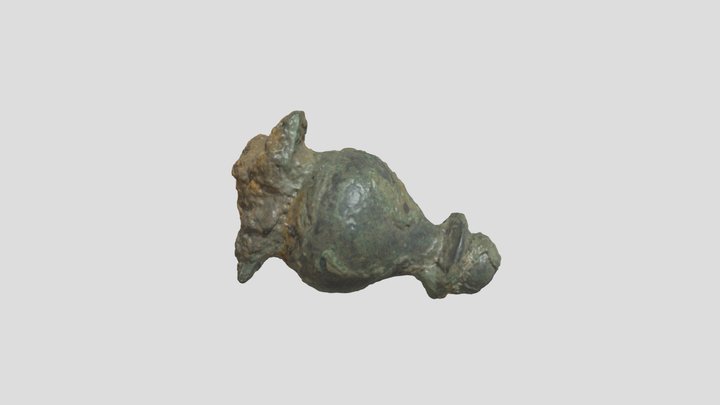
3D model
- Source
- Sketchfab
- Credit
- ArheologiePrahova
- Licence
- Free Standard
- Commercial use
- cannot be read from the licence given — check the record
No picture of Vexillum (Vexillum) was found. Wikipedia, Wikidata and iDigBio were searched and had none.
Smithsonian Open Access did not answer, so this is what the others held rather than everything there is.
GBIF was asked, and what came back is not recorded: nothing, or a picture this site could not tie to Vexillum (Vexillum), or no answer at all. This entry cannot say which.
Smithsonian Open Access and MorphoSource were not reached for this taxon, so this list is what the others held rather than everything there is.
This is what the site found, which is not the same as what exists.
Keep going
What may have been alongside itVexillum through timeFormations of the PlioceneThe world it lived on
Occurrence data from the Paleobiology Database, CC BY 4.0. Röding 1798