Turdidae
The thrushes are a passerine bird family, Turdidae, with a worldwide distribution. The family was once much larger before biologists reclassified the former subfamily Saxicolinae, which includes the chats and European robins, as Old World flycatchers. Thrushes are small to medium-sized ground living birds that feed on insects, other invertebrates, and fruit. Some unrelated species around the world have been named after thrushes due to their similarity to birds in this family.

Yathin S Krishnappa · CC BY-SA 3.0 · via Wikipedia/Commons. May be a photograph of a specimen, or an artist’s reconstruction — an interpretation of a skeleton, since colour and soft tissue are almost never preserved.
On record
Recorded, not inferred- Also called
- thrushPBDB
- Sits inside
- PasseriformesPBDB
- Diet
- insectivore, frugivorePBDB
- Life habit
- volantPBDB
- Motility
- actively mobilePBDB, for Theropoda
- Environment
- terrestrialPBDB
Time the record covers
At least 1.7 million years on record.
The record covers at least 1.8 Mya to 11.7 ka. No occurrence read is dated outside 5.333 Mya to 0 Mya.
219 occurrences of Turdidae on record, most of them in the Pleistocene. The Paleobiology Database records this as a living group. Bar height is expected occurrences, not a count: each fossil is spread across the span it is dated to, so a tall narrow bar means tight dating and a low wide one means loose.
When
219 occurrences- Plioceneunder 1%
- Pleistocene83%
- Holocene16%
These are dates about fossils, not the animal: the record can only begin after it arose and end before it died out, so either end may reach further. Shares are expected occurrences: a fossil dated to a span is counted partly in each period it straddles. More on what this infers.
Found in
2 formations
Loading coastlines…
The named rock units Turdidae has been recovered from, largest first. Drawn where the rock is now, not where it formed. 217 occurrences have no formation on record, which is common for older literature.
Turdidae and its relatives
PleistoceneWhere Turdidae and its relatives were recorded in the Pleistocene.
Found in the same rock
1,770 taxa- Turdus46 sites
- Tyto alba26 sites
- Corvus monedula25 sites
- Passeriformes24 sites
- Corvus corax23 sites
- Pyrrhocorax graculus23 sites
- Columba livia21 sites
- Turdus merula21 sites
- Scolopax rusticola20 sites
- Turdus philomelos20 sites
- Columba19 sites
- Falco tinnunculus19 sites
- Erithacus rubecula18 sites
- Anas platyrhynchos17 sites
- Anas crecca16 sites
- Columba palumbus16 sites
- Coturnix coturnix16 sites
- Rana16 sites
- Falco sparverius15 sites
- Pyrrhocorax pyrrhocorax15 sites
- Sturnus vulgaris15 sites
- Anatidae14 sites
- Chloris chloris14 sites
- Garrulus glandarius14 sites
The Paleobiology Database records 129 sites for Turdidae, and this reads all of them. The number is how many of those sites it was catalogued from too. The 24 sharing the most are listed.
This is not a list of everything alive at the time. It is only what has come out of the same ground as this animal and been written down.
Entered from
66 references- A catalogue of British Pleistocene birds identified by Colin JO Harrison and stored in the Natural History Museum, London, (Department of Palaeontology)24
- The Quaternary avifauna of Crete, Greece24
- Birds of the Late Pleistocene and Holocene from the Palaeolithic Djuktai cave site of Yakutia, eastern Siberia12
- Terminal Pleistocene–Holocene Avifauna of San Miguel and Santa Rosa Islands: Identifications of Previously Unidentified Avian Remains Recovered from Fossil Sites and Prehistoric Cave Deposits11
- Upper Pleistocene and Holocene fossil avifauna from Moleta cave (Mallorca, Balearic Islands)10
- An extinct large thrush (Aves: Turdidae) from the Late Quaternary of Mediterranean Europe8
- Biostratigraphy of amphibians, reptiles, birds and mammals in Corsica and the role of man in the Holocene faunal turnover7
- Birds from Sime del Elefante, Atapuerca, Spain: palaeoecological implications in the oldest human bearing levels of the Iberian Peninsula6
- Quaternary fossil fauna of South Canterbury, South Island, New Zealand6
- Pleistocene birds of Gruta da Furninha (Peniche-Portugal): a paleontological and paleoenvironmental aproach5
- Bird remains from Curata and Bordu Mare caves (Romania)5
- The Late Pleistocene fossil birds of the central and southern Ryukyu Islands, and their zoogeographical implications for the Recent avifauna of the archipelago5
Each of the 219 occurrences read was entered from one of these publications, ordered by how many each accounts for. This is not a search for papers mentioning the name. 54 further references are not listed. Entries link to doi.org where the Paleobiology Database holds an identifier, and to its own record where it does not. Relayed as the Paleobiology Database holds them, not checked against what they resolve to.
Media and terms
Media content2

Picture of Turdidae
- Source
- Wikipedia/Commons
- Credit
- Yathin S Krishnappa
- Licence
- CC BY-SA 3.0
- Commercial use
- the licence allows it
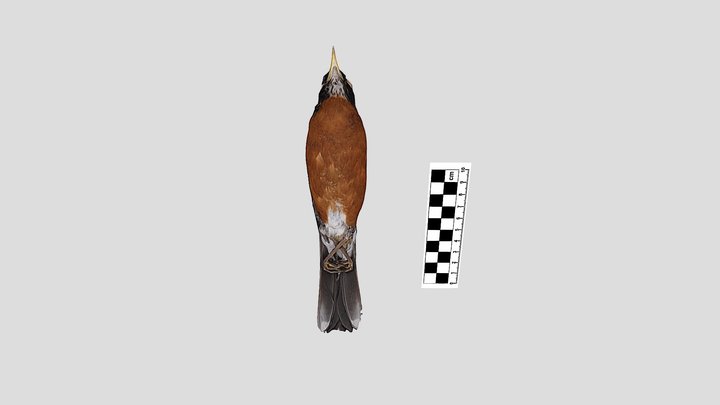
Smithsonian Open Access and MorphoSource were not reached for this taxon, so this list is what the others held rather than everything there is.
The description on this site
- Licence
- CC BY-SA 4.0
This is what the site found, which is not the same as what exists.
Keep going
What may have been alongside itPasseriformes through timeFormations of the PleistoceneThe world it lived on
Occurrence data from the Paleobiology Database, CC BY 4.0. (Rafinesque 1815)