Triloculina
Triloculina is a genus of foraminifera in the order Miliolida, included in the Quinqueloculininae. The test has three chambers, each a half coil in length. Early chambers, at least in the microspheric generation, in quinqueloculinan arrangement, later becoming triloculine with successive chambers added in planes 120 degrees apart. Only the final three chambers are visible externally. The aperture is terminal, at the end of the final chamber, with a bifid tooth in adult forms. As with the entire order, the test is composed of imperforate, porcelaneous calcite.

via iDigBio · CC0 · via iDigBio. May be a photograph of a specimen, or an artist’s reconstruction — an interpretation of a skeleton, since colour and soft tissue are almost never preserved.
On record
Recorded, not inferred- Sits inside
- MiliolinellinaePBDB
- Diet
- omnivorePBDB, for Foraminifera
- Life habit
- semi-infaunalPBDB, for Foraminifera
- Motility
- stationaryPBDB, for Foraminifera
Time the record covers
At least 113 million years on record.
The record covers at least 113.2 Mya to 11.7 ka. No occurrence read is dated outside 119.57 Mya to 0 Mya.
481 occurrences of Triloculina on record, most of them in the Pleistocene. The Paleobiology Database records this as a living group. Bar height is expected occurrences, not a count: each fossil is spread across the span it is dated to, so a tall narrow bar means tight dating and a low wide one means loose.
When
481 occurrences- Early Cretaceousunder 1%
- Late Cretaceous2%
- Paleocene8%
- Eocene7%
- Oligocene13%
- Miocene12%
- Pliocene7%
- Pleistocene47%
- Holocene3%
These are dates about fossils, not the animal: the record can only begin after it arose and end before it died out, so either end may reach further. Shares are expected occurrences: a fossil dated to a span is counted partly in each period it straddles. More on what this infers.
Found in
39 formations
- Qom Formation Formation71
- Sylhet Formation Formation23
- Sinjar Formation17
- Guitar Formation Formation9
- Lower Coralline Limestone Formation4
- Bolognano Formation4
Loading coastlines…
The named rock units Triloculina has been recovered from, largest first. Drawn where the rock is now, not where it formed. 15 further formations hold fewer occurrences each and are not listed. 306 occurrences have no formation on record, which is common for older literature.
Triloculina and its relatives
PleistoceneWhere Triloculina and its relatives were recorded in the Pleistocene.
Found in the same rock
1,558 taxa- Quinqueloculina111 sites
- Uvigerina100 sites
- Pyrgo93 sites
- Cibicides84 sites
- Cibicidoides83 sites
- Cassidulina69 sites
- Elphidium61 sites
- Bolivina58 sites
- Fissurina58 sites
- Textularia57 sites
- Pullenia56 sites
- Lagena55 sites
- Melonis52 sites
- Globobulimina50 sites
- Globocassidulina49 sites
- Bulimina48 sites
- Gyroidinoides47 sites
- Lenticulina44 sites
- Chilostomella43 sites
- Nonionella41 sites
- Stainforthia41 sites
- Brizalina38 sites
- Epistominella38 sites
- Oridorsalis35 sites
The Paleobiology Database records 388 sites for Triloculina, and this reads 240 of them. The number is how many of those sites it was catalogued from too. The 24 sharing the most are listed.
This is not a list of everything alive at the time. It is only what has come out of the same ground as this animal and been written down.
Entered from
106 references- Sedimentary facies and depositional environments of the Oligocene–early Miocene marine Qom Formation, Central Iran Back-Arc Basin, Iran (northeastern margin of the Tethyan Seaway)71
- The Enigmatic Paleocene-Eocene coralline Distichoplax: Approaching the structural complexities, ecological affinities and extinction hypotheses23
- Site U133921
- Site U134121
- Site U141818
- Sites U1428 and U142917
- A study of biostratigraphy of Sinjar Formation in selected sections from northern Iraq16
- Site U134315
- Site U141714
- Frontal prism Site U141211
- Micropaleontology of four sections south of Qoseir, Egypt11
- Die Fauna des marinen Miozäns von Kevelaer (Niederrhein). Band 1 Foraminiferen, Anthozoen.10
Each of the 481 occurrences read was entered from one of these publications, ordered by how many each accounts for. This is not a search for papers mentioning the name. 94 further references are not listed. Entries link to doi.org where the Paleobiology Database holds an identifier, and to its own record where it does not. Relayed as the Paleobiology Database holds them, not checked against what they resolve to.
Media and terms
Media content2
Picture of Triloculina
- Source
- iDigBio
- Credit
- via iDigBio
- Licence
- CC0
- Commercial use
- the licence allows it
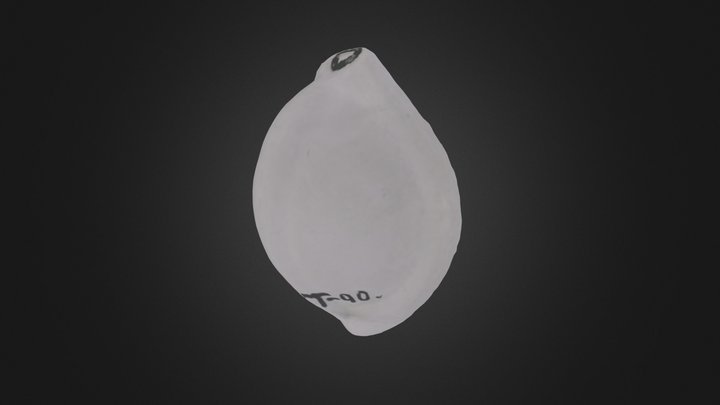
3D model
- Source
- Sketchfab
- Licence
- CC0 Public Domain
- Commercial use
- the licence allows it
Smithsonian Open Access and MorphoSource were not reached for this taxon, so this list is what the others held rather than everything there is.
The description on this site
- Source
- Wikipedia, “Triloculina”
- Licence
- CC BY-SA 4.0
This is what the site found, which is not the same as what exists.
Keep going
What may have been alongside itMiliolinellinae through timeFormations of the PleistoceneThe world it lived on
Occurrence data from the Paleobiology Database, CC BY 4.0. d'Orbigny 1826