Todites

via iDigBio · via iDigBio. May be a photograph of a specimen, or an artist’s reconstruction — an interpretation of a skeleton, since colour and soft tissue are almost never preserved.
On record
Recorded, not inferred- Sits inside
- OsmundaceaePBDB
- Diet
- "photoautotroph"PBDB, for Streptophyta
Time the record covers
At least 261 million years on record.
The record covers at least 266.9 Mya to 5.333 Mya. No occurrence read is dated outside 274.4 Mya to 2.58 Mya.
375 occurrences of Todites on record, most of them in the Late Triassic. Bar height is expected occurrences, not a count: each fossil is spread across the span it is dated to, so a tall narrow bar means tight dating and a low wide one means loose.
When
375 occurrences- Permian2%
- Early Triassic3%
- Middle Triassic4%
- Late Triassic29%
- Early Jurassic28%
- Middle Jurassic21%
- Late Jurassic10%
- Early Cretaceous2%
- Late Cretaceousunder 1%
- Plioceneunder 1%
These are dates about fossils, not the animal: the record can only begin after it arose and end before it died out, so either end may reach further. Shares are expected occurrences: a fossil dated to a span is counted partly in each period it straddles. More on what this infers.
Found in
140 formations
- Rajmahal Formation9
- Cloughton Formation · Ravenscar Group8
- Scalby Formation · Ravenscar Group5
- Hongqi Formation5
- Cape Stewart Formation4
- Saltwick Formation · Ravenscar Group4
Loading coastlines…
The named rock units Todites has been recovered from, largest first. Drawn where the rock is now, not where it formed. 116 further formations hold fewer occurrences each and are not listed. 142 occurrences have no formation on record, which is common for older literature.
Todites and its relatives
Late TriassicWhere Todites and its relatives were recorded in the Late Triassic.
Found in the same rock
514 taxa- Cladophlebis180 sites
- Podozamites142 sites
- Equisetites139 sites
- Neocalamites137 sites
- Nilsonia126 sites
- Pterophyllum103 sites
- Coniopteris93 sites
- Taeniopteris92 sites
- Czekanowskia90 sites
- Clathropteris89 sites
- Dictyophyllum84 sites
- Pityophyllum83 sites
- Baiera76 sites
- Sphenobaiera76 sites
- Phoenicopsis73 sites
- Anomozamites71 sites
- Phlebopteris71 sites
- Ginkgo63 sites
- Elatocladus55 sites
- Ctenis54 sites
- Otozamites53 sites
- Sagenopteris53 sites
- Carpolithus51 sites
- Thaumatopteris51 sites
The Paleobiology Database records 282 sites for Todites, and this reads 240 of them. The number is how many of those sites it was catalogued from too. The 24 sharing the most are listed.
This is not a list of everything alive at the time. It is only what has come out of the same ground as this animal and been written down.
Entered from
110 references- A Catalogue of Indian Fossil Plants24
- About subdivisions of the Lower Jurassic of Tadzhikistan based on paleobotanic data20
- Triassic Floras of Eurasia19
- The Stratigraphic Tables of Xinjiang19
- The Yorkshire Jurassic Flora V. Coniferales18
- The Stratigraphic Tables of Sichuan16
- Review of the Kimmeridgian flora of Sutherland, Scotland with reference to the ecology and in situ pollen8
- A Catalogue of Fossil Plants from India Part 2: Palaeozoic and Mesozoic Megafossils8
- Regional Geology of Shanxi Province8
- Early Jurassic plants in Japan. Part 8. Supplementary description and concluding remarks8
- The Stratigraphic Tables of Gansu8
- Regional Geology of Jilin Province7
Each of the 375 occurrences read was entered from one of these publications, ordered by how many each accounts for. This is not a search for papers mentioning the name. 98 further references are not listed. Each entry links to the Paleobiology Database's own record for the work.
Media and terms
Media content2
Picture of Todites
- Source
- iDigBio
- Credit
- via iDigBio
- Licence
- not stated by the source
- Commercial use
- cannot be read from the licence given — check the record
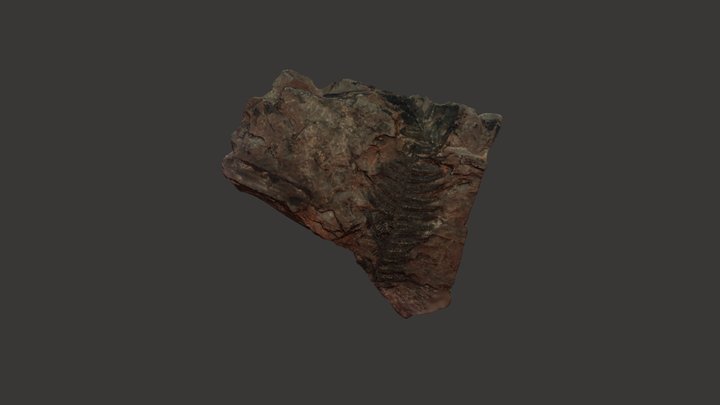
3D model
- Source
- Sketchfab
- Licence
- CC Attribution
- Commercial use
- cannot be read from the licence given — check the record
Smithsonian Open Access and MorphoSource were not reached for this taxon, so this list is what the others held rather than everything there is.
This is what the site found, which is not the same as what exists.
Keep going
What may have been alongside itOsmundaceae through timeFormations of the Late TriassicThe world it lived on
Occurrence data from the Paleobiology Database, CC BY 4.0. Seward 1900