Sulidae
The bird family Sulidae comprises the gannets and boobies. Collectively called sulids, they are medium-large coastal seabirds that plunge-dive for fish and similar prey. The 11 species in this family are often considered congeneric in older sources, placing all in the genus Sula. However, Sula and Morus (gannets) can be distinguished via morphological, behavioral, and DNA sequence characters. Abbott's booby (Papasula) is given its own genus, as it stands apart from both in these respects. It appears to be a distinct and ancient lineage, maybe closer to the gannets than to the true boobies.

Duncan Wright , USFWS · Public Domain · via Wikipedia/Commons. May be a photograph of a specimen, or an artist’s reconstruction — an interpretation of a skeleton, since colour and soft tissue are almost never preserved.
On record
Recorded, not inferred- Also called
- boobyPBDB
- Sits inside
- SuliformesPBDB
- Diet
- carnivorePBDB, for Coelurosauria
- Life habit
- ground dwelling, solitaryPBDB, for Theropoda
- Motility
- actively mobilePBDB, for Theropoda
- Environment
- terrestrialPBDB, for Theropoda
Time the record covers
At least 41 million years on record.
The record covers at least 41.03 Mya to 11.7 ka. No occurrence read is dated outside 48.07 Mya to 0 Mya.
251 occurrences of Sulidae on record. The Paleobiology Database records this as a living group. Bar height is expected occurrences, not a count: each fossil is spread across the span it is dated to, so a tall narrow bar means tight dating and a low wide one means loose.
When
251 occurrencesThese are dates about fossils, not the animal: the record can only begin after it arose and end before it died out, so either end may reach further. Shares are expected occurrences: a fossil dated to a span is counted partly in each period it straddles. More on what this infers.
Found in
30 formations
- Pisco Formation20
- Monterey Formation12
- San Diego Formation11
- Temblor Formation10
- Yorktown Formation · Chesapeake Group6
- Calvert Formation · Chesapeake Group6
Loading coastlines…
The named rock units Sulidae has been recovered from, largest first. Drawn where the rock is now, not where it formed. 6 further formations hold fewer occurrences each and are not listed. 146 occurrences have no formation on record, which is common for older literature.
Found in the same rock
2,692 taxa- Sula45 sites
- Sula sula35 sites
- Anous stolidus27 sites
- Gallus gallus25 sites
- Morus bassanus22 sites
- Otodus megalodon21 sites
- Sula dactylatra20 sites
- Carcharodon hastalis18 sites
- Procellariidae17 sites
- Puffinus17 sites
- Onychoprion fuscatus16 sites
- Sterninae15 sites
- Carcharhinus14 sites
- Fregata minor14 sites
- Gygis alba14 sites
- Puffinus lherminieri14 sites
- Morus13 sites
- Myliobatis13 sites
- Sula leucogaster13 sites
- Anous minutus12 sites
- Pinguinus impennis12 sites
- Cetotheriidae11 sites
- Phalacrocorax11 sites
- Phocoenidae11 sites
The Paleobiology Database records 178 sites for Sulidae, and this reads all of them. The number is how many of those sites it was catalogued from too. The 24 sharing the most are listed.
This is not a list of everything alive at the time. It is only what has come out of the same ground as this animal and been written down.
Entered from
94 references- Extinction, biogeography, and human exploitation of birds on Tikopia and Anuta, Polynesian outliers in the Solomon Islands33
- Avian remains from late pre-colonial Amerindian sites on islands of the Venezuelan Caribbean12
- A specimen-based approach to reconstructing the late Neogene seabird communities of California12
- Fossil birds of the San Diego Formation, Late Pliocene, Blancan, San Diego County, California9
- The avifauna of the Grund Beds (Middle Miocene, Early Badenian, northern Austria)8
- Miocene and Pliocene birds from the Lee Creek Mine, North Carolina8
- The Great Auk and the Gannet: a Prehistoric Perspective on the Extinction of the Great Auk8
- Los Piqueros (Aves: Sulidae) de la Formacion Pisco, Peru6
- The fossil birds of Henderson Island, Pitcairn Group: natural turnover and human impact, a synopsis6
- Osteological differences between Sula and Morus, and a description of an extinct new species of Sula from Lord Howe and Norfolk Islands, Tasman Sea6
- Additional notes on subfossil bird remains from Ascension Island6
- Avifauna from the Emily Bay settlement site, Norfolk Island: a preliminary account5
Each of the 251 occurrences read was entered from one of these publications, ordered by how many each accounts for. This is not a search for papers mentioning the name. 82 further references are not listed. Entries link to doi.org where the Paleobiology Database holds an identifier, and to its own record where it does not. Relayed as the Paleobiology Database holds them, not checked against what they resolve to.
Media and terms
Media content2
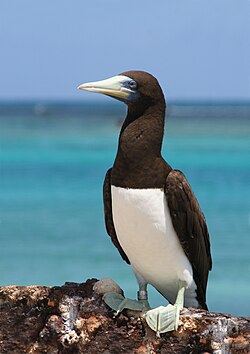
Picture of Sulidae
- Source
- Wikipedia/Commons
- Credit
- Duncan Wright , USFWS
- Licence
- Public Domain
- Commercial use
- the licence allows it
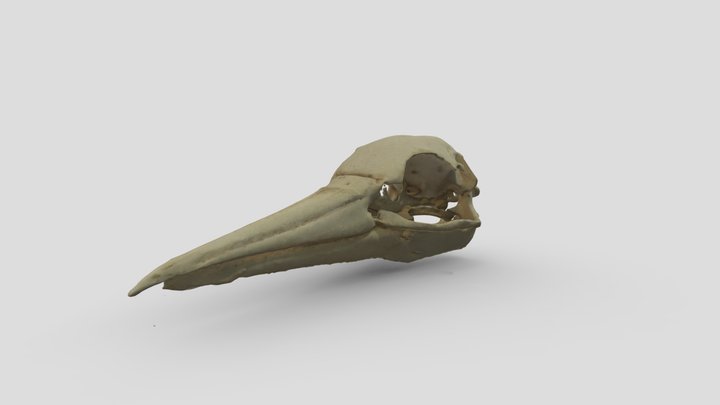
3D model
- Source
- Sketchfab
- Credit
- LJMUZoology
- Licence
- CC Attribution
- Commercial use
- cannot be read from the licence given — check the record
Smithsonian Open Access and MorphoSource were not reached for this taxon, so this list is what the others held rather than everything there is.
The description on this site
- Source
- Wikipedia, “Sulidae”
- Licence
- CC BY-SA 4.0
This is what the site found, which is not the same as what exists.
Keep going
What may have been alongside itSuliformes through timeThe world it lived on
Occurrence data from the Paleobiology Database, CC BY 4.0. Reichenbach 1849