Spondylus gaederopus

Uncredited · CC BY 2.5 · via Wikidata/Commons. May be a photograph of a specimen, or an artist’s reconstruction — an interpretation of a skeleton, since colour and soft tissue are almost never preserved.
On record
Recorded, not inferred- Sits inside
- SpondylusPBDB
- Diet
- suspension feederPBDB, for Spondylus
- Life habit
- epifaunalPBDB, for Spondylus
- Motility
- stationary, attachedPBDB, for Spondylus
- Vision
- limitedPBDB, for Spondylidae
- Environment
- marinePBDB, for Pectinida
Time the record covers
At least 15 million years on record.
The record covers at least 15.98 Mya to 129 ka. No occurrence read is dated outside 20.45 Mya to 11.7 ka.
36 occurrences of Spondylus gaederopus on record, most of them in the Miocene. The Paleobiology Database records this as a living group. Bar height is expected occurrences, not a count: each fossil is spread across the span it is dated to, so a tall narrow bar means tight dating and a low wide one means loose.
When
36 occurrences- Miocene50%
- Pliocene11%
- Pleistocene39%
These are dates about fossils, not the animal: the record can only begin after it arose and end before it died out, so either end may reach further. Shares are expected occurrences: a fossil dated to a span is counted partly in each period it straddles. More on what this infers.
Found in
9 formations
- Lindos Acropolis Formation2
- Lychow Formation1
- Weglinek Formation1
- Weglin Formation1
- Gavdos Formation1
- Apostoli Formation1
Loading coastlines…
The named rock units Spondylus gaederopus has been recovered from, largest first. Drawn where the rock is now, not where it formed. 26 occurrences have no formation on record, which is common for older literature.
Spondylus gaederopus and its relatives
MioceneWhere Spondylus gaederopus and its relatives were recorded in the Miocene.
Found in the same rock
1,049 taxa- Barbatia (Barbatia) barbata18 sites
- Chlamys18 sites
- Arca noae15 sites
- Talochlamys multistriata15 sites
- Aequipecten14 sites
- Chama gryphoides14 sites
- Lithophaga lithophaga14 sites
- Ostrea edulis13 sites
- Glycymeris (Glycymeris)12 sites
- Lima lima12 sites
- Neopycnodonte navicularis12 sites
- Anomia ephippium11 sites
- Pecten11 sites
- Acar10 sites
- Aequipecten opercularis10 sites
- Conus10 sites
- Persististrombus coronatus10 sites
- Scapharca (Scapharca) diluvii10 sites
- Striarca10 sites
- Chlamys (Chlamys) varia9 sites
- Vermetus9 sites
- Bittium reticulatum8 sites
- Bolma rugosus8 sites
- Cardium8 sites
The Paleobiology Database records 29 sites for Spondylus gaederopus, and this reads all of them. The number is how many of those sites it was catalogued from too. The 24 sharing the most are listed.
This is not a list of everything alive at the time. It is only what has come out of the same ground as this animal and been written down.
Entered from
21 references- Biozonation of the Neogene invertebrate megafauna of the Hellenic area6
- Les formations recifales coralliennes du Miocene superieur d'Algerie et du Maroc [Upper Miocene coral reef formations from Algeria and Morocco]5
- Bivalve Molluscs from the Badenian of Northwestern Bulgaria3
- Middle Miocene bivalve faunas from the carbonate deposits of Poland (Central Paratethys)3
- Sedimentary evolution of a Late Pleistocene temperate red algal reef (Coralligene) on Rhodes, Greece: correlation with global sea-level fluctuations2
- Macrofauna del Pleistocene inferiore di Cinisi (Sicilia)2
- Palaeoecology, taphonomy, and preservation of a lower Pliocene shell bed (coquina) froma volcanic oceanic island (Santa Maria Island, Azores)1
- Mid-latitude coralgal bioconstruction and endolithic microbialites: environmental significance during Quaternary climate variations1
- The marine fossils malacofauna in a Plio-Pleistocene section from Vallin Buio (Livorno, Italy)1
- Facies pattern and molluscan fauna of the Late Pleistocene raised coral reef of Rabigh area, Red Sea coast, Saudi Arabia1
- Bivalves from the Middle Miocene reefs of Poland and Ukraine: A new approach to Badenian/Sarmatian boundary in the Paratethys1
- Lower to Middle Miocene Mollusc assemblages from the Torino Hills (NW Italy): Synthesis of new data and chronostratigraphical arrangement1
Each of the 36 occurrences read was entered from one of these publications, ordered by how many each accounts for. This is not a search for papers mentioning the name. 9 further references are not listed. Entries link to doi.org where the Paleobiology Database holds an identifier, and to its own record where it does not. Relayed as the Paleobiology Database holds them, not checked against what they resolve to.
Media and terms
Media content2
Picture of Spondylus gaederopus
- Source
- Wikidata/Commons
- Credit
- nobody named on the record
- Licence
- CC BY 2.5
- Commercial use
- the licence allows it
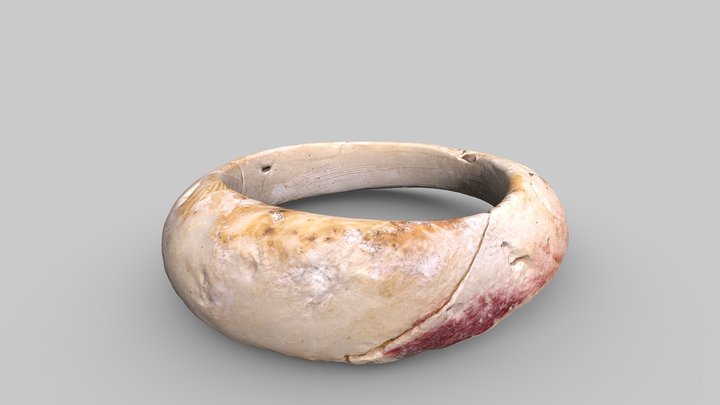
3D model
- Source
- Sketchfab
- Licence
- CC Attribution-NonCommercial
- Commercial use
- the licence does not allow it
Smithsonian Open Access and MorphoSource were not reached for this taxon, so this list is what the others held rather than everything there is.
This is what the site found, which is not the same as what exists.
Keep going
What may have been alongside itSpondylus through timeFormations of the MioceneThe world it lived on
Occurrence data from the Paleobiology Database, CC BY 4.0. Linnaeus 1758