Sphyrna mokarran
The great hammerhead is the largest species of hammerhead shark, belonging to the family Sphyrnidae, attaining an average length of 4.6 m (15 ft) and reaching a maximum length of 6.2 m (20 ft). It is found around the globe in all the warmer parts of the oceans. The great hammerhead can be distinguished from other hammerheads by the shape of its "hammer", which is wide with an almost straight front margin, its tall, sickle-shaped first dorsal fin, and its strongly falcated pelvic fins. A solitary, strong-swimming apex predator, the great hammerhead feeds on a wide variety of prey ranging from crustaceans and cephalopods, to bony fish, to smaller sharks. Observations of this species in the wild suggest that the cephalofoil functions to immobilize stingrays, a favored prey. This species has a viviparous mode of reproduction, bearing litters of up to 2-49 pups every two years.

Albert kok · CC BY-SA 4.0 · via Wikipedia/Commons. May be a photograph of a specimen, or an artist’s reconstruction — an interpretation of a skeleton, since colour and soft tissue are almost never preserved.
On record
Recorded, not inferred- Also called
- great hammerheadPBDB
- Sits inside
- SphyrnaPBDB
- Diet
- carnivorePBDB, for Carcharhiniformes
- Life habit
- nektonicPBDB, for Carcharhiniformes
- Motility
- actively mobilePBDB, for Carcharhiniformes
Time the record covers
At least 14 million years on record.
The record covers at least 15.98 Mya to 1.8 Mya. No occurrence read is dated outside 23.04 Mya to 774 ka.
14 occurrences of Sphyrna mokarran on record, most of them in the Miocene. The Paleobiology Database records this as a living group, and the chart stops with its fossils rather than at the present. Bar height is expected occurrences, not a count: each fossil is spread across the span it is dated to, so a tall narrow bar means tight dating and a low wide one means loose.
When
14 occurrences- Miocene86%
- Pliocene7%
- Pleistocene7%
These are dates about fossils, not the animal: the record can only begin after it arose and end before it died out, so either end may reach further. Shares are expected occurrences: a fossil dated to a span is counted partly in each period it straddles. More on what this infers.
Found in
9 formations
- Seria Formation3
- Chucunaque Formation2
- Caujarao Formation2
- Lagunitas Formation1
- Tirabuzón Formation1
- Gatun Formation1
Loading coastlines…
The named rock units Sphyrna mokarran has been recovered from, largest first. Drawn where the rock is now, not where it formed. 1 occurrence has no formation on record, which is common for older literature.
Sphyrna mokarran and its relatives
MioceneWhere Sphyrna mokarran and its relatives were recorded in the Miocene.
Found in the same rock
316 taxa- Hemipristis serra8 sites
- Otodus megalodon8 sites
- Carcharhinus5 sites
- Carcharhinus leucas5 sites
- Sphyrna zygaena5 sites
- Galeocerdo aduncus4 sites
- Myliobatis4 sites
- Negaprion brevirostris4 sites
- Carcharhinus amboinensis3 sites
- Carcharhinus brachyurus3 sites
- Carcharhinus falciformis3 sites
- Carcharodon hastalis3 sites
- Dasyatidae3 sites
- Diodontidae3 sites
- Galeocerdo cuvier3 sites
- Isurus oxyrinchus3 sites
- Odontoceti3 sites
- Pristis3 sites
- Rhinoptera3 sites
- Rhynchobatus3 sites
- Aetobatus narinari2 sites
- Aetomylaeus2 sites
- Carcharhiniformes2 sites
- Carcharhinus amblyrhynchos2 sites
The Paleobiology Database records 12 sites for Sphyrna mokarran, and this reads all of them. The number is how many of those sites it was catalogued from too. The 24 sharing the most are listed.
This is not a list of everything alive at the time. It is only what has come out of the same ground as this animal and been written down.
Entered from
10 references- First report on a diverse Neogene cartilaginous fish fauna from Borneo (Ambug Hill, Brunei Darussalam)3
- A new vertebrate continental assemblage from the Tortonian of Venezuela2
- Late Miocene chondrichthyans from Lago Bayano, Panama: Functional diversity, environment and biogeography2
- Les poissons cartilagineux (chondrichtyens) du Serravallien de la vallée de l'Eyre (Gironde, France) (1/2)1
- Integrated Chronology, Flora and Faunas, and Paleoecology of the Alajuela Formation, Late Miocene of Panama1
- Sharks and Rays (Chondrichthyes, Elasmobranchii) from the late Miocene Gatun Formation of Panama1
- Les chondrichthyens du Miocène moyen (Serravallien) de Salles (Gironde, France)1
- Domo de Zaza, an Early Miocene vertebrate locality in south-central Cuba, with notes on the tectonic evolution of Puerto Rico and the Mona Passage1
- Chondrichthyes and Osteichthyes from the early Pleistocene Leisey Shell Pit local fauna, Hillsborough County, Florida1
- Phyletic studies; part 1, Tiger sharks1
Each of the 14 occurrences read was entered from one of these publications, ordered by how many each accounts for. This is not a search for papers mentioning the name. Entries link to doi.org where the Paleobiology Database holds an identifier, and to its own record where it does not. Relayed as the Paleobiology Database holds them, not checked against what they resolve to.
Media and terms
Media content3

Picture of Sphyrna mokarran
- Source
- Wikipedia/Commons
- Credit
- Albert kok
- Licence
- CC BY-SA 4.0
- Commercial use
- the licence allows it

Photogrammetry
- Source
- MorphoSource
- Licence
- not stated by the source
- Commercial use
- cannot be read from the licence given — check the record
- Specimen
- Sphyrna mokarran · UF:EAComp:8092
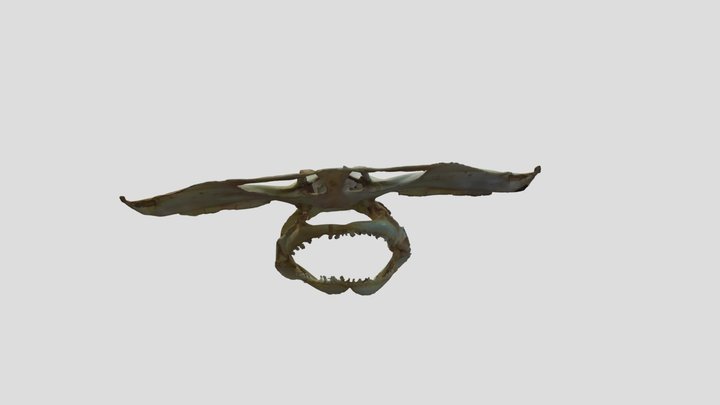
3D model
- Source
- Sketchfab
- Credit
- coleccionesbiol.3d.sig
- Licence
- CC Attribution
- Commercial use
- cannot be read from the licence given — check the record
Smithsonian Open Access was not reached for this taxon, so this list is what the others held rather than everything there is.
The description on this site
- Licence
- CC BY-SA 4.0
This is what the site found, which is not the same as what exists.
Keep going
What may have been alongside itSphyrna through timeFormations of the MioceneThe world it lived on
Occurrence data from the Paleobiology Database, CC BY 4.0. (Rüppell 1837)