Pseudochama
Pseudochama is a species of bivalve mollusc in the family Chamidae.

Hectonichus · CC BY-SA 3.0 · via Wikipedia/Commons. May be a photograph of a specimen, or an artist’s reconstruction — an interpretation of a skeleton, since colour and soft tissue are almost never preserved.
On record
Recorded, not inferred- Sits inside
- ChamidaePBDB
- Diet
- suspension feederPBDB
- Life habit
- epifaunalPBDB
- Motility
- stationary, attached, epibiontPBDB
- Vision
- blindPBDB, for Bivalvia
Time the record covers
At least 37 million years on record.
The record covers at least 37.71 Mya to 129 ka. No occurrence read is dated outside 41.03 Mya to 0 Mya.
75 occurrences of Pseudochama on record, most of them in the Miocene. The Paleobiology Database records this as a living group. Bar height is expected occurrences, not a count: each fossil is spread across the span it is dated to, so a tall narrow bar means tight dating and a low wide one means loose.
When
75 occurrences- Eocene1%
- Oligocene1%
- Miocene53%
- Pliocene26%
- Pleistocene18%
These are dates about fossils, not the animal: the record can only begin after it arose and end before it died out, so either end may reach further. Shares are expected occurrences: a fossil dated to a span is counted partly in each period it straddles. More on what this infers.
Found in
26 formations
- Chipola Formation · Alum Bluff Group10
- Oak Grove Formation · Alum Bluff Group9
- Yorktown Formation7
- Talparo Formation5
- Shoal River Formation · Alum Bluff Group4
- Waccamaw Formation3
Loading coastlines…
The named rock units Pseudochama has been recovered from, largest first. Drawn where the rock is now, not where it formed. 2 further formations hold fewer occurrences each and are not listed. 15 occurrences have no formation on record, which is common for older literature.
Pseudochama and its relatives
MioceneWhere Pseudochama and its relatives were recorded in the Miocene.
Found in the same rock
1,650 taxa- Anadara20 sites
- Chlamys18 sites
- Parvilucina16 sites
- Yoldia16 sites
- Anadara (Diluvarca) santarosana15 sites
- Corbula (Caryocorbula)15 sites
- Nassarius (Uzita)15 sites
- Semele15 sites
- Anomia14 sites
- Lirophora14 sites
- Calyptraea centralis13 sites
- Ervilia chipolana13 sites
- Strioterebrum13 sites
- Tectonatica13 sites
- Cancellaria12 sites
- Cerastoderma12 sites
- Crassinella12 sites
- Dinocardium taphrium12 sites
- Erycina12 sites
- Mitrella12 sites
- Nuculana12 sites
- Turritella12 sites
- Turritella subgrundifera12 sites
- Crassatella densus11 sites
The Paleobiology Database records 48 sites for Pseudochama, and this reads all of them. The number is how many of those sites it was catalogued from too. The 24 sharing the most are listed.
This is not a list of everything alive at the time. It is only what has come out of the same ground as this animal and been written down.
Entered from
34 references- The Molluscan Fauna of the Alum Bluff Group of Florida21
- Unpublished census data from Atlantic coastal plain and circum-Caribbean Neogene assemblages and taxonomic opinions11
- Miocene and Pliocene mollusks from Trinidad5
- Bivalve Molluscs from the Badenian of Northwestern Bulgaria3
- Mollusca from the Miocene and Lower Pliocene of Virginia and North Carolina. Part 1. Pelecypoda3
- A paleobiotic survey of Caribbean faunas from the Neogene of the Isthmus of Panama2
- Les formations recifales coralliennes du Miocene superieur d'Algerie et du Maroc [Upper Miocene coral reef formations from Algeria and Morocco]2
- The Pliocene Reefs of Miami: Their Geomorphological Significance in the Evolution of the Atlantic Coastal Ridge, Southeastern Florida, U.S.A.2
- Computer-based mollusc stratigraphy - a case study from the Eggenburgian (Lower Miocene) type region (NE Austria)1
- Paleoecology of a Pliocene coral reef in Cyprus: recovery of a marine community from the Messinian Salinity Crisis1
- Preliminary biostratigraphy and molluscan fauna of the Goose Creek Limestone of eastern South Carolina1
- Middle Miocene bivalve faunas from the carbonate deposits of Poland (Central Paratethys)1
Each of the 75 occurrences read was entered from one of these publications, ordered by how many each accounts for. This is not a search for papers mentioning the name. 22 further references are not listed. Entries link to doi.org where the Paleobiology Database holds an identifier, and to its own record where it does not. Relayed as the Paleobiology Database holds them, not checked against what they resolve to.
Media and terms
Media content3

Picture of Pseudochama
- Source
- Wikipedia/Commons
- Credit
- Hectonichus
- Licence
- CC BY-SA 3.0
- Commercial use
- the licence allows it
CT scan
- Source
- MorphoSource
- Licence
- In Copyright
- Commercial use
- cannot be read from the licence given — check the record
- Specimen
- Pseudochama cristella · fmnh:invertebrate zoology:183211
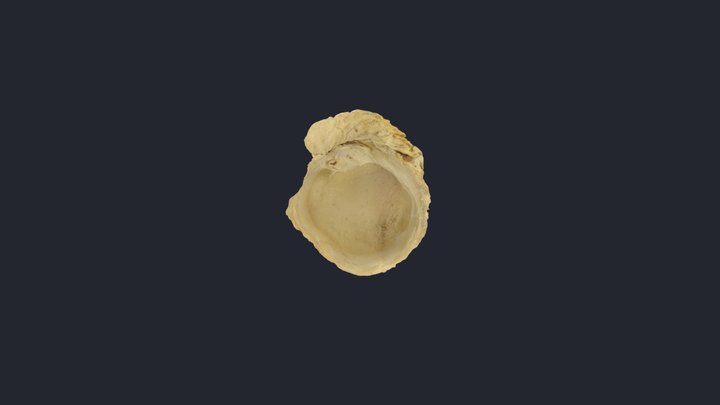
Smithsonian Open Access was not reached for this taxon, so this list is what the others held rather than everything there is.
The description on this site
- Source
- Wikipedia, “Pseudochama”
- Licence
- CC BY-SA 4.0
This is what the site found, which is not the same as what exists.
Keep going
What may have been alongside itChamidae through timeFormations of the MioceneThe world it lived on
Occurrence data from the Paleobiology Database, CC BY 4.0. (Odhner 1917)