Pluvialis apricaria
The European golden plover, also known as the Eurasian golden plover, greater golden plover, or just the golden plover within Europe, is a relatively large species of plover. This species is similar to two other golden plovers, the American golden plover, Pluvialis dominica, and Pacific golden plover, Pluvialis fulva, which are both slightly smaller, slimmer and longer-legged than European golden plover, and both have grey rather than white axillary (armpit) feathers.

Charles J. Sharp · CC BY-SA 4.0 · via Wikipedia/Commons. May be a photograph of a specimen, or an artist’s reconstruction — an interpretation of a skeleton, since colour and soft tissue are almost never preserved.
On record
Recorded, not inferred- Also called
- European golden-ploverPBDB
- Sits inside
- PluvialisPBDB
- Diet
- carnivorePBDB, for Coelurosauria
- Life habit
- ground dwelling, solitaryPBDB, for Theropoda
- Motility
- actively mobilePBDB, for Theropoda
- Environment
- marinePBDB, for Charadriiformes
- Mass
- 32.8 gWikidata
Time the record covers
At least 645 thousand years on record.
The record covers at least 774 ka to 129 ka. No occurrence read is dated outside 1.8 Mya to 11.7 ka.
3 occurrences of Pluvialis apricaria on record, most of them in the Pleistocene. The Paleobiology Database records this as a living group. Bar height is expected occurrences, not a count: each fossil is spread across the span it is dated to, so a tall narrow bar means tight dating and a low wide one means loose.
When
3 occurrences- Pleistocene100%
These are dates about fossils, not the animal: the record can only begin after it arose and end before it died out, so either end may reach further. Shares are expected occurrences: a fossil dated to a span is counted partly in each period it straddles. More on what this infers.
Pluvialis apricaria and its relatives
PleistoceneWhere Pluvialis apricaria and its relatives were recorded in the Pleistocene.
Found in the same rock
52 taxa- Alauda arvensis2 sites
- Melanocorypha calandra2 sites
- Scolopax rusticola2 sites
- Tadorna ferruginea2 sites
- Turdus merula2 sites
- Alca torda1 site
- Alectoris1 site
- Anatidae1 site
- Anser1 site
- Anser albifrons1 site
- Anser fabalis1 site
- Anthus1 site
- Anthus trivialis1 site
- Arenaria interpres1 site
- Athene noctua1 site
- Bubo bubo1 site
- Calandrella1 site
- Calidris alpina1 site
- Calidris pugnax1 site
- Calonectris diomedea1 site
- Charadriiformes1 site
- Columba livia1 site
- Corvus pliocaenus1 site
- Cygnus equitum1 site
The Paleobiology Database records 3 sites for Pluvialis apricaria, and this reads all of them. The number is how many of those sites it was catalogued from too. The 24 sharing the most are listed.
This is not a list of everything alive at the time. It is only what has come out of the same ground as this animal and been written down.
Entered from
3 references- Early Pleistocene birds from Pirro Nord (Puglia, southern Italy)1
- The fossil bird associations from the early Middle Pleistocene of the Ragusa province (SE Sicily, Italy)1
- Pleistocene and prehistoric birds of south-west Britain1
Each of the 3 occurrences read was entered from one of these publications, ordered by how many each accounts for. This is not a search for papers mentioning the name. Entries link to doi.org where the Paleobiology Database holds an identifier, and to its own record where it does not. Relayed as the Paleobiology Database holds them, not checked against what they resolve to.
Media and terms
Media content2

Picture of Pluvialis apricaria
- Source
- Wikipedia/Commons
- Credit
- Charles J. Sharp
- Licence
- CC BY-SA 4.0
- Commercial use
- the licence allows it
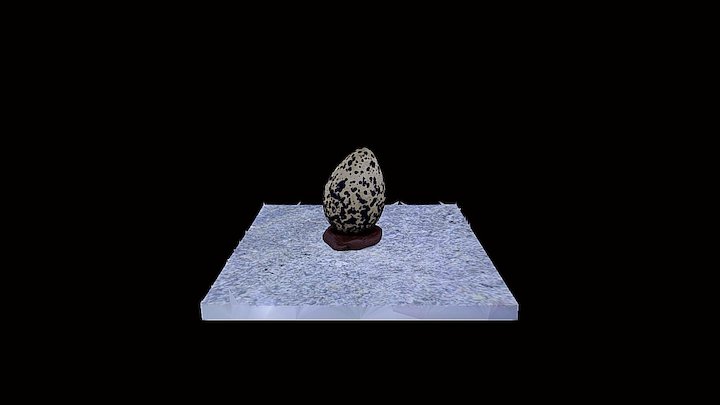
3D model
- Source
- Sketchfab
- Credit
- DigitalLife3D
- Licence
- CC Attribution-NonCommercial
- Commercial use
- the licence does not allow it
Smithsonian Open Access and MorphoSource were not reached for this taxon, so this list is what the others held rather than everything there is.
The description on this site
- Licence
- CC BY-SA 4.0
This is what the site found, which is not the same as what exists.
Keep going
What may have been alongside itPluvialis through timeFormations of the PleistoceneThe world it lived on
Occurrence data from the Paleobiology Database, CC BY 4.0. (Linnaeus 1758)