Planorbis
Planorbis is a genus of air-breathing freshwater snails, aquatic pulmonate gastropod molluscs in the family Planorbidae, the ram's horn snails, or planorbids. All species in this genus have sinistral or left-coiling shells.

Ehrmann, Hermann Felix Paul (* 21st December 1868 – † 6th October 1937; Germany) · Public Domain · via Wikipedia/Commons. May be a photograph of a specimen, or an artist’s reconstruction — an interpretation of a skeleton, since colour and soft tissue are almost never preserved.
On record
Recorded, not inferred- Sits inside
- PlanorbiniPBDB
- Life habit
- epifaunalPBDB, for Gastropoda
- Motility
- actively mobilePBDB, for Gastropoda
- Vision
- limitedPBDB, for Gastropoda
- Environment
- freshwaterPBDB, for Planorbidae
Time the record covers
At least 372 million years on record.
The record covers at least 372.15 Mya to 129 ka. No occurrence read is dated outside 382.31 Mya to 11.7 ka.
142 occurrences of Planorbis on record, most of them in the Eocene. The Paleobiology Database records this as a living group. Bar height is expected occurrences, not a count: each fossil is spread across the span it is dated to, so a tall narrow bar means tight dating and a low wide one means loose.
When
142 occurrences- Devonianunder 1%
- Late Jurassicunder 1%
- Early Cretaceous1%
- Late Cretaceousunder 1%
- Paleoceneunder 1%
- Eocene54%
- Oligocene3%
- Miocene11%
- Pliocene4%
- Pleistocene25%
These are dates about fossils, not the animal: the record can only begin after it arose and end before it died out, so either end may reach further. Shares are expected occurrences: a fossil dated to a span is counted partly in each period it straddles. More on what this infers.
Found in
39 formations
- Headon Beds Formation20
- Bembridge Limestone Formation12
- Osborne Beds Formation10
- Kuldana Formation6
- Hempstead Formation5
- Palos Verdes Sand Formation4
Loading coastlines…
The named rock units Planorbis has been recovered from, largest first. Drawn where the rock is now, not where it formed. 15 further formations hold fewer occurrences each and are not listed. 42 occurrences have no formation on record, which is common for older literature.
Planorbis and its relatives
EoceneWhere Planorbis and its relatives were recorded in the Eocene.
Found in the same rock
2,940 taxa- Limnaea31 sites
- Hydrobia17 sites
- Paludina16 sites
- Melanopsis14 sites
- Unio12 sites
- Lymnaea11 sites
- Cyrena10 sites
- Thiara10 sites
- Cerithium9 sites
- Teleostei9 sites
- Chara8 sites
- Testudines8 sites
- Acteocina culcitella7 sites
- Bithynia7 sites
- Caesia fossatus7 sites
- Caesia perpinguis7 sites
- Callianax biplicata7 sites
- Cryptomya californica7 sites
- Dentalium neohexagonum7 sites
- Donax (Paradonax) californicus7 sites
- Leptopecten latiauratus7 sites
- Lucinisca nuttalli7 sites
- Mitrella gausapata7 sites
- Ostrea7 sites
The Paleobiology Database records 101 sites for Planorbis, and this reads all of them. The number is how many of those sites it was catalogued from too. The 24 sharing the most are listed.
This is not a list of everything alive at the time. It is only what has come out of the same ground as this animal and been written down.
Entered from
62 references- On the Tertiary fluvio-marine formation of the Isle of Wight32
- On the discovery of an alligator and of several new Mammalia in the Hordwell Cliff; with observations upon the geological phenomena of that locality8
- On the Tertiary or SupraCretaceous Formations of the Isle of Wight as exhibited in the sections at Alum Bay and White Cliff Bay7
- Rodent biostratigraphy of the Eocene-Oligocene transitional strata of the Isle of Wight5
- A contribution to the study of the Eocene in Western Pakistan and Western India: C. The description of the Scaphopoda and Gastropoda from standard sections in the Rakhi Nala and Zindar Pir areas of the Western Punjab and in the Kohat District5
- Moluscos continentales del Plio-Pleistoceno de la cuenca de Guadix-Baza4
- A Late Pleistocene fauna and flora from Upton Warren, Worcestershire4
- On the Tertiary Beds of Hordwell, Hampshire4
- On the presence of Prolagurus and Allophaiomys in the Dacic Basin3
- Weitere Fossilfunde aus dem altesten Pleistozan der Erpfinger Hohle (Schwabische Alp)3
- Faune des Sables a Nummulites Variolarius de Barisseuse, pres de Saint-Vast-les-Mello (Oise), et Remarques Paleontologiques3
- Molluscs of the Tampa and Suwannee Limestones3
Each of the 142 occurrences read was entered from one of these publications, ordered by how many each accounts for. This is not a search for papers mentioning the name. 50 further references are not listed. Entries link to doi.org where the Paleobiology Database holds an identifier, and to its own record where it does not. Relayed as the Paleobiology Database holds them, not checked against what they resolve to.
Media and terms
Media content2

Picture of Planorbis
- Source
- Wikipedia/Commons
- Credit
- Ehrmann, Hermann Felix Paul (* 21st December 1868 – † 6th October 1937; Germany)
- Licence
- Public Domain
- Commercial use
- the licence allows it
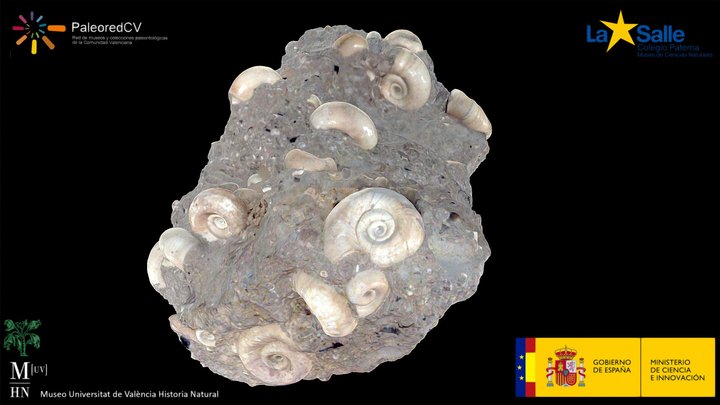
3D model
- Source
- Sketchfab
- Licence
- CC Attribution
- Commercial use
- cannot be read from the licence given — check the record
Smithsonian Open Access was not reached for this taxon, so this list is what the others held rather than everything there is.
The description on this site
- Source
- Wikipedia, “Planorbis”
- Licence
- CC BY-SA 4.0
This is what the site found, which is not the same as what exists.
Keep going
What may have been alongside itPlanorbini through timeFormations of the EoceneThe world it lived on
Occurrence data from the Paleobiology Database, CC BY 4.0. Muller 1774