Pisonia
Pisonia is a genus of flowering plants in the four o'clock flower family, Nyctaginaceae. It was named for Dutch physician and naturalist Willem Piso (1611–1678). Certain species in this genus are known as catchbirdtrees, birdcatcher trees or birdlime trees because they catch birds. The sticky seeds are postulated to be an adaptation of some island species that ensures the dispersal of seeds between islands by attaching them to birds, and also allows the enriching of coralline sands. These island species include P. brunoniana of Australasia and Polynesia and P. umbellifera, which is widespread in the tropical Indo-Pacific region.

Kahuroa · Public Domain · via Wikipedia/Commons. May be a photograph of a specimen, or an artist’s reconstruction — an interpretation of a skeleton, since colour and soft tissue are almost never preserved.
On record
Recorded, not inferred- Also called
- birdcatcher treePBDB
- Sits inside
- NyctaginaceaePBDB
- Diet
- "photoautotroph"PBDB, for Angiospermae
Time the record covers
At least 28 million years on record.
The record covers at least 33.9 Mya to 5.333 Mya. No occurrence read is dated outside 66 Mya to 2.58 Mya.
11 occurrences of Pisonia on record, most of them in the Miocene. The Paleobiology Database records this as a living group, and the chart stops with its fossils rather than at the present. Bar height is expected occurrences, not a count: each fossil is spread across the span it is dated to, so a tall narrow bar means tight dating and a low wide one means loose.
When
11 occurrencesThese are dates about fossils, not the animal: the record can only begin after it arose and end before it died out, so either end may reach further. Shares are expected occurrences: a fossil dated to a span is counted partly in each period it straddles. More on what this infers.
Found in
2 formations
- Pirabas Formation1
- Ackerman Formation · Wilcox Group1
Loading coastlines…
The named rock units Pisonia has been recovered from, largest first. Drawn where the rock is now, not where it formed. 9 occurrences have no formation on record, which is common for older literature.
Pisonia and its relatives
MioceneWhere Pisonia and its relatives were recorded in the Miocene.
Found in the same rock
177 taxa- Myrcia5 sites
- Bumelia4 sites
- Cassia4 sites
- Inga4 sites
- Sapindus4 sites
- Pithecolobium3 sites
- Trichilia3 sites
- Antholithes2 sites
- Bignonia2 sites
- Capparis2 sites
- Chrysobalanus2 sites
- Coccolobis2 sites
- Coussapoa2 sites
- Dalbergia2 sites
- Drypetes2 sites
- Eugenia2 sites
- Fagara2 sites
- Filicites2 sites
- Goniopteris2 sites
- Heliconia2 sites
- Leguminosites2 sites
- Magnoliopsida2 sites
- Phyllites2 sites
- Pilocarpus prepinnatifolius n. sp.2 sites
The Paleobiology Database records 11 sites for Pisonia, and this reads all of them. The number is how many of those sites it was catalogued from too. The 24 sharing the most are listed.
This is not a list of everything alive at the time. It is only what has come out of the same ground as this animal and been written down.
Entered from
10 references- A Late Tertiary flora from Bahia, Brazil2
- Localidades fossiliferas da Formacao Pirabas (Mioceno Inferior)1
- A Miocene flora from the gorge of the Yumuri River, Matanzas, Cuba1
- The fossil flora of the Loja Basin in Southern Ecuador1
- Tertiary fossil plants from the Republic of Haiti1
- Pliocene fossil plants from Eastern Bolivia1
- Tertiary fossil plants from the Dominican Republic1
- Étude sur les florès tertiaires de quelques gisements de lignite de l'Indochine et du Yunnan [Study on the Tertiary flora of some lignite deposits in Indochina and Yunnan]1
- The Lower Eocene floras of Southeastern North America1
- The Upper Cretaceous and Eocene floras of South Carolina and Georgia1
Each of the 11 occurrences read was entered from one of these publications, ordered by how many each accounts for. This is not a search for papers mentioning the name. Entries link to doi.org where the Paleobiology Database holds an identifier, and to its own record where it does not. Relayed as the Paleobiology Database holds them, not checked against what they resolve to.
Media and terms
Media content2
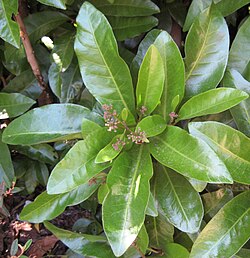
Picture of Pisonia
- Source
- Wikipedia/Commons
- Credit
- Kahuroa
- Licence
- Public Domain
- Commercial use
- the licence allows it
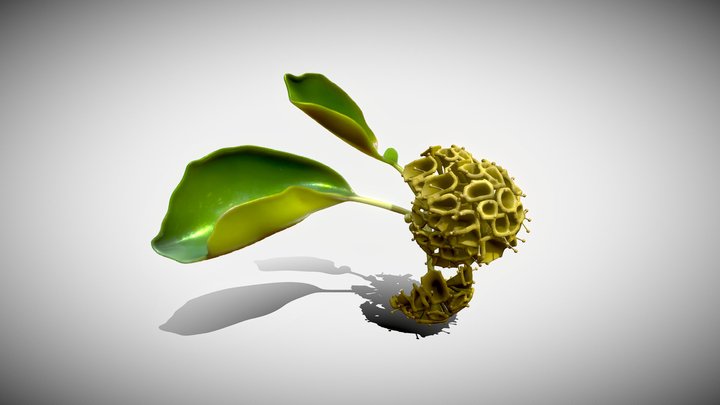
Smithsonian Open Access and MorphoSource were not reached for this taxon, so this list is what the others held rather than everything there is.
The description on this site
- Source
- Wikipedia, “Pisonia”
- Licence
- CC BY-SA 4.0
This is what the site found, which is not the same as what exists.
Keep going
What may have been alongside itNyctaginaceae through timeFormations of the MioceneThe world it lived on
Occurrence data from the Paleobiology Database, CC BY 4.0. Linnaeus 1753