Peniculauris

Yale Peabody Museum · CC0 · via GBIF. May be a photograph of a specimen, or an artist’s reconstruction — an interpretation of a skeleton, since colour and soft tissue are almost never preserved.
On record
Recorded, not inferred- Sits inside
- TolmatchoffiiniPBDB
- Diet
- suspension feederPBDB, for Productidina
- Life habit
- low-level epifaunalPBDB, for Productidina
- Motility
- stationaryPBDB, for Productidina
- Vision
- blindPBDB, for Strophomenata
- Environment
- marinePBDB, for Lophophorata
Time the record covers
At least 35 million years on record.
The record covers at least 290.1 Mya to 254.14 Mya. No occurrence read is dated outside 298.9 Mya to 251.902 Mya.
260 occurrences of Peniculauris on record, most of them in the Permian. Bar height is expected occurrences, not a count: each fossil is spread across the span it is dated to, so a tall narrow bar means tight dating and a low wide one means loose.
When
260 occurrences- Permian100%
These are dates about fossils, not the animal: the record can only begin after it arose and end before it died out, so either end may reach further. Shares are expected occurrences: a fossil dated to a span is counted partly in each period it straddles. More on what this infers.
Found in
24 formations
- Kaibab Formation69
- Cathedral Mountain Formation47
- Skinner Ranch Formation26
- Road Canyon Formation26
- Hess Formation19
- Bone Spring Formation15
Loading coastlines…
The named rock units Peniculauris has been recovered from, largest first. Drawn where the rock is now, not where it formed. 18 occurrences have no formation on record, which is common for older literature.
Peniculauris and its relatives
PermianWhere Peniculauris and its relatives were recorded in the Permian.
Found in the same rock
1,093 taxa- Acosarina mesoplatys46 sites
- Composita45 sites
- Hercosia uddeni45 sites
- Hustedia44 sites
- Meekella calathica43 sites
- Crinoidea41 sites
- Echinauris38 sites
- Megousia auriculata37 sites
- Edriosteges multispinosus35 sites
- Derbyia33 sites
- Rhamnaria tenuispinosa33 sites
- Derbyia laqueata32 sites
- Echinauris irregularis31 sites
- Institella leonardensis29 sites
- Anemonaria sublaevis28 sites
- Stenolaemata27 sites
- Marginifera26 sites
- Dielasma25 sites
- Dyoros (Dyoros) subliratus25 sites
- Texarina wordensis25 sites
- Chonosteges variabilis24 sites
- Permophricodothyris bullata24 sites
- Derbyia informis23 sites
- Rhynchopora hebetata23 sites
The Paleobiology Database records 246 sites for Peniculauris, and this reads 240 of them. The number is how many of those sites it was catalogued from too. The 24 sharing the most are listed.
This is not a list of everything alive at the time. It is only what has come out of the same ground as this animal and been written down.
Entered from
17 references- Permian Brachiopods of West Texas, VI86
- The environment and history of the Toroweap and Kaibab Formations of northern Arizona and southern Utah74
- The Geology of the Glass Mountains, Texas, Part II, Faunal summary and correlation of the Permian formations with description of Brachiopoda71
- Brachiopods and mollusca of the Lower Permian Arcturus Group, Nevada and Utah, Part 1: brachiopods, scaphopods, rostroconchs, and bivalves11
- Paleontology, Taphonomy, and Paleoecology of the Palmarito Formation (Permian of Venezuela)3
- Stratigraphy and paleontology of Lower Permian rocks north of Cananea, northern Sonora, Mexico2
- Geology of the Star Range, Beaver County Utah2
- Molluscan fauna from the Permian Kaibab Formation, Walnut Canyon, Arizona2
- A new Late Permian brachiopod fauna from Tanggula, Qinghai-Tibet Plateau and its palaeogeographic implications1
- Brachiopods from the Upper Permian Tsunemori Formation of the Akiyoshi area, southwest Japan, and their tectonic implications1
- The distribution and orientation of shells from a brachiopod population, Permian Kaibab Formation, northern Arizona, USA1
- Permiskie brakhiopodi yujnogo Primoriya1
Each of the 260 occurrences read was entered from one of these publications, ordered by how many each accounts for. This is not a search for papers mentioning the name. 5 further references are not listed. Entries link to doi.org where the Paleobiology Database holds an identifier, and to its own record where it does not. Relayed as the Paleobiology Database holds them, not checked against what they resolve to.
Media and terms
Media content2
Picture of Peniculauris
- Source
- GBIF
- Credit
- Yale Peabody Museum
- Licence
- CC0
- Commercial use
- the licence allows it
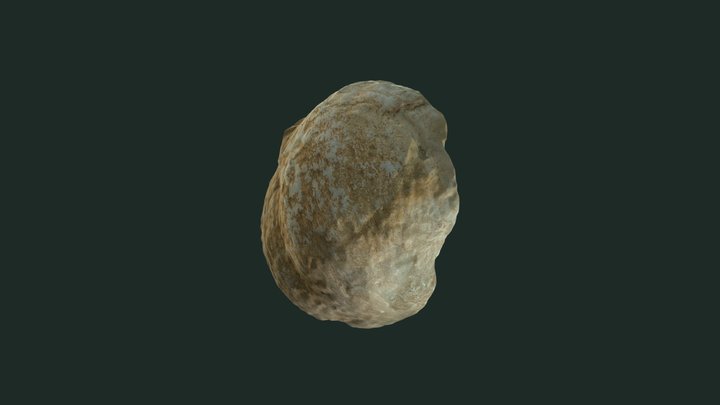
3D model
- Source
- Sketchfab
- Credit
- Shellie Luallin
- Licence
- CC Attribution
- Commercial use
- cannot be read from the licence given — check the record
This is what the site found, which is not the same as what exists.
Keep going
What may have been alongside itTolmatchoffiini through timeFormations of the PermianThe world it lived on
Occurrence data from the Paleobiology Database, CC BY 4.0. Muir-Wood and Cooper 1960