Palaeotherium
Palaeotherium is an extinct genus of equoid that lived in Europe and possibly the Middle East from the Middle Eocene to the Early Oligocene. It is the type genus of the Palaeotheriidae, a group exclusive to the Palaeogene that was closest in relation to the Equidae, which contains horses plus their closest relatives and ancestors. Fossils of Palaeotherium were first described in 1782 by the French naturalist Robert de Lamanon and then closely studied by another French naturalist, Georges Cuvier, after 1798. Cuvier erected the genus in 1804 and recognized multiple species based on overall fossil sizes and forms. As one of the first fossil genera to be recognized with official taxonomic authority, it is recognized as an important milestone within the field of palaeontology. The research by early naturalists on Palaeotherium contributed to the developing ideas of evolution, extinction, and succession and demonstrating the morphological diversity of different species within one genus.

Shadowgate from Novara, ITALY · CC BY 2.0 · via Wikipedia/Commons. May be a photograph of a specimen, or an artist’s reconstruction — an interpretation of a skeleton, since colour and soft tissue are almost never preserved.
On record
Recorded, not inferred- Sits inside
- PalaeotheriinaePBDB
- Diet
- frugivore, folivorePBDB
- Life habit
- ground dwellingPBDB
- Motility
- actively mobilePBDB, for Osteichthyes
- Environment
- terrestrialPBDB
Time the record covers
At least 7.1 million years on record.
The record covers at least 41.03 Mya to 33.9 Mya. No occurrence read is dated outside 56 Mya to 27.3 Mya.
157 occurrences of Palaeotherium on record, most of them in the Eocene. Bar height is expected occurrences, not a count: each fossil is spread across the span it is dated to, so a tall narrow bar means tight dating and a low wide one means loose.
When
157 occurrencesThese are dates about fossils, not the animal: the record can only begin after it arose and end before it died out, so either end may reach further. Shares are expected occurrences: a fossil dated to a span is counted partly in each period it straddles. More on what this infers.
Found in
15 formations
- Castrais Formation11
- Bembridge Limestone Formation10
- Headon Hill Formation6
- Headon Beds Formation3
- Upper Headon Beds Formation3
- Collegats Formation3
Loading coastlines…
The named rock units Palaeotherium has been recovered from, largest first. Drawn where the rock is now, not where it formed. 107 occurrences have no formation on record, which is common for older literature.
Palaeotherium and its relatives
EoceneWhere Palaeotherium and its relatives were recorded in the Eocene.
Found in the same rock
794 taxa- Eurohippus parvulus22 sites
- Hyrachyus15 sites
- Lophiodon remensis14 sites
- Propalaeotherium voigti11 sites
- Plagiolophus9 sites
- Plagiolophus annectens9 sites
- Rhinocerolophiodon buxovillanum9 sites
- Trionyx8 sites
- Antiacodon pygmaeus7 sites
- Dichobune robertiana7 sites
- Eolacerta robusta7 sites
- Lophiodon lautricense7 sites
- Anoplotherium commune6 sites
- Diplocynodon6 sites
- Lophiodon cuvieri6 sites
- Microchoerus erinaceus6 sites
- Peratherium6 sites
- Pseudoltinomys6 sites
- Crocodylia5 sites
- Dichodon5 sites
- Lophiodon tapirotherium5 sites
- Metanchilophus depereti5 sites
- Pachynolophus5 sites
- Peratherium cuvieri5 sites
The Paleobiology Database records 84 sites for Palaeotherium, and this reads all of them. The number is how many of those sites it was catalogued from too. The 24 sharing the most are listed.
This is not a list of everything alive at the time. It is only what has come out of the same ground as this animal and been written down.
Entered from
41 references- Les Périssodactyles (Mammalia) du gisement Bartonien supérieur de Robiac (Éocène moyen du Gard, Sud de la France)31
- Revision der Equoidea aus den eozänen Braunkohlen des Geiseltales bei Halle (DDR). (Revision of Equoidea from the Eocene lignite of the Geiseltal, Halle (DDR))18
- Les mammiferes d'Egerkingen et l'histoire des faunes de l'Eocene d'Europe13
- Mesozoic and Tertiary Fossil Mammals and Birds of Great Britain11
- Contribution a l'étude du basin d'Aquitaine, Les Gisements de Mammiferes Tertiares8
- Mammalian taphonomy and palaeoecology of the Bembridge Limestone Formation (Late Eocene, S. England)6
- Etude de quelques mammiferes du Ludien de la Debruge (Vaucluse)6
- Cranial morphology and phylogenetic relationships of Trigonostylops wortmani, an Eocene South American native ungulate4
- Mammifères fossiles des grès de Célas (Eocène supérieur du Gard): découvertes récentes4
- Nouvelles données sur le renouvellement des faunes de mammiferes a l'Eocene superieur, d'apres le gisement de Fons (Gard)4
- Nuevos yacimientos del Terciario continental del N.E. de España4
- Marsupialia, Insectivora, Primates, Creodonta and Carnivora from the Headon Beds (upper Eocene) of southern England4
Each of the 157 occurrences read was entered from one of these publications, ordered by how many each accounts for. This is not a search for papers mentioning the name. 29 further references are not listed. Entries link to doi.org where the Paleobiology Database holds an identifier, and to its own record where it does not. Relayed as the Paleobiology Database holds them, not checked against what they resolve to.
Media and terms
Media content3

Picture of Palaeotherium
- Source
- Wikipedia/Commons
- Credit
- Shadowgate from Novara, ITALY
- Licence
- CC BY 2.0
- Commercial use
- the licence allows it
Laser scan
- Source
- MorphoSource
- Licence
- In Copyright
- Commercial use
- cannot be read from the licence given — check the record
- Specimen
- Palaeotherium crassum · NHMUK:PAL:PV M 2444
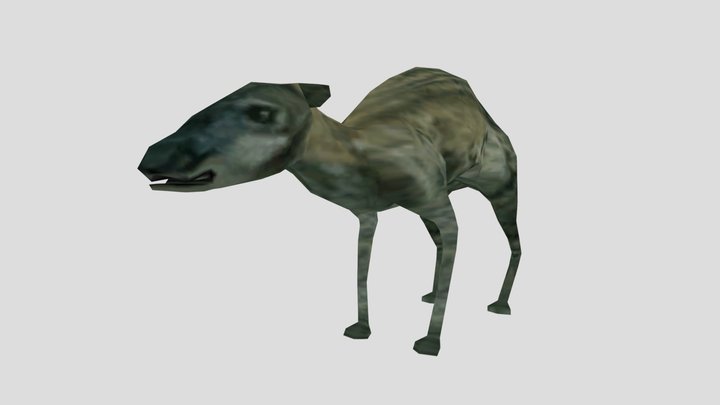
3D model
- Source
- Sketchfab
- Credit
- Ziggertron
- Licence
- CC Attribution
- Commercial use
- cannot be read from the licence given — check the record
The description on this site
- Licence
- CC BY-SA 4.0
This is what the site found, which is not the same as what exists.
Keep going
What may have been alongside itPalaeotheriinae through timeFormations of the EoceneThe world it lived on
Occurrence data from the Paleobiology Database, CC BY 4.0. Cuvier 1804